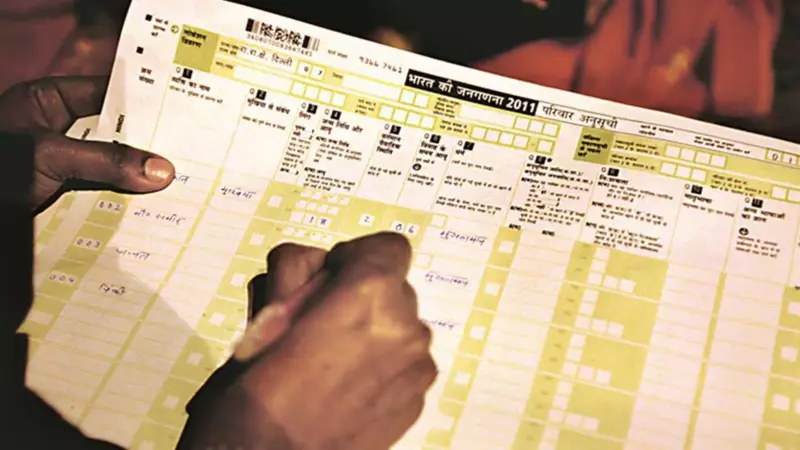
Census 2027 Self-Enumeration: A Digital Revolution in India's Population Count
India is set to embark on a transformative journey with Census 2027, introducing a self-enumeration facility that promises to make the process more accessible and efficient. This innovative approach allows citizens to actively participate in the national headcount by filling out and submitting census documents themselves, marking a significant shift from traditional methods.
Multilingual Accessibility and Digital Infrastructure
The self-enumeration portal will be available in an impressive array of 16 languages, ensuring linguistic inclusivity across the nation. These languages include Assamese, Bengali, English, Gujarati, Hindi, Kannada, Konkani, Malayalam, Manipuri, Marathi, Nepali, Odia, Punjabi, Tamil, Telugu, and Urdu. This multilingual support is crucial for a country as diverse as India, where language barriers have historically posed challenges in data collection.
According to sources familiar with the matter, the details were shared during a high-level conference of chief secretaries, state nodal officers, and directors of Census operations held in New Delhi on January 23. The conference highlighted the government's commitment to leveraging technology for better governance and data accuracy.

How the Self-Enumeration Process Works
The process begins when respondents log into the self-enumeration portal using their mobile number, which is mandatory for registration. After entering additional required details, users will complete the census schedule by answering all questions presented in the digital form.
Upon successful submission, a unique reference ID (SE ID) will be generated and sent to the registered mobile number. This reference ID serves as a crucial link between the self-enumerated data and the official census database. Households must share this ID with the enumerator assigned to their locality during subsequent field visits.
"After checking the self-enumeration data, the enumerator will include it in the original database," a source explained, emphasizing the verification step that ensures data integrity.
Timeline and Operational Framework
The self-enumeration facility will be activated 15 days before the commencement of house listing operations in each state or Union Territory. This pre-enumeration window provides citizens with ample time to complete their submissions at their convenience, reducing last-minute rushes and potential errors.
Census 2027 is structured in two main phases:
- Phase 1: Houselisting and Housing Census, scheduled to begin on April 1 this year.
- Phase 2: Population enumeration, set for February 2027.
This will be the 16th census overall and the eighth since India's independence, continuing a tradition that dates back to 1872.
Legal Framework and Budgetary Support
To facilitate self-enumeration, the Centre amended the Census Rules, 1990, in March 2022. The amended rules explicitly permit individuals to fill, complete, and submit census schedules through self-enumeration, providing the necessary legal foundation for this digital initiative.
The government has approved a substantial budget of Rs 11,718.24 crore for Census 2027, reflecting the scale and importance of this national exercise. This funding supports various aspects of the census, including technology infrastructure, personnel training, and data management systems.
Advanced Monitoring and Data Collection Systems
The Registrar General of India (RGI), operating under the Ministry of Home Affairs, has developed a sophisticated Census Management and Monitoring System. This web-based platform enables real-time monitoring of data collection activities, deployment of enumerators and supervisors, and efficient management of census operations across the country.
In a recent notification, the RGI outlined the details to be collected during the house-listing process, which includes information on 33 items such as buildings and household assets. This comprehensive approach ensures that Census 2027 captures a holistic picture of India's demographic and socio-economic landscape.

The introduction of self-enumeration in Census 2027 represents a significant step toward modernizing India's data collection methods. By combining technological innovation with linguistic inclusivity, the government aims to enhance citizen participation, improve data accuracy, and streamline the entire census process for a more efficient and effective national count.