

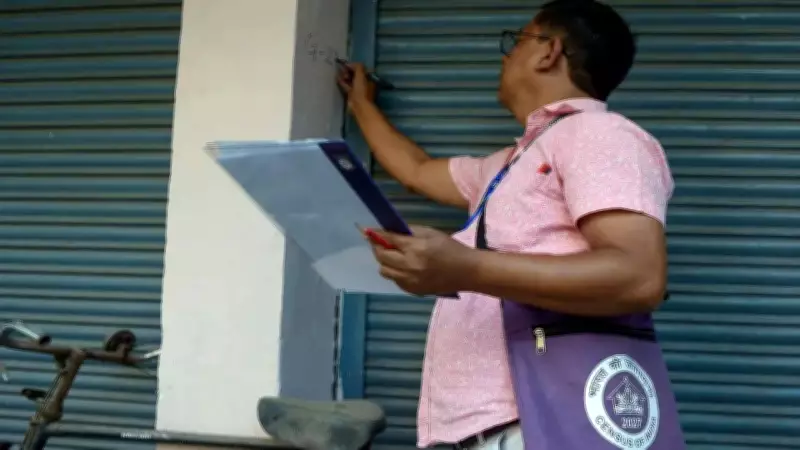
MUMBAI: For census enumerators in Mumbai Metropolitan Region, the hardest part isn't counting people. It's convincing some of them to be counted.
As the house-listing phase of the 16th census enters its final days before the June 14 deadline, enumerators, who are mostly school teachers and government staff, say they are being turned away from slum clusters, stonewalled by housing societies and, in at least one case, chased off by dogs.
In Bhattipada, Bhandup, teacher Prerna Singh was stopped at the entrance of a slum cluster and told that she could not proceed until the area's local 'boss' arrived to vet her paperwork. After waiting for several hours, she was turned away without completing her assignment.

'They yell, slam doors, treat us like we are thieves, shouting, 'Chase them away!'' said one teacher. 'It feels very humiliating. Who are we? Are we their servants?'
Teachers say many residents are either unfamiliar with the census or suspicious of its purpose. Questions about housing conditions, amenities and ownership of assets often trigger fears about taxation, welfare benefits, housing eligibility or even future eviction and redevelopment drives.
In slum pockets, the suspicion can quickly turn hostile. 'One resident refused to provide information, argued aggressively, recorded my video and told me not to come to that area again. I felt unsafe and left as soon as I could,' said a teacher who visited a slum area in Thane.
Female enumerators say navigating unfamiliar settlements without security cover can be intimidating. 'To avoid going alone, I have sometimes taken my son, husband or a friend with me,' said Gayatri Lokhande, a teacher assigned to Ganesh Nagar in Bhandup. 'I feel scared at times. The way some people look at us sends shivers down my spine.'
Suspicion cuts across class lines. In upscale housing societies in Bhandup, residents have argued that government officials have no right to ask personal questions or enter private premises, teachers said.
Some societies refuse entry despite official authorisation letters, while residents in one building blocked an enumerator's WhatsApp number after repeated requests for data.
At Juhu Chandan Society in Thane's Jambli Naka, a census survey team was allegedly refused entry and had dogs set loose on them. The matter was resolved only after some senior census officials intervened and briefed residents about the exercise.
'This is nothing but mental torture for teachers,' said Lokhande. 'Anyone who questions us should first stand in a classroom and teach children for hours. Then come here and carry out this work. Then we will see.'
Across Maharashtra, nearly 2.6 lakh officials, including school teachers and anganwadi workers, have been deployed for the census exercise. In Mumbai alone, around 24,500 enumerators and supervisors have been assigned census duties.
Sociologists say that the hostility reflects a wider trust deficit between citizens and state institutions.
Dipti Ranjan Sahu, professor of sociology at University of Lucknow and president of Indian Sociological Society, said many residents, particularly in marginalised settlements, view interactions with the state through the prism of past experiences involving evictions, exclusion from welfare schemes and bureaucratic hurdles.
'When officials arrive seeking information, the exercise is often interpreted as a threat rather than a benefit,' Sahu said. Misinformation linking census data to taxation, citizenship checks or loss of entitlements, coupled with what sociologists describe as 'survey fatigue', further fuels resistance, he added.
With just days left before the June 14 deadline, enumerators say the challenge is no longer getting information. It is convincing people that census is not something to fear.
The next phase of census, population enumeration, is scheduled for February 2027.
(Enumerators names have been changed to protect their identities.)






