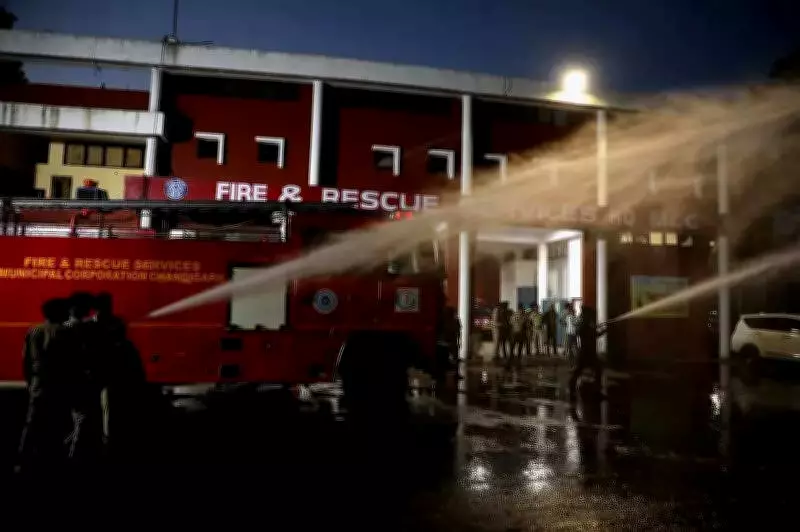
Chandigarh Municipal Corporation Proposes Sweeping Fire Safety Reforms
The Municipal Corporation (MC) of Chandigarh is actively considering a series of transformative changes to the city's fire safety regulations. The primary objective is to align these rules with modern, liberalized global norms, thereby enhancing overall fire safety standards while simultaneously reducing the compliance burden on building owners and industrial operators.
Key Reforms Under Consideration
Among the pivotal reforms being evaluated are the establishment of shared fire-fighting infrastructure, the rationalization of fire safety standards to meet international benchmarks, and the elimination of redundant technical requirements that are currently scattered across multiple laws and regulations. The proposed modifications also include a thorough review of norms concerning water tank capacity, building setbacks, and height-related restrictions.
This initiative follows recommendations from the central government, with the UT administration setting a firm deadline of March 31, 2026, for the municipal corporation to finalize the proposed changes. Officials have indicated that the MC is examining the possibility of removing all height-based restrictions for specific categories of buildings, such as hospitals and industrial units, in accordance with internationally accepted practices.

"Some of the changes may include removal of all height-based restrictions for buildings in line with global norms. Further, it will involve rationalisation of setback requirements," confirmed an MC official. For tall buildings, the maximum setback requirement under the proposed norms may not exceed 9 metres.
Modernizing Standards and Simplifying Processes
A significant change under consideration is the elimination of references to the National Building Code (NBC) in building byelaws, building plan approvals, and fire and life safety acts and rules. These outdated references are proposed to be replaced with modern, liberalized standards that are specifically tailored to current technologies and international best practices.
The reforms also aim to streamline the process for obtaining fire no-objection certificates (NOCs). "The focus is on easing the process for getting necessary fire NOCs by removing duplicate technical requirements in the Fire Act and rules that are already covered under development control regulations," the official elaborated.
Shared Infrastructure and Rationalized Norms
The provision for shared or common fire-fighting infrastructure—such as hydrants and water tanks—is proposed to be introduced in industrial parks and estates as an alternative to mandatory plot-level installations. Commercial units may also be permitted to pool their resources to collectively meet fire safety requirements.
Additionally, fire safety norms are proposed to be rationalized in several critical areas, including:
- Water tank capacity
- Distance to exits and fire extinguishers
- Spacing of hydrants, extinguishers, and sprinklers
- Staircase design
The changes also envision strengthening fire safety mechanisms in industrial areas, which includes the installation of public fire hydrants.
Adoption of Haryana Fire Rules and Future Steps
Last year, the general house of the MC passed a resolution to adopt the Haryana Fire and Emergency Service Act, 2022, thereby replacing the outdated Delhi fire safety laws of 1986. However, officials have clarified that the latest proposed reforms would extend beyond the recently adopted Haryana framework.
A proposal for the adoption of the Haryana Fire and Emergency Services Act, 2022, along with necessary amendments and requisite notifications, has already been submitted to the Ministry of Home Affairs (MHA). "The submitted proposal may be sent back by the MHA, and UT Chandigarh may revise it as per recommendations. The revised draft will then be shared again with the MHA for approval, following which rules will be notified in UT Chandigarh," the official stated.
These comprehensive reforms represent a significant step towards modernizing Chandigarh's fire safety infrastructure, ensuring it meets contemporary international standards while fostering a more business-friendly environment.