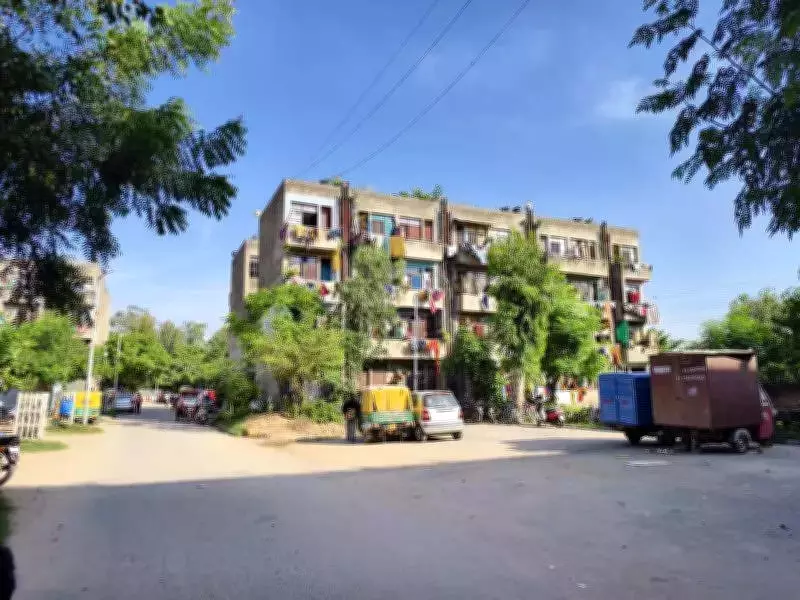
Chandigarh Administration Constitutes New Committee for Rehabilitation Colonies
The Chandigarh administration has taken a significant step by forming a fresh committee to determine the future of approximately 35,000 dwelling units located in the city's rehabilitation colonies. This move comes in response to persistent demands from residents for ownership rights and ongoing disputes concerning illegal transfers and occupancy issues.
Committee Mandate and Immediate Actions
The newly established panel has been assigned the critical task of examining the current status of these properties, studying the legal framework that governs them, and reviewing models implemented by other cities to address similar challenges under rehabilitation schemes. Chief Secretary H Rajesh Prasad confirmed the constitution of this committee and has directed it to submit its report at the earliest opportunity. A final decision will be made by the administration based on the committee's recommendations.
This development occurs despite the existence of a previous committee formed in 2023, whose recommendations were never implemented. That earlier panel concluded that ownership rights could not be granted to residents, declared post-survey sale and purchase transactions as illegal, and suggested framing a policy to recover government dues in cases involving unauthorized transfers. It also recommended charging license fees at prevailing market rates.

Survey Findings and Transfer Issues
A recent survey of the rehabilitation colonies revealed a startling statistic: nearly 80% of the houses are no longer occupied by their original allottees. Many units have changed hands through general power of attorney (GPA) transactions, with several properties reportedly sold multiple times—in some instances, three to four times. The administration maintains that such transactions, based on what it terms "flimsy documents," are invalid. This stance is rooted in the fact that the houses were originally allotted on a monthly license fee basis under a rehabilitation scheme intended for economically weaker sections, not for commercial transfer purposes.
Historical Background and Legal Position
The rehabilitation colonies, which include areas such as Dadumajra, Indira Colony, Manimajra, Mauli Jagra, Dhanas, Bapu Dham, Sector 52, and Sector 56, comprise over 34,965 units constructed since 1980 under the scheme. Most of these units were allotted on 99-year leases or similar terms beginning in 1979. In 2011, the Supreme Court barred property transfers through GPA arrangements, a restriction that continues to apply today. The issue has also been raised in the Lok Sabha, with Chandigarh MP Manish Tewari querying the matter last year. In response, the Centre clarified that there is no provision to grant ownership rights to beneficiaries of the rehabilitation scheme. The properties remain on leasehold terms, and transfers contrary to the original allotment conditions are not recognized.
Practical Challenges Faced by Residents
Residents have highlighted several difficulties arising from the current arrangement. Banks often decline housing loans due to unclear ownership titles, which restricts property transactions and limits value appreciation. Officials estimate that over 15,000 houses are listed as defaulters for non-payment of license fees over the years. In many colonies, license fees have not been revised since 2008. Although applications for ownership rights were briefly invited in 1990, the process was not pursued further, leaving most residents without ownership status.
Future Expectations and Committee Role
The newly constituted committee is expected to address these legal and administrative complexities comprehensively. This includes possible revisions in fee structures and mechanisms for relief, while ensuring compliance with existing laws and upholding the original objectives of the rehabilitation scheme. The committee's findings will be crucial in shaping the future of these colonies and providing clarity to thousands of affected residents.