Chennai's L-Shaped Madhya Kailash Flyover Inaugurated, Promising Major Traffic Relief
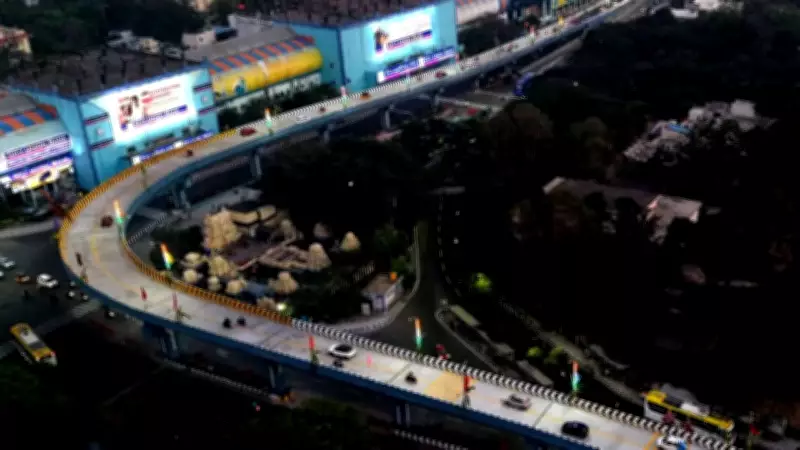
In a significant development for Chennai's urban infrastructure, Chief Minister M K Stalin officially inaugurated the much-anticipated L-shaped Madhya Kailash flyover on February 16, 2026. This ₹60-crore project, spanning 650 meters with four lanes, is strategically designed to link Sardar Patel Road and Old Mahabalipuram Road (OMR), two of the city's busiest arterial corridors.
Substantial Daily Benefits for Commuters
Transport officials project that over 11,000 vehicles crossing the Madhya Kailash junction daily will experience direct benefits from this new flyover. The infrastructure is engineered to accommodate an estimated 3,760 vehicles per hour, which is expected to dramatically improve traffic flow between critical areas including Guindy, Adyar, and the OMR corridors. This enhancement aims to reduce travel times and alleviate the chronic congestion that has plagued this intersection for years.
Immediate Traffic Observations and Challenges
Initial reports following the inauguration highlighted a mixed traffic scenario. While vehicles on the flyover itself enjoyed a smooth and uninterrupted ride, congestion persisted on the ground level, particularly on the opposite side of Sardar Patel Road. A significant snarl, extending approximately 400 meters to the Gandhi Mandapam junction, was observed, primarily caused by vehicles from OMR attempting to reach Guindy and Adyar via existing U-turns.

Comprehensive Plan to Eliminate Bottlenecks
In response to these persistent ground-level issues, highways officials and traffic police have formulated a multi-pronged strategy. A central component of this plan involves transforming the Madhya Kailash and IIT Madras junctions into signal-free zones. Authorities identified that the traffic signals at Gandhi Mandapam were acting as a major choke point on Sardar Patel Road, contributing to the backups.
To further streamline movement, a new U-turn is being constructed between the L-bridge for vehicles traveling from Kotturpuram towards Guindy. Concurrently, free left turns are being implemented, which may lead to the complete removal of the Gandhi Mandapam signal, thereby facilitating more fluid traffic movement.
Enhanced Safety and Navigation Measures
Traffic police will conduct a week-long monitoring period to study new movement patterns and make necessary adjustments. A specific focus will be on improving signage; incorrect 'right turn' boards at Madhya Kailash will be replaced with clearer, more intuitive signage to prevent confusion among motorists.
Officials have also outlined new lane discipline protocols to enhance safety. Vehicles traveling from OMR to Adyar will be directed to use the rightmost lanes earlier to access U-turns, while Guindy-bound traffic will be channeled to the left lanes. With the junction becoming signal-free, the risk of collisions is expected to be minimized, promoting safer and more efficient traffic flow.
Future Infrastructure and Commuter Adjustments
Looking ahead, the Highways Department has announced additional amenities, including plans for a park at the central junction area. Furthermore, a 158-meter-long foot overbridge is under construction to link the Kasturba Nagar MRTS station to the Central Leather Research Institute (CLRI), crossing both OMR and Sardar Patel Road. This pedestrian bridge will feature four access points, improving connectivity for non-vehicular commuters.
While the flyover brings widespread relief, some commuters will need to adjust their routes. For instance, vehicles originating from Kendriya Vidyalaya and heading to OMR will now need to travel via Adyar and take a U-turn at Kasturba Nagar. Officials assure that consultations indicated the impact on commuters would be limited due to the relatively low traffic volume in these specific segments.
The inauguration of the Madhya Kailash flyover marks a pivotal step in Chennai's ongoing efforts to modernize its transportation network and address the growing demands of urban mobility.