

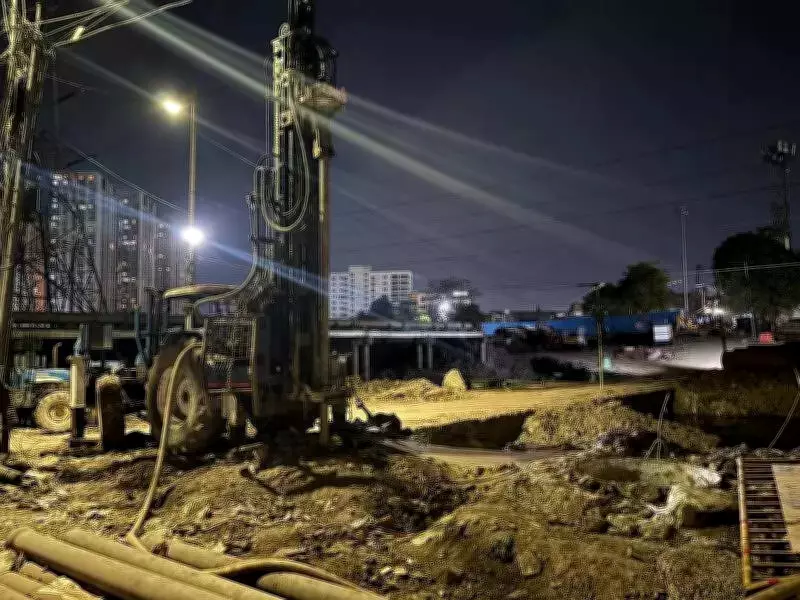
Chennai's Cooum River to Get New High-Level Bridge for Enhanced Connectivity
The state highways department in Chennai has initiated construction on a significant high-level bridge across the Cooum River, designed to link Padi Kuppam with Poonamallee High Road at Koyambedu. This development promises to deliver seamless access for daily commuters, addressing long-standing transportation challenges in the region.
Replacing an Outdated and Flood-Prone Structure
This ambitious project will replace a decades-old causeway that has frequently been submerged during monsoon seasons. The old structure's culverts were often clogged by water hyacinth, exacerbating flooding issues and disrupting traffic flow. The new bridge is strategically planned to enhance connectivity between Poonamallee High Road and key localities such as Mogappair, Padi Kuppam, and Golden George Nagar.
Technical Specifications and Timelines
Scheduled for completion by July 2026, the four-lane bridge will span 91 meters in length. It will feature a 7.5-meter carriageway and include 1.5-meter footpaths on both sides, offering improved safety for pedestrians. In contrast, the existing causeway measures only 63 meters long and 5.5 meters wide, highlighting the substantial upgrade in capacity and durability.

Infrastructure Enhancements and Historical Context
While Padi Kuppam Road and Rail Nagar Road fall under the jurisdiction of the Greater Chennai Corporation (GCC), the highways department has also constructed a 12-meter approach road to facilitate commuting during the bridge's construction phase. The previous two-lane causeway at Padi Kuppam suffered extensive damage during the devastating 2015 floods and was subsequently restored. This new bridge will mark the fourth major high-level river bridge on this route, following an existing one built in Mogappair a decade ago and two others constructed in Nolambur over the last two years.
Political Insights and Community Impact
DMK Nolambur zonal chairman V Rajan emphasized the historical significance of this infrastructure, noting that all high-level bridges on the western side of the Cooum River in areas like Koyambedu, Padi Kuppam, Mogappair, Nolambur, and Maduravoyal were established under different DMK governments. He recounted how decades ago, residents often crossed the river on foot, frequently getting their clothes wet. The original causeway in Padi Kuppam was built in 1996, and this 2026 upgrade to a high-level bridge represents a major leap forward in urban development.
Rajan further explained that the old river bridge often becomes inundated when the Cooum River swells, forcing commuters into a 5-kilometer detour via Thirumangalam to reach Koyambedu. The new bridge is expected to benefit everyone traveling to Koyambedu, Poonamallee High Road, and 100-Feet Road, significantly reducing travel time and inconvenience.
Community Feedback and Additional Requests
Commuters have urged the Greater Chennai Corporation to enhance the approach lanes to the new bridge. R Ramesh of Mogappair East highlighted issues such as poor lighting, encroachments like abandoned cars, and misuse of river banks by anti-social elements. He called for GCC to maintain pavements, install new street lights, and plant more trees along the banks to improve safety and aesthetics.
This infrastructure project not only aims to alleviate traffic congestion but also addresses environmental and social concerns, marking a pivotal step in Chennai's ongoing urban renewal efforts.






