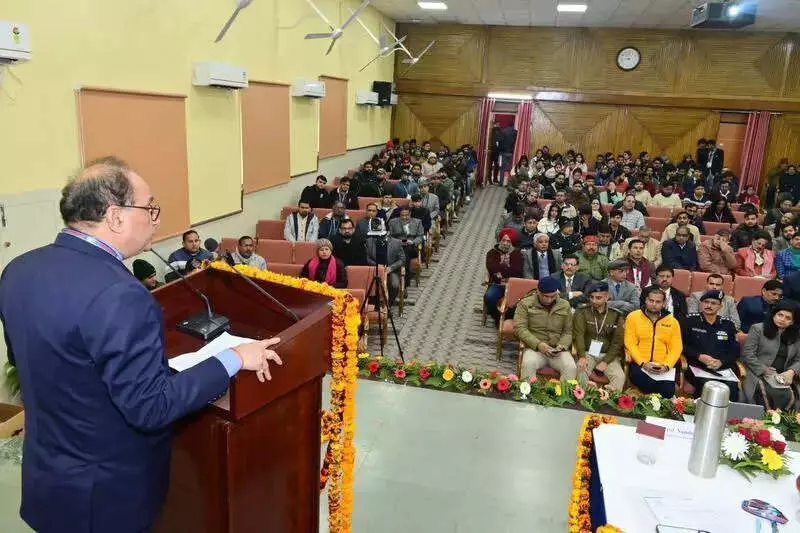
Chief Minister Pushkar Singh Dhami participated in a disaster resilience workshop at IIT Roorkee on Thursday. He joined the event virtually due to dense fog conditions that prevented his physical attendance.
Uttarakhand's Vulnerability to Natural Disasters
During his address, CM Dhami emphasized Uttarakhand's high susceptibility to multiple natural hazards. He specifically mentioned earthquakes, landslides, floods, cloudbursts, avalanches, and forest fires as significant threats facing the state. The chief minister stressed that emerging environmental challenges require sustained preparedness and proactive planning to effectively reduce disaster risks.
Modern Technology and Scientific Interventions
"We have continuously strengthened Uttarakhand's disaster mitigation capabilities through modern technologies and scientific interventions," Dhami stated. He noted these efforts stand as significant and exemplary among Himalayan states. The chief minister highlighted one particular achievement, revealing that plastic waste management initiatives have helped reduce carbon emissions by 72 tonnes within the Himalayan region.

IIT Roorkee's National Contributions
Dhami acknowledged IIT Roorkee's nationally important work in several critical areas. He praised the institute's contributions to earthquake early warning systems, AI-enabled forecasting, remote sensing applications, and GIS-based modeling. The chief minister also recognized the scientific support IIT Roorkee provides for policy formulation and field-level implementation of disaster management strategies.
"IIT Roorkee has emerged as a key national partner in strengthening early-warning systems, scientific mapping, and capacity building," Dhami said. He assured that the state government remains fully committed to deepening collaborations with the institute. This commitment aims to ensure research outcomes translate into real-time protection of lives and livelihoods across Uttarakhand.
Workshop Participants and Focus Areas
The one-day workshop brought together diverse stakeholders including policymakers, scientists, disaster management professionals, and academic leaders. Participants deliberated on strategies to strengthen preparedness and resilience in disaster-prone regions. Discussions maintained a special focus on Uttarakhand's fragile Himalayan ecosystem, recognizing its unique vulnerabilities and conservation needs.
Shri Trilochan Upreti Smriti Himalayan Sodh Sansthan partnered with IIT Roorkee to organize the event. Institute director K K Pant, deputy director U P Singh, and department of earth sciences head Sandeep Singh addressed attendees alongside other dignitaries.
Community-Centric Approaches to Disaster Preparedness
Bhagwati Prasad Raghav, zonal convenor for Uttarakhand and Uttar Pradesh of Prajna Pravah, emphasized the need for collective societal engagement in disaster preparedness. He called for ethical leadership and community-centric approaches that complement technological interventions with social awareness and institutional coordination.
"True resilience emerges when technology, policy, and community action converge," Raghav stated. He added that platforms like this workshop play a critical role in aligning scientific capability with societal responsibility. This integration ensures disaster management strategies remain practical, effective, and responsive to community needs.
The workshop concluded with participants agreeing on the importance of continued collaboration between scientific institutions, government agencies, and local communities. Such partnerships aim to build comprehensive disaster resilience strategies that protect both people and the environment in vulnerable regions like Uttarakhand.