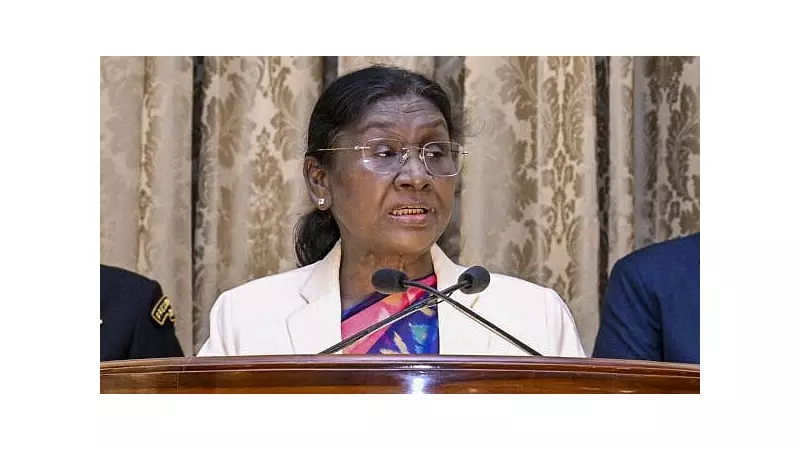
In a landmark event celebrating India's linguistic diversity, President Droupadi Murmu officially released the Constitution of India translated into the Santhali language. The historic document was unveiled on 25 December 2025, marking a significant milestone for the Santhali-speaking community across the nation.
A Moment of Pride for the Santhali Community
Addressing the gathering at the release ceremony, President Murmu expressed profound joy and pride. She emphasized that the availability of the nation's supreme legal document in Santhali is not just an administrative step but a profound recognition of the language and its people. The President highlighted that this move empowers citizens by giving them direct access to their fundamental rights and duties in a language they intimately understand.
The translation has been meticulously prepared in the Ol Chiki script, which is the unique writing system developed for the Santhali language. This script plays a crucial role in preserving the linguistic identity and cultural heritage of the Santhal community, one of the largest tribal groups in India.
Significance of the Ol Chiki Script
The choice of the Ol Chiki script for this official translation is of immense cultural importance. Unlike many Indian languages that use scripts derived from Brahmic systems, Ol Chiki was created in the 20th century specifically for Santhali. Its use in the Constitution elevates its status and ensures the document's authenticity for native speakers.
This initiative is seen as a major step forward in the inclusion of tribal languages in the country's official and constitutional discourse. It aligns with broader efforts to promote and preserve indigenous languages that are integral to India's rich cultural mosaic.
Broader Implications for Language and Governance
The release of the Santhali Constitution sets a powerful precedent. It demonstrates a commitment to making governance and legal frameworks accessible to all linguistic groups. This act of inclusion strengthens the democratic fabric of the nation by ensuring that no community is left behind in understanding the law of the land.
Experts view this as a continuation of efforts to implement the constitutional provisions that protect linguistic minorities. It is expected to inspire similar translations and recognitions for other scheduled tribal languages, fostering a deeper sense of belonging and participation among all communities.
The event on December 25, 2025, therefore, stands as more than just a book release. It is a symbolic affirmation of India's unity in diversity, where every language has a place of honor, and every citizen can engage with the Constitution in their mother tongue.