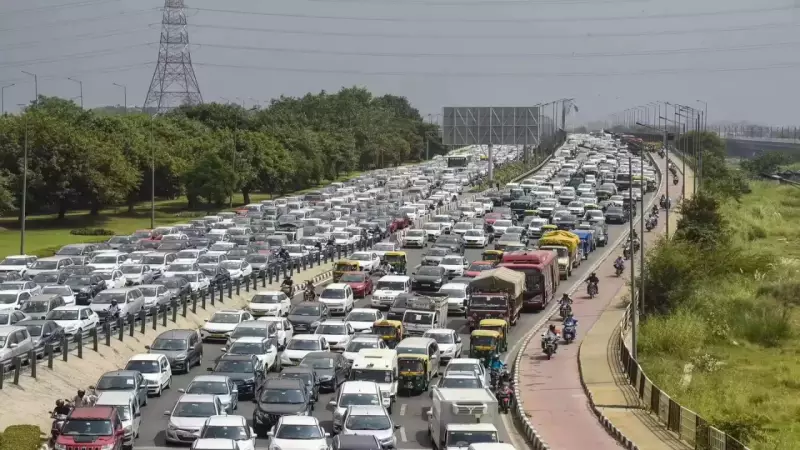
Delhi Sees Massive Exodus of Old Vehicles
More than eight lakh vehicles have received no objection certificates from Delhi's transport department over the past four financial years. Most of these vehicles are old and end-of-life models that owners now want to move out of the city.
Sharp Rise in NOC Issuance
Government data reveals a dramatic increase in NOC issuance. Only 82,340 vehicles obtained these certificates until 2021-22. The numbers then surged dramatically.
- 6.2 lakh vehicles received NOCs by 2022-23
- 7.3 lakh vehicles received NOCs by 2023-24
- Over 8.3 lakh vehicles received NOCs by 2024-25
Officials will release figures for 2025-26 towards the end of this year.

Strict Enforcement Drives NOC Demand
Transport officials explain this surge in NOC applications. They attribute it to strict enforcement of court orders regarding vehicle age limits.
The National Green Tribunal and Supreme Court have banned diesel vehicles older than 10 years from Delhi-NCR roads. They have also banned petrol vehicles older than 15 years.
Traffic police and transport departments conduct year-round crackdowns against these prohibited vehicles. Owners face substantial penalties when caught with banned vehicles.
- Four-wheeler owners pay Rs 10,000 fines
- Two-wheeler owners pay Rs 5,000 fines
- Additional towing and parking charges apply
Authorities impose these fines even when vehicles are parked in public spaces.
Beyond End-of-Life Vehicles
The NOC numbers include more than just officially designated end-of-life vehicles. They also encompass older BS-III and BS-IV vehicles that face operating restrictions.
These restrictions activate under Delhi's Graded Response Action Plan during high pollution periods, especially winter months.
- GRAP Stage-III bars BS-III petrol and BS-IV diesel four-wheelers from Delhi-NCR roads, with exceptions for essential services
- GRAP Stage-IV bans all diesel vehicles except essential services, plus BS-IV petrol four-wheelers
These temporary bans supplement the permanent prohibition on end-of-life vehicles.
Deregistration Numbers Tell Similar Story
Vehicle deregistration statistics follow a similar pattern. The government cancelled registration certificates for 48.8 lakh vehicles in 2021-22.
Subsequent years saw substantial additions:
- 6.1 lakh more vehicles deregistered in 2022-23
- 3.5 lakh more vehicles deregistered in 2023-24
- 3.7 lakh more vehicles deregistered in 2024-25
While numbers have declined since the initial enforcement push, they remain consistently high. This indicates ongoing government action against ageing vehicles.
Scrapping Lags Behind
Physical vehicle scrapping presents a different picture. The actual dismantling of end-of-life vehicles reached 1.4 lakh in 2022-23.
However, this number dropped sharply to just over 15,800 in 2023-24. It recovered somewhat to nearly 25,000 in 2024-25.
Even with this recovery, scrapping accounts for barely 5% of vehicles leaving Delhi. The cumulative total of scrapped vehicles stood at around 1.8 lakh by 2024-25.
This figure appears tiny compared to both NOC transfers and deregistrations.
Environmental Impact Questions
Experts note this disparity raises important questions. The current clean-up appears largely administrative rather than environmental.
Actual environmental benefits depend on what happens to these vehicles after they leave Delhi. If owners simply re-register them in other states, pollution reduction remains minimal.
True environmental gains require permanent vehicle dismantling rather than geographical relocation.
Delhi's Scrapping Policy
The Delhi government implemented a vehicle scrapping policy with specific goals. It aims to remove end-of-life vehicles to reduce pollution and improve road safety.
The policy offers financial incentives to encourage scrapping:
- Discounts on new vehicle purchases
- Road tax exemptions
- Lower registration fees
- Official scrap certificates
Vehicle owners typically use twelve authorized scrapping facilities located in neighbouring cities. They book appointments through the central government's voluntary vehicle scrapping application.