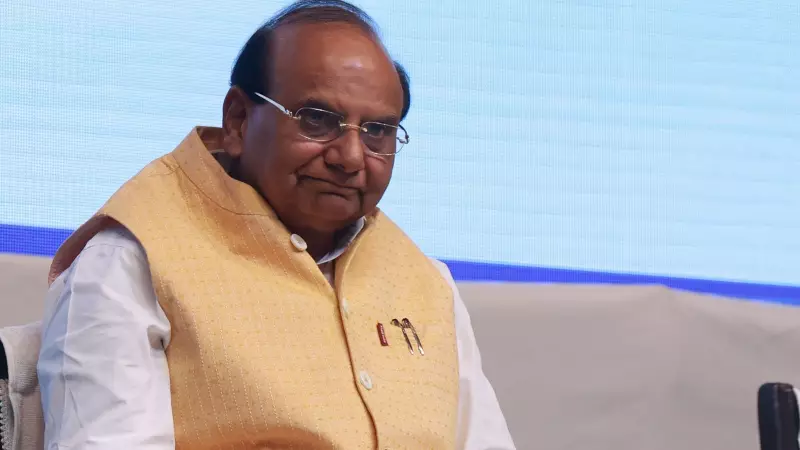
Lieutenant Governor Vinai Kumar Saxena on Monday, January 6, 2026, addressed the opening day of the Delhi Legislative Assembly's Winter Session, presenting a report card of the BJP-led government's work over the past ten months. He emphasized a focus on overcoming past administrative inertia to deliver on key areas like river rejuvenation, infrastructure, and public welfare.
Overcoming Inertia: A Ten-Month Report Card
In his speech, Saxena stated that the foremost challenge for his government was to break free from years of negativity and inertia in governance. He claimed that within this short span, the administration has taken several bold and concrete steps aimed at the welfare of Delhi's citizens.
The government has doubled the capital expenditure in this year's budget to approximately Rs 28,000 crore, signaling a major push for infrastructure development. On the ground, this has translated into the renovation of 150 kilometers of roads, with work on an additional 400 km slated for completion by March 2026. Furthermore, redevelopment of another 600 km of road stretches is targeted by the end of this year.

Highlighting a specific achievement, the L-G mentioned the completion of the long-pending Nand Nagri Flyover project, which has improved connectivity for several colonies across the Yamuna.
Health, Pollution, and the Yamuna Cleanup Drive
A significant portion of the address was dedicated to health initiatives and environmental measures. Saxena provided concrete numbers on the Ayushman Bharat health scheme's implementation in the capital.
Over 6.72 lakh Ayushman cards have been issued, including more than 2.62 lakh 'Vay Vandana Yojana' cards for senior citizens above 70. To date, 19,287 patients have received treatment under this scheme across 188 empanelled hospitals. To strengthen primary healthcare, 238 Ayushman Arogya Mandirs are being made operational under the PM-ABHIM scheme to reduce the load on major hospitals.
The government has also implemented a Hospital Information Management System (HIMS) in 37 hospitals and added 53 new ambulances, taking the fleet strength to 330.
On the environmental front, Saxena declared the cleaning of the Yamuna river as a top priority, citing years of neglect. The strategy involves installing new Sewage Treatment Plants (STPs) and tapping polluted drains with decentralized STPs. Taking a swipe at the previous AAP government, he asserted that the current administration is committed to year-round pollution control, not just seasonal measures.
He outlined a comprehensive air pollution plan launched in June 2025, focusing on prevention and technology. To curb vehicular pollution, the revised EV policy aims to add over 7,700 clean fuel buses by 2026, and 600 additional traffic personnel have been deployed to manage jams and emissions.
Session Begins with Suspensions
The first day of the session was not without controversy. Four AAP legislators—Kuldeep Kumar, Som Dutt, Jarnail Singh, and Sanjeev Jha—were suspended for the remainder of the session for allegedly disrupting the house proceedings and the Lieutenant Governor's address.
This action underscored the tense political atmosphere in the Assembly as the ruling BJP detailed its achievements, setting the stage for further debate in the ongoing Winter Session.