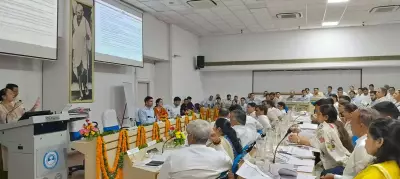
New Delhi: Delhi Lieutenant Governor Taranjit Singh Sandhu recently interacted with vice-chancellors and directors of universities and higher educational institutions under the Government of National Capital Territory of Delhi (GNCTD). He stressed the need for stronger and seamless linkages between academia, society, government, and industry to equip students with skills, enhance employability, and encourage entrepreneurship.
Emphasis on Austerity and Behavioral Change
Sandhu, who is also the chancellor of these universities and institutions, urged educational institutions to sensitize students towards adopting austerity measures. These include reducing fossil fuel consumption through greater use of public transport and carpooling instead of private vehicles. He remarked, "These nearly three lakh students could become ambassadors who, apart from sensitizing their families, can also influence peer behavior among their friends and social circles."
Student Involvement in Urban Issues
He added that students should be actively involved in issues such as women's safety, traffic decongestion, green mobility, urban sustainability, water conservation, groundwater recharge, waste management, and broader social contribution. Sandhu underlined that universities and higher educational institutions should evolve into key drivers of a "Delhi Behavioral Change Mission."

Focus on Urban Challenges
The meeting also focused on major urban challenges confronting the capital. Universities were encouraged to undertake collaborative, research-driven solutions in areas including air pollution and its public health impact, equitable water distribution, Yamuna rejuvenation, waste management, traffic management, electric mobility, and intelligent transport systems.
Mental Health and Disaster Resilience
Institutions were also urged to work on mental health, addiction, and youth well-being, alongside research on urban poverty, migrant livelihoods, and the informal economy. Given Delhi's vulnerability to earthquakes and floods, universities were encouraged to develop disaster resilience frameworks and strengthen disease surveillance and epidemic preparedness in collaboration with health authorities.