

Delhi's LPG Crisis Forces Families to Survive on Single Meals, Return to Traditional Cooking
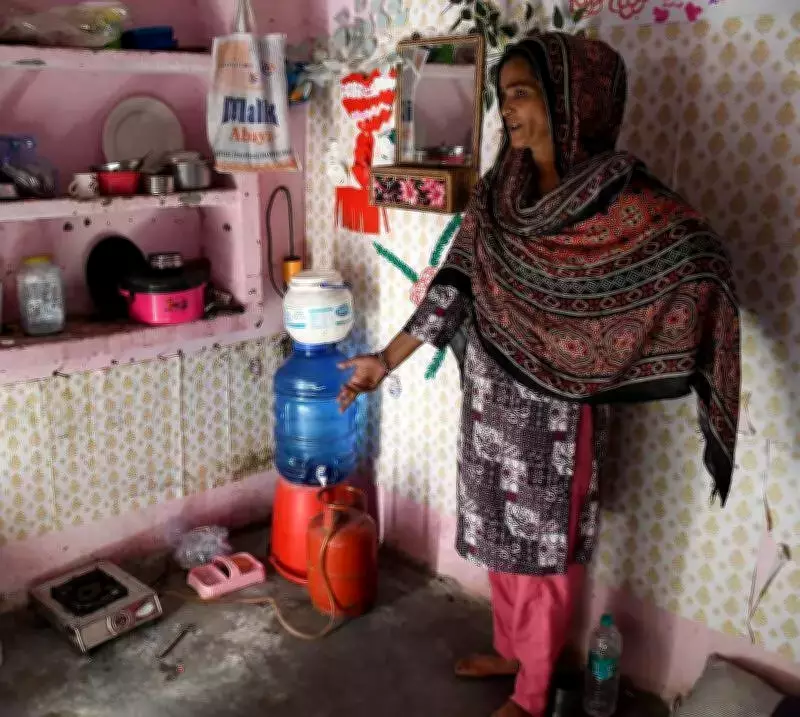
In southeast Delhi's Madanpur Khadar Extension, the ongoing LPG crisis has transformed daily life into a struggle for basic sustenance. For 50-year-old Sita and her family, the menu has been reduced to just one meal per day: khichdi and kadhi. They are carefully stretching the last traces of gas in their cylinder, uncertain how long it will last.
"There is very little gas remaining," Sita revealed. "My son took the cylinder to the agency, hoping to get it replaced, but he came back empty-handed." Her son Vikas, who drives a battery rickshaw, is the sole earning member, while her husband is currently in their Uttar Pradesh village. Buying a cylinder on the black market is not an option. "We cannot afford it," she stated bluntly.
From Gas Stoves to Traditional Chulhas
In the same neighborhood, having even a little gas left has become a privilege. Just a few houses away, 50-year-old Phulkali and her daughter-in-law Suman, 30, have exhausted both their cylinders. The family has returned to cooking on a traditional chulha while awaiting their booked cylinders.

Holding her two-and-a-half-year-old child, Suman explained how the situation has made everyday cooking challenging. "I have two children. They need proper nutrition, but cooking on this makes it difficult," she said. Phulkali added that their problems extend beyond just the cooking method. "Even the wood at home is running out," she noted, pointing to the diminishing stack of firewood.
Acknowledging their relative advantage, Phulkali said they can only cook this way because they own their house. "If we were living on rent, we would not even be able to do this," she admitted.
Improvisation and Desperation in Dense Settlements
For many in the densely packed settlement, even setting up a chulha is impossible due to lack of open space. Families are improvising in whatever ways they can.
Jyoti Pawar, 35, received a message claiming her cylinder had been delivered, but nothing arrived. In desperation, she borrowed a cylinder from her father-in-law's house in Noida. "But I am worried about what will happen once the cylinders in Noida run out," she expressed.
Elsewhere, some families have started burning wood on their terraces to cook. For 64-year-old Shamim Begum, who lives with seven family members, the situation has become especially exhausting during Ramzan. "We fast the entire day, and then cooking over burning wood leaves us exhausted," she said. Though she managed to get a cylinder on Sunday, the relief is temporary.
Black Market Exploitation and Shared Resources
One resident, who wished to remain anonymous, revealed she had to pay Rs 3,500 for a cylinder in the black market. Several locals confirmed that prices have skyrocketed from around Rs 90 per kg to more than Rs 300 per kg.
In a cramped cluster of rented rooms nearby, four families comprising nine adults and six children share both their living space and anxiety about cooking their next meal. Among them, 20-year-old Shoaib, a pharmacy worker, has unexpectedly become the star resource. He owns the only induction stove in the community.
As others try to squeeze the last bit of gas from their cylinders, they know Shoaib's small electric stove may be their only option when the fuel runs out. "He plugs in the stove and cooks the food," said his neighbor Shaheen, 30, a tailor. "I have two children and gas runs out quickly. What should we do?"
Another neighbor, Farida Khatun, 45, who works at a hotel, described how establishments are adapting too. "They have started burning wood with kerosene to cook there. If things continue like this, we will also have to figure something out."
The LPG crisis has not only disrupted daily cooking routines but has forced families to make difficult choices about nutrition, finances, and basic survival. With no immediate resolution in sight, residents continue to navigate this challenging situation with resilience and resourcefulness.






