

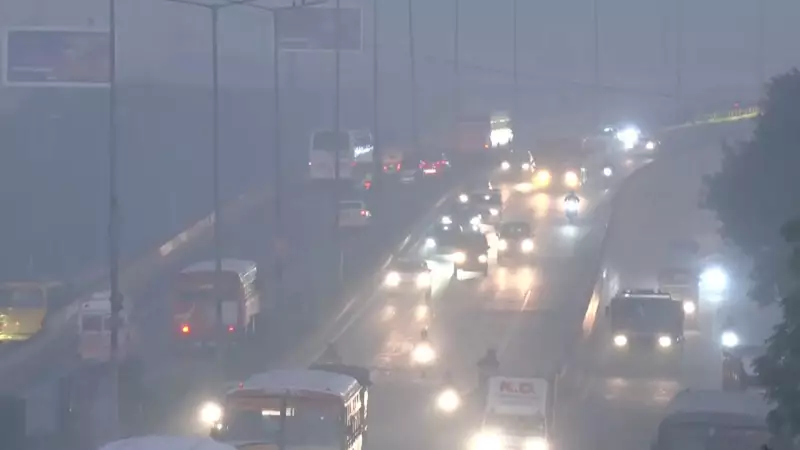
Delhi Metro Expansion Urged to Combat Air Pollution, Following Beijing's Lead
The Commission for Air Quality Management (CAQM) has proposed a major expansion of the Delhi Metro network. Officials cite Beijing's extensive metro system as a successful example for reducing vehicular pollution. They suggest Delhi may need to more than double its current operational length to effectively tackle air quality issues.
Current Network vs. Proposed Growth
Delhi's Metro currently spans 462.7 kilometers, with 352.16 kilometers operational and 110.6 kilometers under construction. It includes 12 lines and 289 stations, serving areas like Ghaziabad, Noida, Gurgaon, and Faridabad. On average, it transports 6.5 to 7 million passengers daily.
In contrast, Beijing operates a metro network of 879 kilometers with 27 lines and 420 stations. CAQM recommends scaling Delhi's system to 20-30 lines and 450-500 stations to match this scale. This expansion aims to encourage more people to switch from private vehicles to public transport.

Focus on Integrated Transport and Last-Mile Connectivity
A recent high-level meeting emphasized boosting electric vehicle mobility and improving public transport. CAQM officials highlighted the need for an integrated transport plan in the capital. They stressed strengthening last-mile connectivity to make metro travel more accessible.
A senior CAQM official said, "The suggestion to scale up the existing metro network was made to the DMRC because public transportation in the city needs a massive boost." The watchdog believes such measures could significantly reduce particulate matter pollution within three years.
Challenges and Ambitious Goals
However, a Delhi Metro official expressed concerns about the feasibility of expanding to 900 kilometers. "It is a very ambitious proposal," the official noted anonymously. "The first question is whether Delhi has enough space. Even after completing Phase IV and future phases, the network might only reach 600 kilometers."
Current expansion plans include 110 kilometers under Phase IV and 96 kilometers under Phases V-A and V-B. Daily ridership is expected to double with Phase IV completion. Additionally, the NCRTC network will expand to 323 kilometers over the next four years, enhancing regional connectivity.
Expert Insights and Health Benefits
Environmentalists argue that improving existing services is crucial. They recommend enhancing feeder services, introducing EV buses, and creating walkable streets with cycling tracks. "The emphasis should be on increasing last-mile connectivity," an environmentalist stated.
Dr. Nitish Dogra, a public health physician, pointed to global evidence linking metro expansion with health benefits. "Studies show a direct correlation between metro network growth and reduced personal air pollution exposure," he explained. Increased physical activity from commuting also contributes to better health outcomes.
A 2018 report by TERI and ARAI found that electrified public transport could cut PM2.5 and PM10 concentrations by 9% and 7% respectively by 2030. The report identified trucks and two-wheelers as major polluters, while noting that metro construction itself can contribute to PM10 levels during summer.
Government Plans and Future Outlook
The Delhi government plans to increase its bus fleet to 6,000 by year-end, with further targets set for 2027-2029. Of the planned 14,000 buses, 500 will be 7-meter-long vehicles to improve last-mile connectivity. These efforts, combined with metro expansion, aim to create a robust public transport system that reduces reliance on private cars.
As Delhi grapples with severe air pollution, the push for a larger metro network reflects a broader strategy to emulate successful models like Beijing. While challenges remain, the focus on integrated planning and connectivity could pave the way for cleaner air in the capital.






