

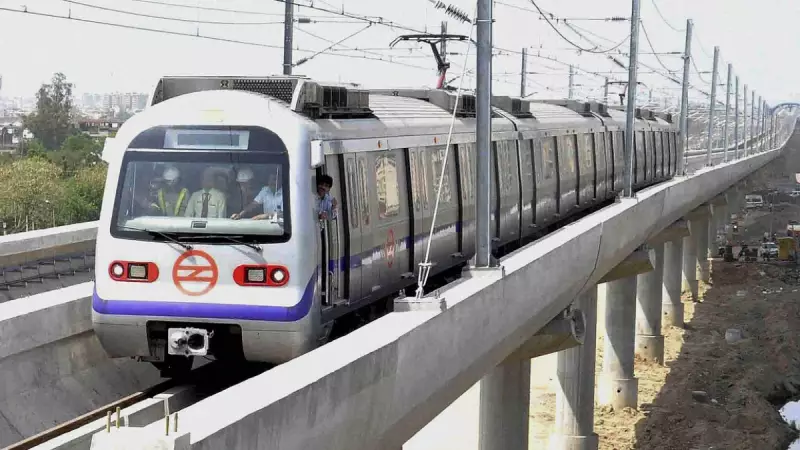
In a significant boost to the national capital's public transport infrastructure, the Union Cabinet, chaired by Prime Minister Narendra Modi, has given its formal approval for the ambitious Delhi Metro Phase 5A project. This major expansion, with a sanctioned cost of Rs 12,015 crore, is set to add 13 new stations to the city's rapidly growing metro network.
Project Details and Financial Approval
The approval, granted on December 24, 2025, clears the path for the construction of a crucial new corridor. The project will be implemented by the Delhi Metro Rail Corporation (DMRC). The financial model involves a substantial central government support of Rs 1,849.50 crore as a subordinate debt. Furthermore, the central government will provide a viability gap funding (VGF) of Rs 1,000 crore to ensure the project's economic feasibility.
This funding structure underscores the government's commitment to developing sustainable urban mobility solutions. The project is expected to be completed within a defined timeline, aiming to decongest road traffic and provide a faster, greener alternative for thousands of daily commuters.

Enhanced Connectivity and Strategic Importance
The Phase 5A corridor is strategically designed to connect key areas, improving last-mile connectivity and integrating with existing transport hubs. The addition of 13 new stations will fill critical gaps in the current network, serving densely populated residential and commercial zones that currently rely heavily on road-based transport.
This expansion is not just about adding track length; it's about creating a more comprehensive and user-friendly network. It will facilitate seamless interchanges, reduce travel time significantly for many, and contribute to the overall economic productivity of the region by making commuting more reliable and efficient.
Broader Impact and Future Prospects
The approval of Phase 5A marks a pivotal moment in Delhi's urban planning narrative. It signals continued investment in mass rapid transit systems as the backbone of the city's future growth. The project aligns with broader national goals of reducing carbon emissions, promoting public transport, and building smart, livable cities.
The construction phase is anticipated to generate substantial employment opportunities, boosting the local economy. Once operational, the new line will lead to a notable decrease in private vehicle usage on parallel routes, resulting in lower air pollution and reduced traffic congestion. This project sets a precedent for other Indian metros, demonstrating a replicable model of central-state collaboration for large-scale urban infrastructure.
With this cabinet nod, the Delhi Metro is poised to enter its next growth phase, reinforcing its status as one of the world's largest and most successful metro networks and bringing reliable, modern transit closer to the doorsteps of more citizens.






