Delhi Government Plans Mega Borewell Survey to Frame Water Usage Policy Amid Future Demand Concerns
The Delhi government is planning to conduct an extensive survey of borewells across the capital to formulate a comprehensive water usage policy, focusing on future demand projections and the need to curb uncontrolled groundwater extraction. Officials emphasize that detailed planning and immediate action are essential to manage the city's water resources effectively.
Addressing Future Water Demand Through Strategic Planning
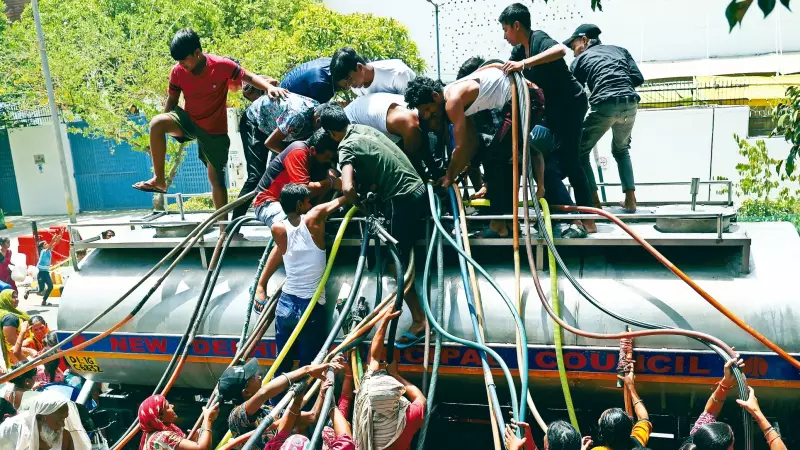
With Delhi's population projected to surge to 29 million by 2041 and 32.1 million by 2051, the city's drinking water demand is expected to rise significantly to 1,418 MGD and 1,566 MGD, respectively. Officials highlight that limited water supply sources and increasing dependency on groundwater necessitate proactive measures. The Delhi Jal Board (DJB) has appointed WAPCOS, a central public sector undertaking, to conduct the survey to determine the exact amount of groundwater being extracted.
"Given the scale and complexity of the task, WAPCOS is developing a sample survey plan and has requested a 20-month timeframe for the survey," said officials. This initiative aims to provide accurate data for framing a new borewell policy, which may include provisions for self-declaration by borewell holders to determine their numbers more precisely.

Current Water Infrastructure and Groundwater Challenges
Currently, the DJB operates 10 water treatment plants (WTPs) that produce 990-1,000 MGD of water, with an additional 135 MGD sourced through tubewells. However, the city's reliance on groundwater is a growing concern. According to the Delhi government's recent Statistical Handbook, there are 21,477 tubewells for irrigation purposes, and while official data show around 5,000 borewells, experts believe the actual number is much higher.
The Central Ground Water Board's 2024 report reveals alarming trends: Delhi extracted more water than it recharged, with 14 out of 34 assessment units (tehsils) categorized as 'over-exploited', 13 as 'critical', two as 'semi-critical', and only five as 'safe'. This underscores the urgency of the government's efforts to regulate groundwater usage.
Policy Development and Inter-State Discussions
The matter was discussed in a recent meeting chaired by Union Home Minister Amit Shah, highlighting its national importance. Officials noted that the Delhi government's Environment department has begun work on framing a new borewell policy, as per a Cabinet decision. Additionally, the BJP government is likely to initiate discussions with Haryana on the old water-sharing agreement, as Delhi heavily depends on the Yamuna and groundwater extraction to meet its water requirements due to a lack of major water sources.
In parallel, the DJB is taking steps to reduce Non-Water Revenue (NWR) in Delhi, further emphasizing a holistic approach to water management. Factors such as the DDA's proposed Master Plan, Transit-Oriented Development (TOD) scheme, and land pooling policy are expected to add to the population, increasing future water demand and dependency on groundwater.
This strategic move by the Delhi government aims to ensure sustainable water usage, mitigate risks of over-extraction, and prepare for the city's growing needs in the coming decades.