

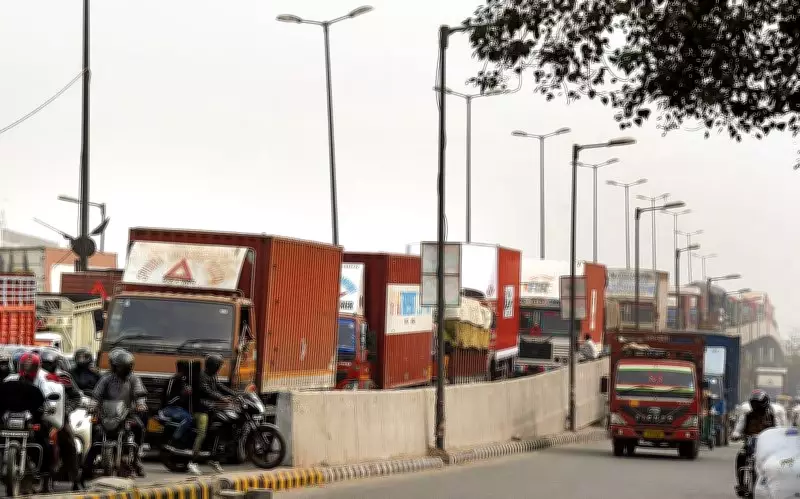
Delhi Government Enforces New Vehicle Standards to Combat Pollution
The Delhi government has announced a significant policy shift aimed at curbing air pollution in the national capital. Starting from November 2024, only goods vehicles that comply with Bharat Stage VI (BS-VI) emission standards and run on Compressed Natural Gas (CNG) or are fully electric will be permitted to operate within Delhi. This move is part of a broader strategy to improve air quality and protect public health in one of India's most polluted cities.
Key Details of the New Vehicle Policy
The policy specifically targets goods vehicles, which are major contributors to vehicular emissions in urban areas. By restricting entry to BS-VI CNG and electric vehicles, the government aims to reduce harmful pollutants such as particulate matter (PM) and nitrogen oxides (NOx). The BS-VI standards, which are the strictest emission norms in India, require vehicles to emit significantly lower levels of pollutants compared to older standards like BS-IV.
Implementation Timeline and Scope: The rule will come into effect from November 2024, giving vehicle owners and operators time to transition to compliant models. It applies to all goods vehicles entering or operating in Delhi, including trucks, vans, and other commercial transport vehicles. This policy is expected to impact thousands of vehicles daily, as Delhi is a major hub for logistics and trade.

Motivations Behind the Policy
The decision is driven by Delhi's persistent air pollution crisis, which has been linked to respiratory illnesses, cardiovascular diseases, and premature deaths. According to environmental studies, vehicular emissions account for a substantial portion of the city's pollution levels, especially during winter months when air quality deteriorates sharply.
Health and Environmental Benefits: By promoting cleaner fuels like CNG and electric power, the policy aims to cut down on greenhouse gas emissions and improve overall air quality. CNG vehicles are known for emitting fewer pollutants than diesel or petrol variants, while electric vehicles produce zero tailpipe emissions. This aligns with national goals under initiatives like the National Clean Air Programme (NCAP) and India's commitments to reduce carbon emissions.
Challenges and Industry Response
While the policy is praised for its environmental intent, it poses challenges for the logistics and transportation sectors. Many goods vehicle operators currently use older, non-compliant vehicles, and upgrading to BS-VI CNG or electric models involves significant costs. Industry stakeholders have raised concerns about the financial burden and the availability of charging infrastructure for electric vehicles.
- Cost Implications: BS-VI vehicles and electric trucks are generally more expensive than their older counterparts, which could increase operational costs for businesses.
- Infrastructure Needs: The success of this policy depends on expanding CNG refueling stations and electric vehicle charging points across Delhi and neighboring regions.
- Enforcement Mechanisms: The government will need robust monitoring systems to ensure compliance, including checks at entry points and penalties for violations.
Broader Context and Future Outlook
This policy is part of a series of measures by the Delhi government to tackle pollution, such as the odd-even vehicle rationing scheme and promoting public transport. It also complements national efforts to phase out older vehicles and encourage electric mobility under schemes like FAME India.
Looking ahead, experts suggest that similar policies may be adopted in other Indian cities grappling with air pollution. The move could spur innovation in the automotive industry, with manufacturers likely to focus more on producing affordable CNG and electric goods vehicles. Ultimately, the success of this initiative will hinge on effective implementation, stakeholder cooperation, and sustained efforts to build a cleaner transportation ecosystem in Delhi.






