

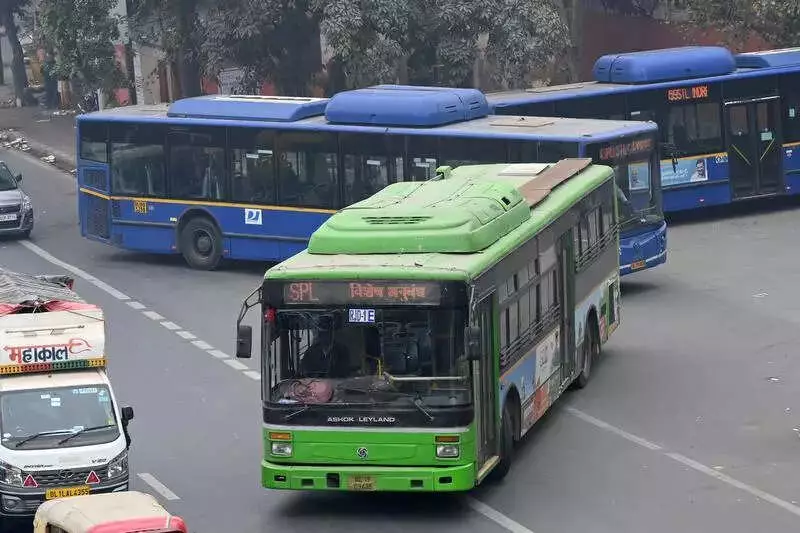
In a major push to combat air pollution and transform public transport, the Delhi government has unveiled an ambitious plan to significantly expand its fleet of electric buses. The administration is set to procure a total of 3,330 new electric buses, a move aimed at greening the capital's transit system and solving last-mile connectivity challenges.
A Multi-Sized Fleet for Diverse Needs
The proposal, sent to the central government's Convergence Energy Services Limited (CESL) under Phase 2 of the PM E-DRIVE scheme, is notable for its strategic mix of bus sizes. This is designed to cater to different road types and neighbourhoods across the city. Chief Minister Rekha Gupta emphasized that this initiative aligns with her government's goal of achieving a fully electric public transport system for Delhi.
The new procurement will introduce, for the first time at a large scale, 7-metre 'mini electric buses'. These compact vehicles are specifically engineered to navigate the narrow streets and congested residential colonies where standard-sized buses cannot ply, directly addressing the critical last-mile gap.

Breakdown of the New Electric Bus Fleet
The transport department's proposal details a calculated distribution of the 3,330 buses:
- 500 buses will be 7-metre mini e-buses for dense residential areas.
- 2,330 buses will be 9-metre models to act as feeder services on smaller roads.
- 500 buses will be standard 12-metre buses for high-demand corridors.
Officials confirmed that all new buses will be low-floor and air-conditioned, enhancing accessibility and commuting comfort, especially for women, senior citizens, and persons with disabilities.
Funding and Future Impact
The proposal follows a recent high-level meeting between Delhi government officials and CESL. Chief Minister Gupta stated that the government has requested for these additional buses—which are over and above the already approved 2,800 buses—to be covered under the central subsidy framework. However, she added that Delhi is prepared to bear the cost independently if there are any delays or technical issues with the subsidies.
The large-scale induction of these zero-emission buses is expected to have a multi-fold impact:
- Substantially reduce dependence on private vehicles.
- Significantly lower vehicular emissions, contributing to cleaner air.
- Improve first and last-mile connectivity across the capital's diverse urban landscape.
This move marks a decisive step in Delhi's journey towards sustainable urban mobility, aiming to set a benchmark for electric public transportation in Indian cities.






