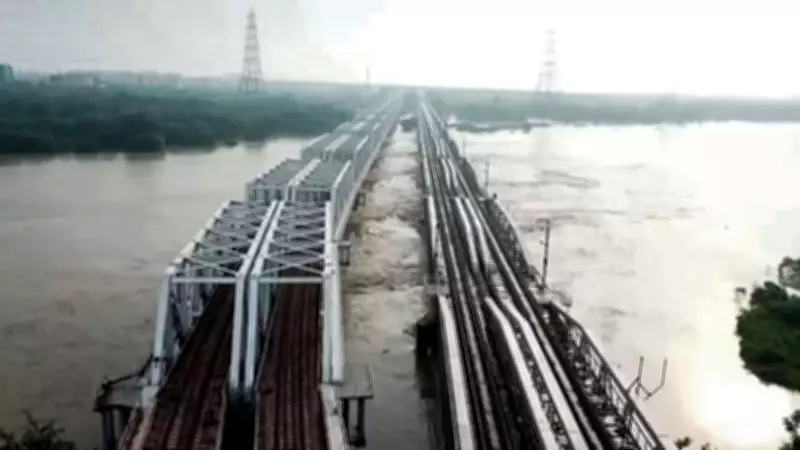
Delhi's Public Works Department (PWD) is actively exploring the possibility of constructing a new bridge across the Yamuna River, with potential sites near the historic Loha Pul or the modern Signature Bridge under consideration. This initiative aims to significantly enhance connectivity in the Trans-Yamuna area while alleviating traffic congestion on the Outer Ring Road and Ring Road in the national capital.
Initial Proposal and Strategic Importance
The proposal for this new bridge was discussed in a recent PWD meeting, although officials emphasize that it remains at a very preliminary stage. "The proposal is at a very initial stage... there is nothing concrete yet," an official stated, highlighting the need for further feasibility studies. Despite this early phase, the bridge is expected to play a crucial role in boosting connectivity between North East, North, and Central Delhi, addressing growing traffic demands in these regions.
Traffic Convergence and Infrastructure Challenges
Currently, the Delhi-Meerut Expressway and Delhi-Dehradun Expressway terminate near Sarai Kale Khan on the Ring Road, connecting Central Delhi areas like ITO with South East and East Delhi. Sarai Kale Khan is also poised to become a major multi-modal transit hub as the largest station in the Delhi-Ghaziabad-Meerut Regional Rapid Transit System (RRTS) corridor. Additionally, the imminent opening of the DND–Sohna (Jewar) link of the Delhi-Mumbai Expressway will further increase traffic volume in this area.

With these three key expressways converging, officials anticipate a significant rise in traffic, potentially spilling over into Lutyens’ Delhi and other parts of the city. "In the wake of all this, the government is considering the construction of a new bridge," explained a PWD official. The department plans to study the stretch from Old Wazirabad to Kalindi Kunj to assess feasibility, traffic congestion, vehicle movement, and challenges, with a focus on improving Trans-Yamuna connectivity and reducing congestion on major roads.
Existing Bridges and Location Options
Presently, there are approximately 25 bridges over the Yamuna, including road and rail structures. Key existing bridges include:
- A bridge from Noida toll to DND in Delhi
- The Akshardham bridge
- A bridge between ITO and Geeta Colony
- The Old Iron Bridge (Loha Pul)
- A bridge near ISBT and the Signature Bridge
These bridges currently facilitate connectivity from the Trans-Yamuna area to central parts of Delhi. However, the Old Iron Bridge, a double-decker structure with vehicular movement on the lower deck and trains on the upper deck, has completed its lifespan. Constructed in 1866–67, it is very old and suffers from wear and tear. The Northern Railway is already constructing a parallel bridge for rail traffic and plans to shift operations from the old bridge.
Given this context, the two possible locations for the new bridge are either near the Old Iron Bridge as its replacement or near the Signature Bridge. "The location is not yet finalised," officials noted, underscoring the need for detailed analysis before any decision is made.
Historical Context and Previous Proposals
This is not the first time such infrastructure projects have been proposed. A few years ago, the Delhi government suggested a 13-kilometer-long elevated bypass road from near the Signature Bridge to the Delhi–Noida–Direct (DND) Flyway through the Yamuna floodplain. This project aimed to provide a signal-free route for commuters from NCR cities in Haryana and Uttar Pradesh, connecting the Outer Ring Road, Ring Road, Barapullah Flyover, ITO Flyover, and NH-24 through an elevated loop in two phases.
However, that project stalled at The Unified Traffic and Transportation Infrastructure (Planning & Engineering) Centre due to a lack of approvals from multiple agencies and environmental clearances. This history highlights the complexities involved in implementing large-scale infrastructure projects in Delhi, involving coordination among various stakeholders and adherence to environmental regulations.

As Delhi continues to grow and its traffic patterns evolve, the proposed new Yamuna bridge represents a critical step toward sustainable urban development. While still in the early planning stages, it holds the promise of easing daily commutes for thousands of residents and improving overall transportation efficiency in the region. The PWD's forthcoming studies will be pivotal in determining the feasibility and optimal location for this much-needed infrastructure addition.