

Delhi Unveils Rs 1.04 Lakh Crore Green Budget for 2026-27 with Major Eco Focus
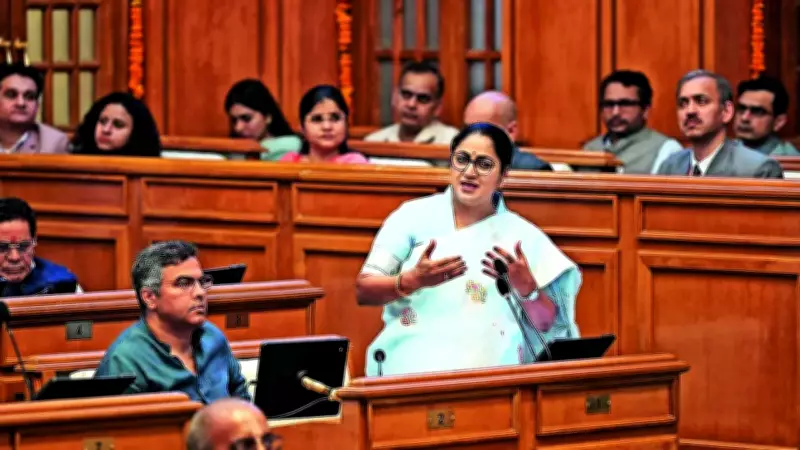
In a significant move towards sustainable development, Chief Minister Rekha Gupta on Tuesday presented Delhi's budget for the fiscal year 2026-27, totaling Rs 1,03,700 crore. This marks a 3.7% increase from the previous year's allocation of Rs 1 lakh crore, with a strong emphasis on environmental conservation and infrastructure growth.
Green Initiatives Take Center Stage
Dedicating 21% of the outlay to 'green initiatives', Gupta described the budget as a "green budget," stating that "environment is embedded in every policy, nature in every scheme and concern for future generations in every decision." Key environmental measures include Rs 504 crore for anti-smog guns, mechanical road sweepers, and water sprinklers to combat dust pollution, alongside a Rs 1,500 crore push for Yamuna cleaning efforts.
Infrastructure and Capital Expenditure Boost
The budget allocates Rs 30,799.7 crore, or 30%, for capital infrastructure, representing the highest capital expenditure share in a decade. An official noted that this is the first time 30% of the budget has been earmarked for capital expenditure, up from below 20% in the last ten years. Specific infrastructure projects include Rs 1,392 crore for upgrading PWD roads through comprehensive redesign to improve durability and reduce congestion, and Rs 2,500 crore under the Centre's SASCI scheme for urban reforms, tourism, and vehicle scrapping incentives.

Sector-Wise Allocations Highlight Priorities
Education receives the highest single-sector allocation at Rs 19,326 crore, followed by health at Rs 13,034 crore. Other major allocations include transport and infrastructure at Rs 12,613 crore, housing and urban development at Rs 11,572 crore, social welfare at Rs 10,537 crore, and water supply and sanitation at Rs 9,000 crore. The budget outlines a vision of "Viksit Delhi, Harit Delhi," focusing on these key areas to enhance quality of life.
Welfare Measures and Social Schemes
Several welfare announcements were made, including free bicycles for Class IX girl students, laptops for meritorious students, and free diagnostic tests for newborns for early disease detection. Gupta also unveiled plans for a new semiconductor policy to boost investment and job creation, e-auto licences and subsidies for 1,000 women, Rs 260 crore for free LPG cylinders during Holi and Diwali for ration card holders, and 750 new Ayushman Arogya Mandirs. Additionally, Rs 2,000 crore under the Chief Minister Development Fund will support citywide development works.
Women Empowerment and Healthcare Initiatives
The government committed to rolling out the 'Mahila Samriddhi Yojana', with Rs 5,110 crore earmarked to provide Rs 2,500 monthly assistance to women, though eligibility criteria are yet to be finalized. In healthcare, Rs 1,500 crore has been allocated under the Ayushman Bharat Health Infrastructure Mission to expand primary healthcare facilities. Urban development includes Rs 300 crore for the Trans-Yamuna Development Board and Rs 800 crore for infrastructure improvements in unauthorized colonies.
Transport and Civic Governance Upgrades
To improve civic governance, Rs 11,266 crore has been allocated to the Municipal Corporation of Delhi (MCD). The government aims to convert Delhi's entire public bus fleet to electric by 2029, with Rs 8,374 crore set aside for the transport sector. Other transport-related measures include free bus travel for women continuing with an allocation of Rs 450 crore, and Rs 100 crore for funding Atal canteens in JJ clusters offering cheap meals.
Revenue and Fiscal Projections
The budget allocates Rs 72,900.2 crore for revenue expenditure and Rs 30,799.7 crore for capital expenditure, indicating a balanced approach between asset creation and welfare spending. Of the total, Rs 62,550 crore is earmarked for schemes and projects, while Rs 41,150 crore will cover establishment expenses. Revenue sources include Rs 74,000 crore from own tax revenues, with GST contributing Rs 43,500 crore, and other taxes like VAT and stamp duties. The budget projects a revenue surplus of Rs 9,091.8 crore and a fiscal deficit of Rs 16,266.3 crore, reflecting fiscal discipline alongside developmental goals.

Funding and Future Plans
Central funding includes Rs 3,931.2 crore from centrally sponsored schemes, Rs 968 crore in grants, and Rs 1,500 crore under the National Mission for Clean Ganga. On capital receipts, the government expects to raise Rs 16,700 crore through market borrowings and receive Rs 2,500 crore as an interest-free loan from the Centre. Additional plans include building 1,000 modern toilet blocks across the city operational round the clock, emphasizing holistic urban development.





