

Delhi Government Unveils Comprehensive Year-Round Action Plan to Combat Pollution
Chief Minister Rekha Gupta announced a major expansion of public transport and clean mobility projects on Friday. This initiative forms part of a comprehensive, year-round action plan designed to improve air quality across the national capital.
Strengthening Public Transport Infrastructure
The government aims to sharply reduce emissions by strengthening bus services, metro networks, and promoting electric vehicles. The plan simultaneously addresses chronic issues of traffic congestion and last-mile connectivity.
"Delhi is working 12 months a year, 7 days a week against pollution, with clear targets and outcomes," Chief Minister Rekha Gupta stated. She made this declaration while chairing a crucial review meeting at the Delhi Secretariat.

Major Bus Fleet Expansion Planned
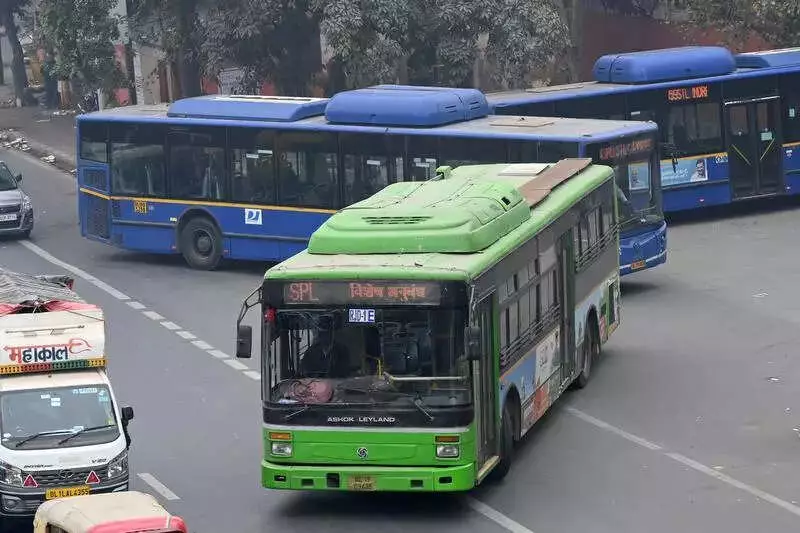
The city's bus fleet will see significant growth under this plan. Authorities target expanding the fleet to 14,000 buses by March 2029. This expansion will follow phased targets, beginning with 6,000 buses by December 2026.
Of these new buses, 500 will be smaller 7-metre models. These smaller buses are specifically intended to improve last-mile connectivity in dense residential and commercial areas where larger buses struggle to navigate.
Enhancing Metro Integration and Network
Integration of various transport modes with metro stations will receive immediate attention. A pilot project will integrate feeder buses, e-autos, bike taxis, and cabs with 10 major metro stations by the end of January.
Delhi Metro's extensive 395-kilometer network, which currently carries up to 7 million passengers daily, will undergo substantial expansion. The network will grow by 110 kilometers under Phase-IV development. An additional 96 kilometers will be added under Phases V-A and V-B.
In parallel, the National Capital Region Transport Corporation's Regional Rapid Transit System is planned to reach 323 kilometers across the National Capital Region within four years, according to the Chief Minister's office.
Accelerating Electric Vehicle Adoption
The new Electric Vehicle Policy 2.0 will focus on transitioning two-wheelers and commercial vehicles to electric mobility. The policy will utilize subsidies, scrappage incentives, and interest subvention schemes to encourage this shift.
To support the growing number of electric vehicles, public charging and battery-swapping infrastructure will be dramatically scaled up. The current network of 9,000 points will expand to 36,000 points across the city.
This comprehensive approach represents Delhi government's commitment to tackling air pollution through systematic, multi-pronged transportation reforms that address both immediate needs and long-term sustainability goals.






