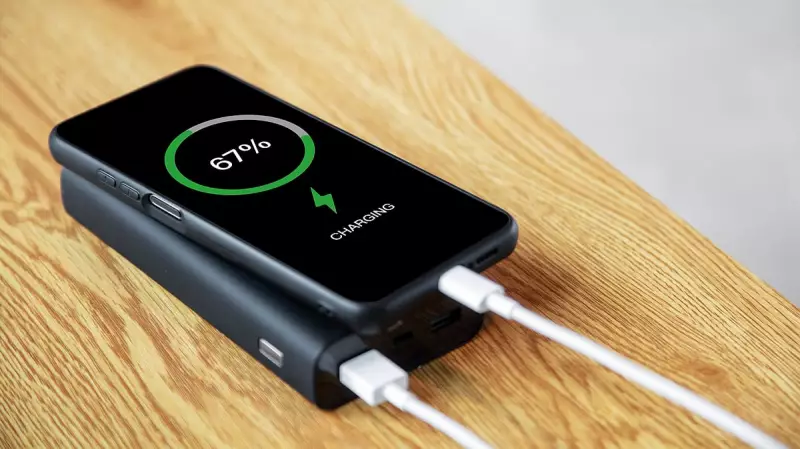
In a significant move to enhance aviation safety, India's Directorate General of Civil Aviation (DGCA) has issued stricter regulations concerning the use of portable chargers, commonly known as power banks, on aircraft. The new norms explicitly prohibit passengers from charging their power banks during a flight.
Why the New Ban on Charging?
The primary concern driving this regulatory change is the risk associated with lithium-ion batteries, which power most portable chargers. These batteries can overheat, catch fire, or even explode under certain conditions, a phenomenon known as thermal runaway. The confined environment of an aircraft cabin significantly amplifies the danger of such an incident.
DGCA highlighted a specific hazard: if a power bank is placed in an overhead bin or concealed within a carry-on bag and begins to malfunction while charging, it can delay the detection of smoke or flames. This delay can be critical, reducing the time available for crew and passengers to respond effectively to a potential fire emergency.
Key Details of the DGCA Directive
The aviation regulator announced these updated safety norms on 05 January 2026. While charging power banks mid-air is now forbidden, passengers are still permitted to carry them in their hand luggage. However, they must be carried in a manner that allows for easy identification and access, not buried deep inside bags.
The directive underscores that power banks must be carried in the cabin only; they are strictly prohibited in checked baggage. This is a longstanding rule because a fire in the cargo hold is far more difficult to detect and control than one in the passenger cabin.
Implications for Air Travelers
For the average flyer, this means a simple but important change in habit. Travelers must ensure their power banks and other electronic devices are fully charged before boarding a flight. They cannot use the USB ports or power outlets on the plane to recharge their portable batteries.
Airlines and cabin crew are expected to enforce this rule diligently. Passengers found attempting to charge a power bank may be instructed to disconnect immediately. The new norms aim to preemptively eliminate a growing safety risk as the use of electronic devices and their accompanying power banks continues to rise among passengers.
A Proactive Step for Safer Skies
This decision by the DGCA aligns with global best practices and growing concerns within the aviation industry about the risks posed by lithium batteries. It represents a proactive step to close a potential safety loophole before a serious incident occurs.
The move reinforces the principle that while convenience is important, it can never compromise the paramount importance of safety in air travel. Passengers are advised to stay informed about such regulations to ensure a smooth and secure journey for themselves and everyone on board.