

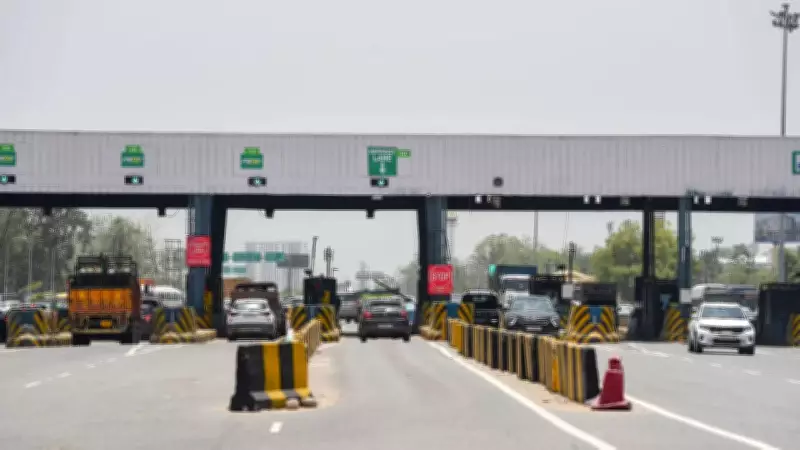
Government Implements Stricter Toll Collection Rules with Double Penalty for Unpaid FASTag Fees
NEW DELHI: The government has introduced significant amendments to the National Highways Fee Rules, establishing a structured recovery mechanism for unpaid user fees at barrier-less toll plazas. According to a recent notification, vehicle owners who fail to pay toll charges due to faulty FASTag or low balance will face double the applicable toll amount if payment is not made within 72 hours of receiving an electronic notice.
Key Changes in Toll Collection Enforcement
The amendments, which came into effect from Tuesday, aim to strengthen digital enforcement of toll collection and hold both users and tolling agencies accountable. An "unpaid user fee" is now defined as the toll applicable to a vehicle whose passage has been recorded by Electronic Toll Collection (ETC) infrastructure but where the fee has not been received.
As per the new norms, electronic notices (e-notices) will be issued to registered vehicle owners for unpaid fees. These notices will specify vehicle details, date and location of passage, and the amount payable. Notices will be sent through SMS, email, mobile applications, and will be available on a designated portal.

Penalty Structure and Compliance Incentives
The rules stipulate that the unpaid user fee payable in response to an e-notice will be twice the applicable toll amount. However, to encourage timely compliance, if the amount is paid within 72 hours of the e-notice issuance, only the original user fee will be payable without any additional charge.
This dual approach of penalty and incentive is designed to rein in users who might otherwise avoid paying toll charges at barrier-free plazas on the National Highway network.
Grievance Redressal and Agency Accountability
A provision for grievance redressal has also been incorporated into the amended rules. Any aggrieved vehicle owner or driver may submit a representation through the designated portal within 72 hours of e-notice issuance. Tolling agencies are required to examine and dispose of such complaints within five days.
If agencies fail to meet this five-day deadline, the claim for unpaid user fee will automatically lapse, ensuring accountability on the part of toll operators.
Integration with VAHAN Database and Enforcement Measures
The rules further provide for integration of the national electronic toll collection system with the VAHAN database. This integration will enable seamless identification of vehicles and enforcement of unpaid dues across the country.
In cases where unpaid user fees remain outstanding beyond 15 days and no representation is pending, the amount will be recorded in the VAHAN system. Appropriate restrictions may then be imposed on vehicle-related services until the dues are cleared, including restrictions on transfer and renewal of Registration Certificate (RC).
Background and Implementation
The Times of India first reported these changes on March 7, just ahead of the launch of barrier-less tolling on National Highways. The amendments represent a significant step toward creating a more robust and accountable digital toll collection system in India, particularly as barrier-free tolling becomes more prevalent across the highway network.
The government's notification emphasizes that these changes are necessary to address challenges in the evolving landscape of electronic toll collection and to ensure that both users and agencies fulfill their respective responsibilities in the toll payment ecosystem.






