

Delhi Urban Arts Commission Flags Critical Issues in Metro Station Promenade Proposal
In a significant development, the Delhi Urban Arts Commission (DUAC) has returned a proposal for a promenade and underground plaza linked to the upcoming Yuga Yugeen Bharat Museum metro station on Pandit Pant Marg, demanding substantial revisions due to multiple design and planning flaws. The proposal, submitted by the Central Public Works Department (CPWD), was examined at the formal stage, where the commission acknowledged the overall intent and praised the underground plaza as well-conceived but highlighted that the promenade design necessitates major changes.
Safety and Usability Concerns Lead to Travelator Removal Recommendation
One of the primary concerns raised by DUAC involves the provision of two travelators along the nearly 100-metre-long passage. Each travelator, proposed on either side for ingress and egress, would be accompanied by continuous railings. The commission observed that this arrangement could pose safety risks, be challenging to maintain, and limit effectiveness. Consequently, DUAC recommended removing both travelators to ensure an unobstructed pedestrian pathway, emphasizing the need for a safer and more efficient design.
Design Interventions Proposed to Enhance Pedestrian Experience
The commission also scrutinized the experience of using the long ramp, approximately 92 metres in length and intended primarily for pedestrian movement. Noting that the continuous stretch may affect usability, DUAC suggested introducing design interventions to break the monotony. These include providing intermediate landings or level bands every 5 to 10 metres. Such spaces could serve as resting points, informal seating areas, or activity zones, thereby improving both comfort and functionality for users.

Sustainability and Accessibility Features Under Scrutiny
On the sustainability front, DUAC drew attention to the proposed shading device, which is discontinuous and partially open to the sky. The commission advised exploring the integration of solar panels within a space-frame system. This approach would offer more effective protection from direct sunlight and generate renewable energy for lighting common areas, aligning with environmental goals.
Pedestrian circulation and crowd management formed another critical part of the commission's observations. Given the expected high footfall, particularly from tourists visiting the Central Vista area, DUAC recommended clearly demarcating ingress and egress zones within the passage. Such longitudinal separation would help streamline movement, reduce conflicts, and enhance overall safety.
Additionally, the commission stressed compliance with universal accessibility norms under the Unified Building Bye-Laws for Delhi, 2016. It insisted on incorporating features such as tactile pathways and handrails to ensure barrier-free movement for all individuals.
Vertical Connectivity and Service Elements Require Reconfiguration
Regarding vertical connectivity, the current plan provides one passenger lift on each side of the promenade. DUAC suggested reconfiguring this arrangement by clustering larger-capacity lifts on one side to improve efficiency. The opposite side could accommodate a staircase designed as per applicable norms, supporting smoother movement and maintaining visual balance.
Furthermore, the commission directed that all service elements, including plumbing lines, rainwater pipes, air-conditioning units, water tanks, and solar panels, be properly concealed in accordance with its project assessment criteria. It also emphasized that sustainability features must align with its prescribed guidelines to ensure a cohesive and environmentally friendly design.
Heritage Considerations Add Layer of Scrutiny
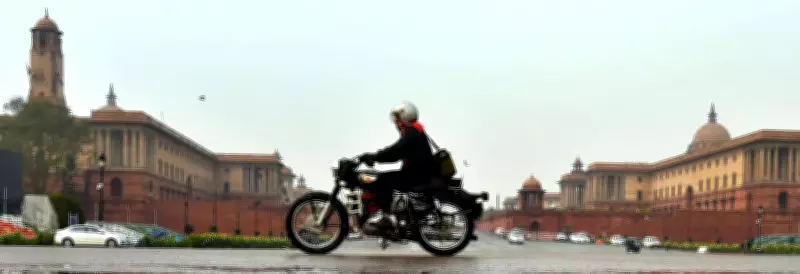
The location of the project adds another layer of scrutiny, as the site falls within the Central Vista precinct. Here, the North Block and South Block are notified as Grade I heritage structures under a 2009 gazette notification issued by the Delhi government. Any new intervention in the area is subject to careful evaluation in terms of design, scale, and impact, necessitating a sensitive approach to preserve the historical context.

Proposal Status and Next Steps
Following its review and discussions with the project architect, the commission concluded that the proposal requires significant improvement. It has asked for a point-by-point response addressing all observations before it can be reconsidered. Currently, the proposal stands as not approved, with observations issued for compliance, highlighting the need for thorough revisions to meet DUAC's standards.





