

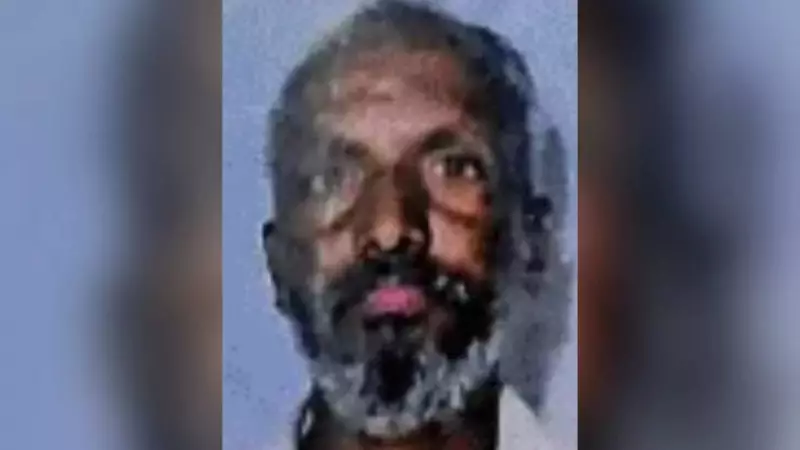
In a bizarre case from Karnataka's Belagavi district, a sugarcane farmer is locked in a desperate struggle against government records to prove a fundamental truth: he is alive. Irappa Nagappa Abbai, 53, was shocked to learn he had been officially deceased for nearly five years, a clerical error that has stripped him of access to vital government welfare schemes.
The Shocking Discovery
The surreal situation came to light in 2025 when Irappa, a small landholder from Sutagatti village in Savadatti taluk, visited the Murgod office. His purpose was routine: to collect necessary documents to apply for the government's drip irrigation subsidy under the minor irrigation department. A successful application could have fetched him financial support of up to Rs 3 lakh.
Instead, he was met with an impossible barrier. Official records unequivocally stated that Irappa Abbai "died" on July 8, 2021. The record showed he had passed away alongside his son, rendering him ineligible for any government aid. "I'm alive, not dead," became his simple, dire plea to unheeding bureaucrats.

A Costly Administrative Error
An inquiry into the mistake traced its origin to the local village accountant. Savadatti Tahsildar Mallikarjun Heggannavar explained that while issuing the death certificate for Irappa's son, who did pass away in 2021, the accountant mistakenly recorded the father as deceased as well. This error was then uploaded to the government database, where it remained unchallenged for years.
"After Irappa approached me, I accepted his application and initiated the process for rectification," stated Tahsildar Heggannavar. He confirmed that a report was sent to the district statistical office in Belagavi and forwarded to Bengaluru. However, officials informed the farmer that such corrections require a formal procedure and cannot be done instantly at the local level.
The Human Toll of a Paperwork Mistake
For Irappa, this error is far from a mere administrative glitch. It has had severe real-world consequences. For the past five months, he has been making exhausting trips, each lasting about one and a half hours, between the Murgod Nada Kacheri and the Savadatti tahsildar's office. Each journey is filled with anxiety as he tries to present his case—in flesh and blood—that he is very much alive.
"This mistake cost me nearly 6 months," lamented Irappa. "I wanted to apply for the drip irrigation scheme for my farm, but because I was declared dead on paper, everything came to a halt." The error has deprived him of potential welfare benefits for months, affecting his livelihood and farming plans.
The tahsildar has assured that a notice has been issued to the responsible village accountant and a departmental inquiry ordered. "If negligence is proved, appropriate action (against the worker) will be initiated," Heggannavar told TOI. He added that the correction process is underway and may take about 20 days.
This case underscores the profound impact bureaucratic errors can have on citizens' lives, turning a simple quest for a farming subsidy into a Kafkaesque battle for existence in the eyes of the state.






