

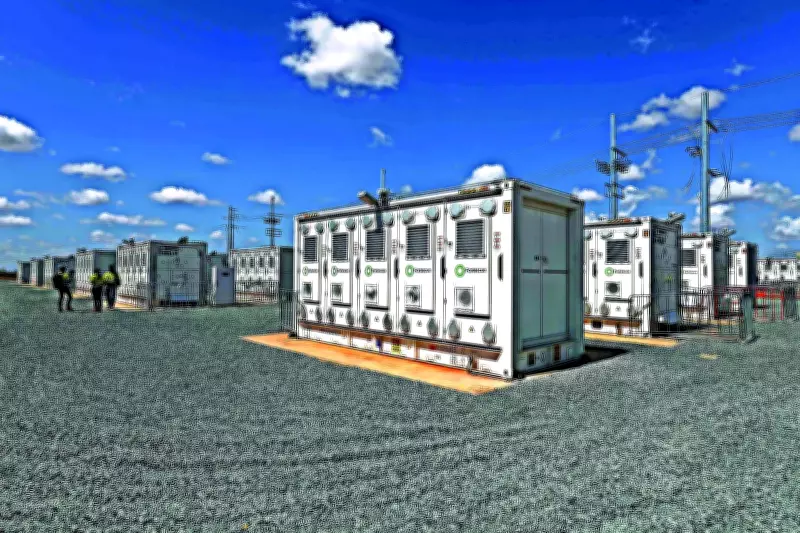
The Gujarat Electricity Regulatory Commission (GERC) has released draft regulations for grid-interactive Battery Energy Storage Systems (BESS), formally recognizing battery storage as generation-linked, transmission-linked, distribution-linked and standalone grid assets.
Key Provisions of the Draft Framework
The draft framework allows standalone BESS developers to independently participate in energy markets, ancillary services and bilateral contracts. It also permits multiple business models, including renewable energy-linked storage, standalone storage projects, transmission and distribution-level battery systems, EV-linked storage infrastructure and consumer or prosumer-owned battery systems.
GERC stated that the regulations aim to improve grid flexibility, reliability, stability and renewable energy integration while addressing intermittency challenges associated with renewable energy sources. The draft specifies that battery storage systems would primarily be procured through competitive bidding.

Applications of BESS
Under the proposed regulations, BESS may be deployed for congestion management, peak demand management, renewable energy balancing, reserve support, voltage regulation, frequency support and energy arbitrage.
Expert Insights
Jaideep Malaviya, a solar energy consultant, said, “Some state utilities experience peak excess power. If solar installations continue at this pace, evacuation and storage of power will become extremely important. BESS help store surplus power and deploy it during shortages.”
He added, “The regulations formally recognize battery storage as a controllable and dispatchable grid resource capable of both injection and drawal of electricity. With such recognition, BESS projects will get a major boost.”
Multi-Use and Alternative to Network Augmentation
The draft also allows multi-use battery systems supporting multiple grid functions simultaneously and permits transmission and distribution licensees to evaluate battery storage as an alternative to conventional network augmentation.
Role of State Load Despatch Centre
The State Load Despatch Centre (SLDC) will oversee scheduling, dispatch and control of all grid-connected BESS projects. The framework also formally recognises battery systems installed under net metering, gross metering and related consumer arrangements.






