

Gurgaon GMDA Reinstitutes Bids for Emergency Call Points to Strengthen City Policing
In a renewed effort to bolster urban security, the Gurugram Metropolitan Development Authority (GMDA) has reinvited bids for the installation of emergency call points (ECPs) at public locations across the city. This initiative follows an unsuccessful initial tender floated in October last year, which received no bids and was subsequently canceled in February. The project is designed to significantly enhance city policing and surveillance capabilities.
Project Details and Implementation Timeline
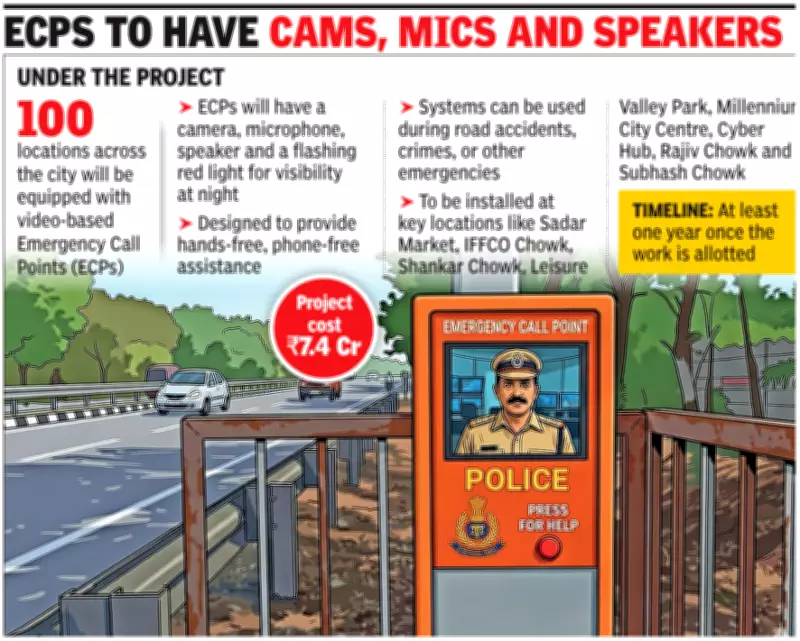
Under this ambitious scheme, approximately 100 high-footfall public areas will be equipped with advanced video-based emergency call systems. These units will enable citizens to establish direct communication with the nearest police control room simply by pressing a button. The system is particularly valuable during critical situations such as road accidents, criminal activities, or other emergencies, offering immediate assistance even to individuals without access to a mobile phone.
The project carries an estimated cost of around Rs 7.4 crore and is projected to require at least one year for completion once the work contract is awarded. Implementation will be carried out in close coordination with Gurgaon city police authorities, reflecting a collaborative approach to urban safety enhancement.

Strategic Locations and Technical Specifications
Officials have identified numerous key locations for ECP installation, including prominent areas that experience substantial public movement. These sites encompass Sadar market, Government Girls School Jacobpura, Khandsa Mandi, IFFCO Chowk, Shankar Chowk, Aggarwal Dharamshala, Leisure Valley Park, Millennium City Centre, Cyber Hub, Vyapar Kendra, Rajiv Chowk, and Subhash Chowk, among others.
Each emergency call point unit will be outfitted with comprehensive technological components:
- High-resolution CCTV camera for real-time visual assessment
- Microphone and speaker system for clear audio communication
- Prominent flashing red light for enhanced nighttime visibility
- Emergency button for immediate activation
Operational Mechanism and Integration
A senior GMDA official elaborated on the system's functionality: "When a user presses the emergency button, it establishes instant connection with the nearest police control centre. This activation simultaneously triggers the CCTV camera for live visual assessment and alerts patrolling vehicles for rapid on-ground response. The entire system is engineered to cultivate a safer urban environment, particularly in sensitive and crowded zones."
Each ECP will be seamlessly integrated with the city's Integrated Command and Control Centre and linked directly to respective police stations. This integration enables continuous 24/7 real-time monitoring and facilitates faster coordination between field units and control rooms, creating a more responsive security ecosystem.
Complementary Surveillance Infrastructure Upgrades
In parallel with the emergency call point initiative, GMDA will establish comprehensive CCTV monitoring facilities at 28 police stations that were not covered during phases 1 and 2 of the city's surveillance network expansion. These stations will receive modern equipment including:
- Large LED display screens for monitoring surveillance feeds
- Dedicated workstations for operational management
- Uninterruptible power supply (UPS) backup systems
- Structured cabling infrastructure
- Ergonomic furniture and air-conditioning systems
This upgraded infrastructure will empower police officers to effectively monitor surveillance feeds and manage traffic within their jurisdictional areas. Furthermore, the system will provide police authorities with the capability to access feeds from other CCTV cameras across the city as required, significantly improving situational awareness during emergencies and law-and-order situations.

Cybersecurity Measures and Network Protection
The upgraded surveillance infrastructure will incorporate robust cybersecurity protocols to safeguard the network against potential digital threats. These protective measures include Distributed Denial of Service (DDoS) protection mechanisms and web application firewall implementation, ensuring the integrity and security of the entire monitoring ecosystem.
This comprehensive approach to urban safety represents a significant step forward in Gurgaon's ongoing efforts to create a more secure and responsive urban environment through technological innovation and strategic infrastructure development.





