

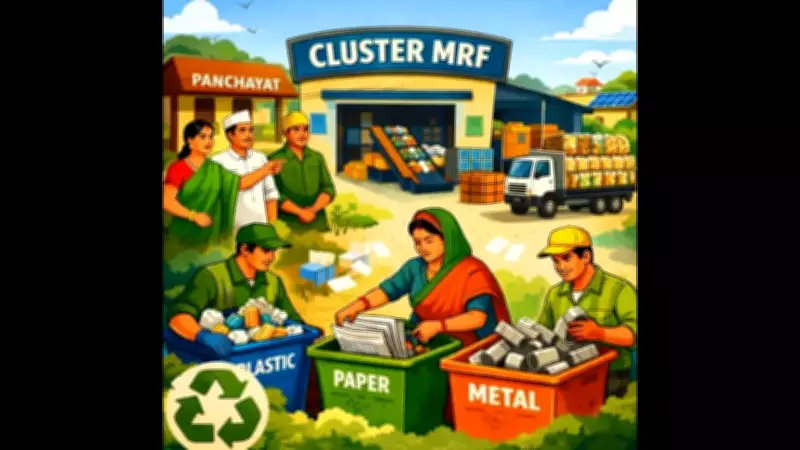
Goa Government Mandates Cluster-Based Waste Recovery Solutions for Panchayats
The Goa state government has issued a directive to village panchayats, urging them to explore cluster-based material recovery facilities (MRFs) as an alternative solution for dry waste disposal. This move comes in response to challenges faced by some panchayats in identifying suitable land within their jurisdictions for establishing individual waste management units.
Comprehensive Reporting Required from Block Development Officers
Government authorities have instructed all block development officers (BDOs) to submit detailed reports concerning both operational and non-operational MRFs across the state. This initiative aims to make all existing units fully functional while simultaneously strengthening decentralized waste management systems throughout Goa's 191 village panchayats.
Director of Panchayats Mahadev Araundekar has specifically requested these reports from BDOs, emphasizing the need for clear justifications regarding MRFs that currently operate on a temporary basis or remain non-functional. "In cases where panchayats have temporary MRFs, have not constructed permanent facilities, or had MRFs under construction during previous inspections, BDOs may propose follow-up joint re-inspections," Araundekar explained.

Joint Inspections and Land Identification Procedures
The director further elaborated that these joint inspections would be conducted in collaboration with officials from the Goa State Pollution Control Board (GSPCB). "A joint proposal will be sent by the directorate of panchayats for all talukas to be forwarded to GSPCB for necessary action," he stated.
For panchayats lacking permanent MRFs, BDOs have been directed to work closely with panchayat secretaries to identify appropriate land parcels and shortlist multiple site options. "Once prospective sites are identified, the details must be officially conveyed to district magistrates (collectors)," Araundekar emphasized, adding that "the cluster approach may also be explored by BDOs."
Regulatory Oversight and Documentation Requirements
Araundekar clarified that GSPCB, as the regulatory authority, will continue conducting regular inspections and directing corrective measures wherever necessary. Meanwhile, BDOs have highlighted that panchayats must submit proper land ownership documents when applying for authorization to establish MRFs.
However, officials noted that in numerous instances, MRFs have already been established based on irrevocable no objection certificates (NOCs) from landowners, with construction funding provided either by the state government or the panchayats themselves. The director has urged GSPCB to consider such NOCs as valid proof of land possession, pointing out that once government funds are utilized for construction, the land effectively vests with the government according to established provisions.
Strategic Approach to Waste Management Infrastructure
This comprehensive strategy represents a significant step toward addressing Goa's waste management challenges through:
- Enhanced coordination between panchayats and regulatory bodies
- Systematic reporting on existing MRF infrastructure
- Flexible solutions including cluster-based approaches where individual land parcels are unavailable
- Streamlined documentation processes for land authorization
The initiative aims to ensure that all 191 village panchayats in Goa eventually have access to functional, permanent material recovery facilities, thereby improving waste processing capabilities across the state while promoting environmental sustainability through decentralized management systems.






