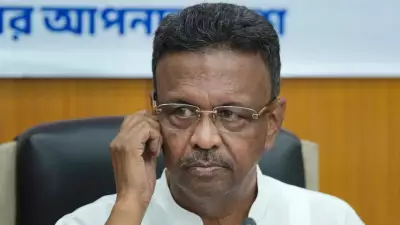
Punjab Governor Issues Stern Warning Over Buddha Dariya Project Delays
Punjab Governor Gulab Chand Kataria expressed strong displeasure over what he termed "never-ending deadlines" during his visit to Ludhiana on Saturday, pulling up administrative officials for the lack of progress in the critical Buddha Dariya rejuvenation project.
Non-Functional Treatment Plants and Broken Promises
The governor highlighted that the effluent treatment plant (ETP) at the Tajpur Road dairy complex remains completely non-functional, mirroring the same poor condition he observed during his inspection visit last year. His frustration peaked particularly over the proposed bio-CNG plant at Tajpur Road, noting that in every review meeting, officials offer the same assurance that a plant is coming to solve the cow dung crisis, yet no ground progress is visible whatsoever.
Kataria issued a stern ultimatum to authorities: if dairy farmers continue to refuse compliance with environmental instructions, officials must move decisively to close the farms and even confiscate the cattle. This strong stance reflects the governor's growing impatience with the project's stagnation.

Site Inspection and Technical Recommendations
The day began with a comprehensive site inspection at Sangat Ghat on Tajpur Road, where governor Kataria, accompanied by Rajya Sabha MP Balbir Singh Seechewal, mayor Inderjit Kaur, and MC commissioner Neeru Katyal Gupta, took a boat ride to personally assess the water quality. The Ghat was notably established under the Kar Sewa initiative led by environmentalist MP Seechewal.
Later, at a high-level meeting at Punjab Agricultural University (PAU), MP Seechewal proposed specific technical solutions including:
- Laying a separate 4.5-kilometer pipeline to ensure treated water does not enter the drain until after Gurudwara Gaughat
- Proper demarcation of the Dariya's banks with clear boundaries
- Immediate removal of all encroachments along the water body
Governor's Directives and Historical Context
While governor Kataria acknowledged that some minimal progress is visible in certain areas, he directed multiple agencies including the sewerage board, soil conservation department, and Punjab Pollution Control Board (PPCB) to "tighten the noose" on industrial and dairy violators. Citing the Dariya's significant historical and religious importance to the region, he pledged to continue monitoring the project regularly and made a heartfelt appeal to citizens for their support in saving this vital water body.
Officials Admit Grim Reality of Pollution
Officials currently admit that approximately 50% of the cow dung generated at the Tajpur Road complex is still being discharged directly into the drain without any treatment. The governor also criticized the Punjab Pollution Control Board for inadequate monitoring practices, stating emphatically that the board should maintain comprehensive data on total dissolved solids (TDS) levels for every kilometer of the drain to accurately track pollution patterns and identify specific problem areas.
This public admonishment represents a significant escalation in pressure on local authorities to deliver tangible results in the long-stalled environmental restoration project that has frustrated both officials and citizens alike with its continuous delays and unfulfilled promises.