MCG Establishes Area Sabhas Across All Gurgaon Wards to Boost Citizen Involvement
In a significant move to strengthen grassroots democracy, the Municipal Corporation of Gurgaon (MCG) has officially constituted area sabhas in every municipal ward across the city. This initiative aims to enhance citizen participation in urban governance and ensure development projects truly reflect local community needs.
Legal Framework and Implementation
According to an order issued by MCG Commissioner Pradeep Dahiya on Wednesday, these area sabhas will function as advisory platforms within their respective jurisdictions. The establishment complies with the Haryana Municipal Citizens' Participation Act of 2008, which mandates such participatory mechanisms in urban local bodies.
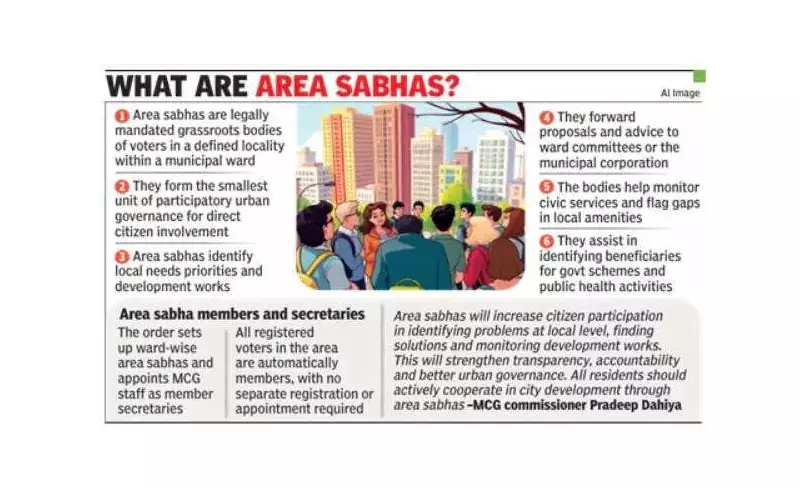
The area sabhas will forward proposals concerning development schemes to either the ward committee or directly to the municipal corporation for inclusion in official urban plans. This creates a formal channel for residents' voices to be heard in municipal decision-making processes.

Membership and Structure
An innovative aspect of this initiative is the automatic membership provision. If you are a registered voter in Gurgaon and your name appears on the electoral roll of a polling booth within an area sabha's jurisdiction, you automatically become a member of that area sabha. There is no separate registration, nomination, or selection process required for ordinary membership.
Membership is conferred by virtue of being a voter rather than through appointment, making this one of the most inclusive governance structures at the municipal level. MCG staffers have been appointed as member secretaries for each area sabha to facilitate administrative functions.
Functions and Responsibilities
Area sabhas represent legally mandated grassroots bodies comprising voters from defined localities or polling booth areas within municipal wards. They function as the smallest unit of participatory governance, enabling residents to directly engage with municipal authorities in multiple aspects of urban management.
The key responsibilities of area sabhas include:
- Suggesting locations for civic infrastructure such as streetlights, roads, community water taps, public wells, and sanitation facilities
- Identifying deficiencies in existing civic amenities and proposing corrective measures
- Identifying eligible beneficiaries for government welfare schemes
- Preparing priority-wise lists of beneficiaries in accordance with government criteria
- Recommending beneficiaries for official approval
Public Health and Community Mobilization
The order specifically outlines public health responsibilities as a crucial component of the area sabhas' mandate. These bodies will assist public health centers, particularly in disease prevention and family welfare activities. They will also help report outbreaks of epidemics and incidents related to natural disasters, creating an early warning system at the community level.
Additionally, area sabhas will mobilize voluntary labor and contributions in cash or kind for development programs. They will supervise municipal works through volunteer teams and support MCG efforts in tax mapping and creating public awareness about the payment of municipal taxes and user charges.
Official Perspectives on the Initiative
MCG Commissioner Pradeep Dahiya emphasized the transformative potential of this initiative, stating, "Area sabhas will increase citizen participation in identifying problems at the local level, finding solutions, and monitoring development works. This will strengthen transparency, accountability, and better urban governance. All residents should actively cooperate in city development through area sabhas."
An MCG official further elaborated that the move aims at "decentralizing decision-making, improving transparency, and ensuring that development initiatives reflect the needs and priorities of local communities."

Community Response and Implementation Challenges
Councillor of Ward Number 4, Pardeep Kumar Padam, welcomed the initiative, noting, "Area sabhas are mandatory for public participation in a civic body. For example, if sanitation staff are working in an area, participation of residents in supervising their work will ensure that the staff is doing their work efficiently. It would increase transparency."
However, the implementation faces a structural challenge: ward committees, which are supposed to coordinate with area sabhas, have not been formed even after ten months of the civic body polls. This gap in the governance structure could potentially affect the smooth functioning of the newly established area sabhas.
The establishment of area sabhas across Gurgaon represents a significant step toward more inclusive and responsive urban governance, potentially creating a model for other Indian cities to follow in enhancing citizen participation at the grassroots level.