Visakhapatnam Municipal Corporation Expands Administrative Zones for Enhanced Governance
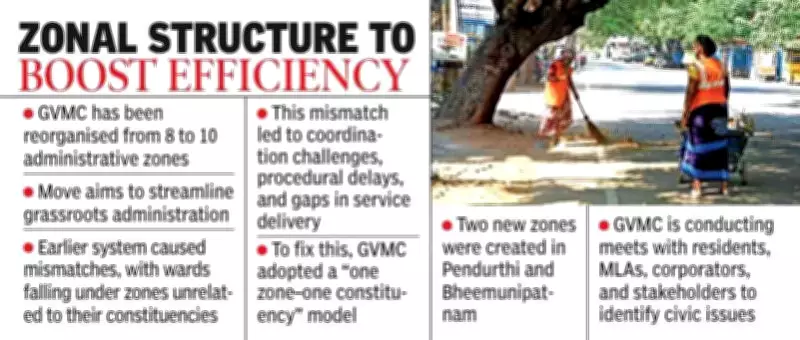
The Greater Visakhapatnam Municipal Corporation (GVMC) has initiated a significant administrative overhaul, expanding from eight to ten administrative zones. This strategic restructuring is designed to streamline grassroots administration and align municipal governance more closely with Assembly constituencies, marking a pivotal shift in urban management for the coastal city.
Addressing Longstanding Administrative Challenges
The previous eight-zone system frequently created administrative mismatches, with wards falling under zones that were unrelated to their respective constituencies. This structural flaw led to persistent coordination challenges, procedural delays, and significant gaps in essential service delivery. For instance, wards within the Visakhapatnam East and North constituencies were administered under different zones, necessitating cumbersome cross-constituency coordination even for routine municipal decisions.
To rectify these systemic inefficiencies, GVMC has adopted an innovative "one zone–one constituency" model. This approach has resulted in the creation of two new administrative zones in Pendurthi and Bheemunipatnam, ensuring that each zone corresponds directly with a single Assembly constituency for more coherent governance.

Comprehensive Consultative Process Underway
As part of an extensive zone-wise review process, GVMC has been conducting detailed consultative meetings with residents, MLAs, corporators, and various stakeholders. These sessions aim to identify pressing civic issues, infrastructure gaps, and priority requirements across different areas of the city. Consultations in the remaining zones are expected to conclude shortly, with draft zonal development plans likely to be finalized within three months to guide future urban planning and investment strategies.
Specific Concerns Raised During Zone Reviews
During the East Zone review meeting, local representatives highlighted numerous critical concerns that require immediate attention. These included inadequate underground drainage connections, persistent drinking water shortages, and the urgent need to prevent pipeline contamination at drainage crossings. Additional issues flagged were insufficient street lighting, poor road and drain conditions, absence of retaining walls in hilly areas, and silted major drains. Representatives also reported significant shortages of sanitation staff and garbage collection vehicles, hampering effective waste management.
At the Anakapalli Zone review meeting, participants raised the pressing issue of severe traffic congestion between Anakapalli and Visakhapatnam, calling for urgent road widening measures. Other concerns highlighted included inadequate sanitation services, poor drainage systems, drinking water shortages, and the necessity to upgrade the existing sewage treatment plant. Development proposals also covered the establishment of a satellite township, implementation of beautification initiatives, construction of a commercial complex, stadium upgrades, and creation of a garbage transfer station alongside designated vending zones.
Commissioner's Vision for Streamlined Governance
GVMC Commissioner Ketan Garg emphasized that the zone-wise conferences are being conducted to streamline planning and governance following the comprehensive administrative reorganisation. "These day-long meetings are structured into hourly thematic sessions covering critical sectors such as development works, street lighting, water supply, sanitation, revenue collection, town planning, and infrastructure," he explained in detail.
Commissioner Garg added that elected representatives and stakeholders are actively participating to provide valuable inputs and suggestions. The primary objective remains to prepare comprehensive zonal development plans within three months. Based on these meticulously crafted plans, municipal priorities and future developmental activities will be finalized and implemented systematically.
Garg further emphasized that the new zonal structure is specifically designed to strengthen administrative efficiency and ensure decentralized development across the entire city. This approach promises more responsive governance and targeted infrastructure improvements that address local needs effectively.