Haryana's Groundwater Crisis Escalates to Emergency Levels
The state of Haryana is confronting a dire water emergency, with its precious aquifers now in a state of severe peril. Official data reveals a staggering reality: nearly 64% of the state's administrative blocks are officially classified as overexploited. This classification means that groundwater extraction is occurring at a rate that far surpasses the natural recharge capacity of these vital underground reservoirs. The implications are profound, threatening not only the agricultural backbone of the state but also the security of drinking water supplies and overall economic stability.
The Root Causes: Policy Choices and Cropping Patterns
This crisis is not a sudden or unforeseen failure. Rather, it represents the cumulative outcome of decades of policy decisions that have systematically rewarded the extraction of groundwater while neglecting its conservation. At the very heart of this problem lies the state's dominant cropping pattern. The widespread cultivation of paddy, actively promoted through assured government procurement and the provision of free or heavily subsidised electricity for irrigation, has locked farmers into a deeply water-intensive agricultural cycle. This is particularly unsustainable in Haryana's semi-arid climatic conditions.
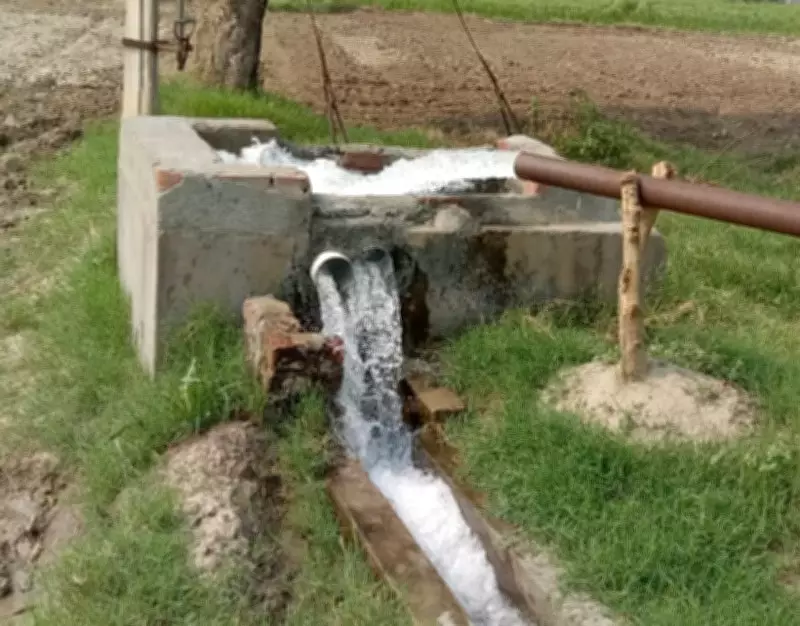
The consequence has been a dramatic shift in irrigation sources. Tubewells have largely replaced traditional canal systems as the primary means of watering crops. This unchecked reliance on groundwater pumping has pushed aquifer levels far beyond their natural recovery points. In several critical districts, reports indicate that groundwater withdrawal has reached alarming rates, exceeding 130% of the annual recharge. This level of over-extraction is a clear guarantee of future water scarcity and agricultural distress.

The Silent, Gradual Nature of the Crisis
What makes the groundwater depletion in Haryana especially alarming is its silent and insidious nature. Unlike dramatic environmental events such as floods or droughts, falling water tables do not command immediate political attention or public outcry. The costs and consequences emerge gradually over time. These include the need for farmers to drill ever-deeper and more expensive borewells, a corresponding increase in energy consumption for pumping, the intrusion of saline water into freshwater aquifers, and the eventual collapse of farm viability and rural drinking water systems. The risk is not confined to rural areas; urban centres are also becoming increasingly dependent on these overdrawn aquifers, spreading the crisis beyond the agricultural sector.
Inadequate Policy Responses and the Path Forward
Policy responses to date have been disproportionately focused on supply-side solutions. Initiatives have largely centred on constructing recharge structures, ponds, and check dams. While these are important, they fail to address the core issue of unsustainable demand. A fundamental policy correction is urgently required. This must include:
- Crop Diversification: Actively incentivising a shift away from water-intensive paddy to less thirsty crops.
- Rational Resource Pricing: Implementing rational pricing for electricity used in irrigation to discourage wasteful extraction.
- Micro-Irrigation Promotion: Expanding incentives for adopting drip and sprinkler irrigation systems.
- Enforceable Regulation: Establishing and strictly enforcing groundwater extraction regulations.
Equally critical is the move towards decentralised water governance. Groundwater is an inherently local resource, and its effective management requires active community participation, transparent data sharing, and clear accountability at the district level. Without empowering local panchayats and user groups to monitor and regulate extraction, state-level conservation targets will remain largely cosmetic and ineffective.
The window for meaningful corrective action is rapidly narrowing. Unless water is treated and managed as the finite ecological asset it truly is, today's rampant overexploitation will inevitably translate into tomorrow's devastating water drought. The time for decisive policy intervention in Haryana is now.