

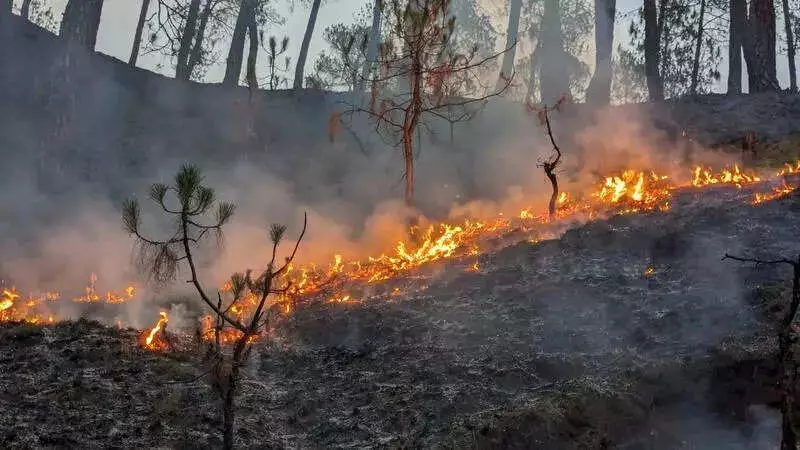
The Uttarakhand High Court has raised serious concerns over the state forest department's recent approach, which is reportedly undermining the century-old community-led forest management system. This shift, experts warn, is crippling the frontline defence against the state's devastating annual forest fires.
Court Takes Note of Damaging Shift in Forest Governance
A bench led by Chief Justice G Narendar has taken official note of a report submitted by amicus curiae Dushyant Mainali. The report states a critical change: since 2023, the forest department has steadily moved away from a trust-based, participatory model of managing van panchayats. This move is weakening community ownership of forests, which is vital for their protection.
The court was hearing a matter on the recurring menace of forest fires. It has directed the state government to file its response to the suggestions made by environmental expert Ajay Rawat, who contributed to the report. The case will be heard again after the court's winter break.

Rule Changes Without Consultation Raise Red Flags
Ajay Rawat's input highlights severe governance issues. He pointed out that on March 16, 2024, the state government amended 15 provisions of the Panchayati Forest Rules, 2024, without any public consultation. "There is no evidence of stakeholder consultation during 2023-24, despite forest panchayats being constitutionally-recognised community institutions," Rawat stated.
The report warns that excluding local communities from decision-making erodes their sense of ownership. It stresses that forest protection, including fire prevention, cannot be enforced through top-down, command-and-control approaches in Uttarakhand's remote hill areas. Empowering van panchayats could address the prevailing mistrust towards the forest department.
Van Panchayats: A Neglected Fire-Fighting Army
Rawat emphasised that van panchayats, established during the colonial era, are among India's earliest examples of community forest management. He believes they have the potential to transform fire-fighting into a mass movement in Uttarakhand. However, no serious effort has been made in this direction, as these institutions remain under the dual and often stifling control of the revenue and forest departments.
The significance of these bodies is enormous. Uttarakhand's van panchayats form the state's largest community-based ecological governance system, managing forests critical to the livelihoods of around 10 lakh rural households (Census 2011). A 2018 study estimated these forests generate ecosystem services worth over Rs 95,000 crore annually. Their strategic location, contiguous with reserved forests, means they can play a crucial role in preventing fires from spreading across larger landscapes.
Other Factors Fueling the Flames
The report also identified other key contributors to the fire risk:
- Tourism & Bonfires: Nearly 70% of hotels and resorts in and around forest areas organise bonfires and campfires year-round. Rawat questioned how the large logs used for these fires escape scrutiny, especially since most establishments are located above 1,000 metres where tree felling is prohibited post-Chipko movement Supreme Court orders.
- Staffing Crisis: Range officers, once the backbone of the department spending 20-25 days a month in the field, are now largely desk-bound due to increased administrative duties, spending only 3-4 days on fieldwork. This demoralises frontline staff like foresters and guards.
- Reckless Picnickers: People burning pine needles and dry bushes for amusement heighten risks. The report suggests the department needs innovative community engagement, citing a positive example where a range officer in Okhalkanda block, Nainital, organised a volleyball tournament to mobilise village youth before the fire season.
The Uttarakhand High Court's intervention underscores a pivotal moment for the state's forest governance. The state's response will determine whether it reverts to a collaborative model or continues a path that experts say leaves its forests dangerously vulnerable.






