

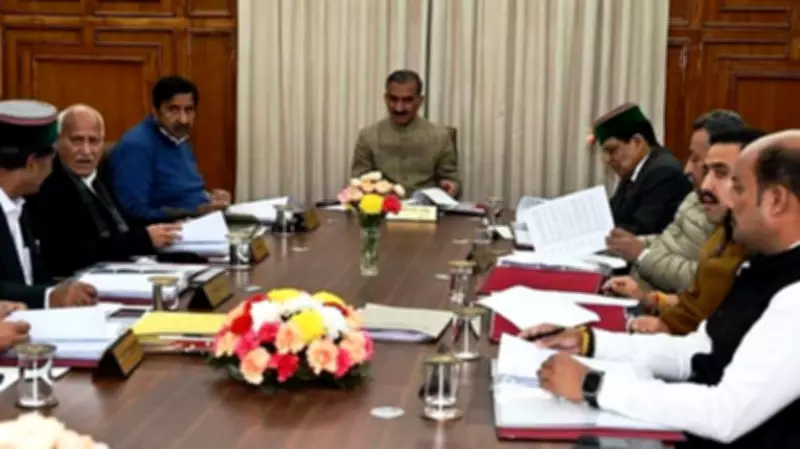
Himachal Pradesh Cabinet Approves Key Social Welfare and Infrastructure Measures
The Himachal Pradesh state cabinet, under the leadership of Chief Minister Sukhvinder Singh Sukhu, has taken two significant decisions aimed at enhancing social welfare and improving regional connectivity. These approvals, announced on March 7, 2026, reflect the government's commitment to addressing critical issues affecting vulnerable populations while boosting transportation infrastructure in the hill state.
Expanded Definition of Destitution for Abandoned Women
In a landmark move for social justice, the cabinet has formally approved a new classification that recognizes women who have been abandoned by their husbands and lack any independent source of income as destitute. This decision is expected to have far-reaching implications for access to government aid and support programs.
The revised definition aims to provide a legal and administrative framework to identify and assist women facing extreme financial hardship due to marital abandonment. Previously, such women might not have qualified for certain welfare schemes due to ambiguous criteria. With this change, they will now be eligible for various state-sponsored benefits, including financial assistance, housing support, and healthcare services designed specifically for destitute individuals.

This policy shift addresses a pressing social issue in the region, where economic dependency and traditional family structures can leave abandoned women without recourse. By officially categorizing them as destitute, the government seeks to streamline the process of delivering essential aid and ensuring their basic needs are met.
Major Enhancement of Heli-Taxi Services on Chandigarh-Shimla Route
In a parallel development focused on infrastructure, the cabinet has sanctioned a substantial increase in heli-taxi services operating between Chandigarh and Shimla. The frequency of flights has been significantly boosted from just three sorties per week to an impressive twelve sorties weekly.
This expansion translates to flights being operated twice daily for six days each week, providing much-improved connectivity for residents, tourists, and business travelers. The Chandigarh-Shimla-Chandigarh route is a vital corridor in the region, and the enhanced service is expected to reduce travel time, alleviate road congestion, and promote tourism and economic activity.
The decision to ramp up heli-taxi operations underscores the government's focus on leveraging aerial mobility to overcome the geographical challenges posed by Himachal's mountainous terrain. Improved air connectivity can facilitate faster medical evacuations, boost the local economy by attracting more visitors, and offer a reliable alternative to often treacherous road journeys, especially during harsh weather conditions.
Implications and Future Outlook
These cabinet decisions collectively highlight a dual approach to governance: one that prioritizes social welfare for marginalized groups while simultaneously investing in modern infrastructure to drive regional development. The destitution classification for abandoned women is a progressive step toward gender-sensitive policymaking, potentially setting a precedent for other states to follow.
Meanwhile, the heli-taxi enhancement aligns with broader efforts to make Himachal Pradesh more accessible and connected. As the state continues to balance preservation of its natural beauty with the demands of growth, such initiatives are crucial for sustainable progress. The cabinet's actions, as reported by PTI, mark a forward-looking agenda aimed at fostering inclusivity and connectivity in the Himalayan region.






