

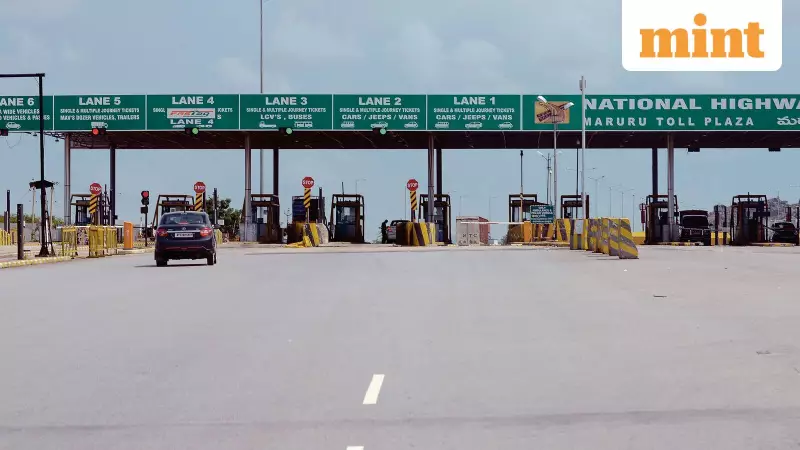
India's Highway Toll Reforms Create Smoother Travel Experience
The rapid expansion of India's national highway network has brought unprecedented connectivity across the country. This growth, however, created significant challenges at traditional toll plazas. Long queues and frustrating delays became common complaints among travelers. Recognizing this problem, the Ministry of Road Transport and Highways (MoRTH) and the National Highways Authority of India (NHAI) implemented comprehensive reforms throughout 2025.
Addressing Traffic Growth Through Digital Transformation
India's national highway network has expanded dramatically, growing approximately 61% from 91,287 kilometers in 2014 to 1,46,560 kilometers today. This expansion naturally increased traffic volumes, putting tremendous pressure on conventional toll collection systems. Before 2021, manual cash payments caused frequent lane congestion, disputes, and unnecessary halts that wasted both time and fuel.
The government responded by shifting from physical, stop-and-pay models to digital, seamless systems. FASTag adoption became compulsory for all vehicles in February 2021, and user numbers skyrocketed from about 35 million in 2021 to over 80 million currently. This digital transition formed the foundation for more sophisticated reforms that followed.

FASTag Annual Pass Delivers Predictable Savings
Launched on August 15, 2025, the FASTag annual pass represents a significant innovation for private vehicle owners. For a single upfront payment of ₹3,000, users receive access to 200 toll trips or one year of travel across 1,159 toll plazas nationwide, whichever comes first.
This system has proven particularly beneficial for frequent highway users, especially daily commuters between cities. By replacing variable daily toll charges with fixed, predictable fees, the pass delivers substantial savings while eliminating the need for frequent FASTag recharges. The scheme's popularity is evident with more than 400,000 passes already sold, representing nearly 20% adoption among car users.
Encouraging Complete Digital Transition
While FASTag adoption has reached an impressive 98%, MoRTH recognized the need to address the remaining 2% of users still relying on cash payments. Previously, vehicles without FASTag faced double toll charges, but this policy was rationalized in November 2025.
The new system charges only 1.25 times the toll for UPI payments, making digital transactions more affordable and accessible. This approach has yielded remarkable results, with over 1.5 million UPI transactions recorded between November 15 and December 10, 2025, totaling ₹19.44 crore in payments.
A MoRTH official explained the philosophy behind these changes. "The focus has shifted from penalizing users to nudging them toward digital convenience. Our goal is to completely eliminate cash transactions at toll plazas and transition entirely to digital systems for all non-FASTag payments."
Barrier-Free Tolling: The Next Frontier
India is now preparing for its next major leap in tolling technology with multi-lane free flow (MLFF) systems. These innovative systems allow vehicles to pass through toll points at normal highway speeds without stopping, with charges deducted automatically through electronic systems.
The first MLFF project will launch at Choryasi Fee Plaza on NH-48 in Gujarat, with operations expected to begin this year. Five additional projects have already been awarded for implementation along major corridors:
- Delhi-Mumbai Expressway
- Bengaluru-Chennai Highway
- Delhi-Dehradun Route
- Amritsar-Jamnagar Expressway
- NH-44 stretch between Gurugram and Jaipur
For commercial operators, particularly truck drivers and logistics companies, barrier-free tolling promises multiple benefits including reduced fuel consumption, decreased driver fatigue, and faster turnaround times. The ministry anticipates these improvements will significantly enhance India's logistics efficiency while reducing overall transportation costs.

Fair Charges During Highway Upgrades
Highway expansion projects often create temporary inconveniences for travelers. To address this fairness concern, MoRTH announced in July 2025 that toll charges would be reduced during construction phases. When highways undergo upgrades—such as expansion from two lanes to four or six lanes—users will pay only 50% of the existing toll until project completion.
This policy ensures travelers are not overcharged for incomplete infrastructure while maintaining transparency in toll collection during construction periods.
Strengthening the FASTag System
Beyond pricing reforms, MoRTH has implemented several measures to improve the integrity and reliability of the FASTag system:
- One Vehicle, One FASTag Policy: Prevents misuse by ensuring each vehicle has only one active FASTag
- Integration with Vahan Database: Links FASTag with India's national vehicle registry to curb vehicle category fraud
- Increased Penalties: Doubles fees for FASTags not properly affixed to assigned vehicles
- Enhanced Grievance Redressal: Introduces multiple complaint channels including the 1033 helpline, bank support, email, and the RajmargYatra App
These comprehensive reforms collectively aim to create smoother toll operations while providing quicker resolution for commuter complaints. The changes represent a fundamental shift in how India approaches highway infrastructure, prioritizing user convenience alongside network expansion.





