

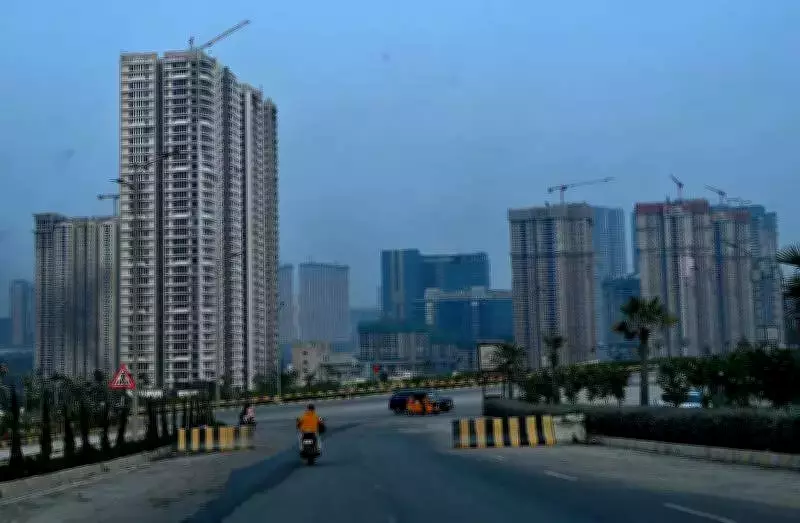
Major Policy Shift in Hyderabad's Development Approval Landscape
In a significant administrative overhaul, the Hyderabad Metropolitan Development Authority (HMDA) has been granted jurisdiction over all high-rise buildings exceeding 10 floors across the expansive 2,000 square kilometer Greater Hyderabad region. This policy change fundamentally alters the development approval process and revenue dynamics that have long defined urban planning in Telangana's capital.
Municipal Corporations Face Substantial Revenue Impact
The decision is expected to substantially affect the financial health of three key municipal corporations: the Greater Hyderabad Municipal Corporation (GHMC), Cyberabad Municipal Corporation (CMC), and Malkajgiri Municipal Corporation (MMC). These local bodies have traditionally relied heavily on building permission fees to fund essential civic infrastructure projects and municipal services.
Revenue from high-rise approvals alone generates hundreds of crores annually, making this a crucial income stream for urban development initiatives. With this responsibility now transferred to HMDA, municipal corporations are poised to lose a significant portion of their funding mechanism.

Historical Context and New Framework
Previously, the approval system operated under a divided structure. GHMC handled high-rise permissions within its established jurisdiction, while HMDA managed approvals for areas outside GHMC but still within the metropolitan region. The state government's recent order has consolidated this authority entirely under HMDA's purview.
Under the revised regulatory framework:
- Within the Core Urban Region (CURE), GHMC will continue granting building permissions for structures up to 10 floors
- All projects exceeding 10 floors will now require explicit HMDA approval
- Layout approvals across the entire metropolitan region will be issued exclusively by HMDA
Statistical Impact and Geographic Concentration
The scale of this change becomes evident when examining recent approval data. During the 2024–25 period alone, GHMC issued permissions for 102 high-rise buildings within its jurisdiction. The impact is projected to be particularly pronounced for the Cyberabad Municipal Corporation, where a substantial share of upcoming high-rise development is concentrated.
Key growth corridors affected include rapidly developing zones such as:
- Kokapet
- Tellapur
- Ameenpur
- Patancheru
- Osmannagar
- Kollur
These areas demonstrate strong vertical expansion potential, translating into substantial revenue generation that will now flow through HMDA rather than municipal corporations.
Rationale Behind the Administrative Shift
Government officials explained that this decision was primarily driven by the recent expansion of GHMC through the merger of several urban local bodies. These merged entities operated with differing fee structures and procedural requirements, creating administrative complexity and inconsistency across the expanded jurisdiction.
A senior official from HMDA's planning wing stated, "This will ensure uniformity in building permissions across all three corporations. We have already begun processing high-rise applications within city limits, and the existing GHMC fee structure will now be applicable across the entire CURE under HMDA."
Revenue-Sharing Mechanism Preserved
Despite the transfer of approval authority, the government order clarified that the existing revenue-sharing arrangement between urban local bodies and HMDA will continue for approvals processed by HMDA within GHMC limits. This provision aims to mitigate some financial impact on municipal corporations while maintaining a streamlined approval process.
The policy shift represents a fundamental restructuring of Hyderabad's urban governance model, balancing the need for standardized development regulations with the financial realities of municipal administration. As implementation progresses, stakeholders will closely monitor how this affects both development timelines and municipal financing across India's fourth-largest metropolitan region.






