Hyderabad's Traffic Crisis: Urgent Multi-Pronged Solutions Needed to Avoid Gridlock
If Hyderabad wishes to evade the severe traffic gridlock experienced by Bengaluru or the daily paralysis seen in Delhi, the city must implement bold and immediate solutions. Urban planners emphasize that the answer does not lie solely in constructing more flyovers. Instead, a comprehensive, multi-pronged strategy is essential. This approach must focus on strengthening public transport systems, enhancing traffic management protocols, and reforming urban mobility policies to create a sustainable future.
Fortifying Public Transport: The Sustainable Solution
Experts unanimously agree that expanding and reinforcing public transport represents the most sustainable path forward. Without significant investment and integrated planning, Hyderabad risks descending into permanent congestion. The current public transport network is struggling to keep pace with the city's rapid expansion.
Key statistics highlight the shortfall:

- Fewer than 3,000 RTC buses are operational on the roads.
- Approximately 80 MMTS services run daily.
- Metro trains are already operating at near capacity during peak hours.
The Telangana State Road Transport Corporation (TGSRTC) serves as the backbone of city mobility, yet its fleet strength is insufficient for a metropolitan area of this size. Transport planners suggest Hyderabad requires at least 5,000 to 6,000 city buses to ensure adequate coverage and frequency. One transport planner stated, "Creating bus stops within 500 metres of every residential pocket is essential." Implementing dedicated bus lanes on high-density corridors—such as the IT stretch, Mehdipatnam–Lakdikapul, Uppal–Secunderabad, and Kukatpally–Ameerpet—could make buses more reliable than private vehicles, encouraging greater public usage.
Scaling Up MMTS Services for Better Connectivity
Improving MMTS connectivity and frequency is another critical component. Post-pandemic, daily footfall in MMTS services has dramatically declined from 1.6 lakh to less than 50,000. Enhancing this suburban rail system could significantly reduce dependency on private vehicles.
P Bharadwaj of the Suburban Trains and Bus Travellers Association emphasized the need for operational improvements: "The time gap between services should be 15 to 20 minutes during peak hours (8 am–10:30 am and 4:30 pm–7:30 pm). Dedicated MMTS platforms at Secunderabad and halting trains in the middle of the platform is the need of the hour." Currently, passengers must walk to the end of the platform to board MMTS trains at Secunderabad, causing inconvenience and reducing efficiency.
According to the Suburban Travellers Association, increasing connectivity from Cherlapalli to various directions—such as Hyderabad, Umdanagar, and Ramachandrapuram/Lingampally (via Neredmet and Suchitra)—along with additional services to Lingampalli (via Malkajgiri, Secunderabad, Begumpet) and Medchal (via Radhakrishna Nagar, Bolarum) would help drive footfall and optimize the network.
Accelerating the Expansion of Metro Rail
The current MMTS network, with around 80 services daily, remains underutilized primarily due to low frequency. Accelerating the expansion of metro rail infrastructure is vital to complement these efforts. A robust metro system can alleviate pressure on roads and provide a fast, reliable alternative for commuters.
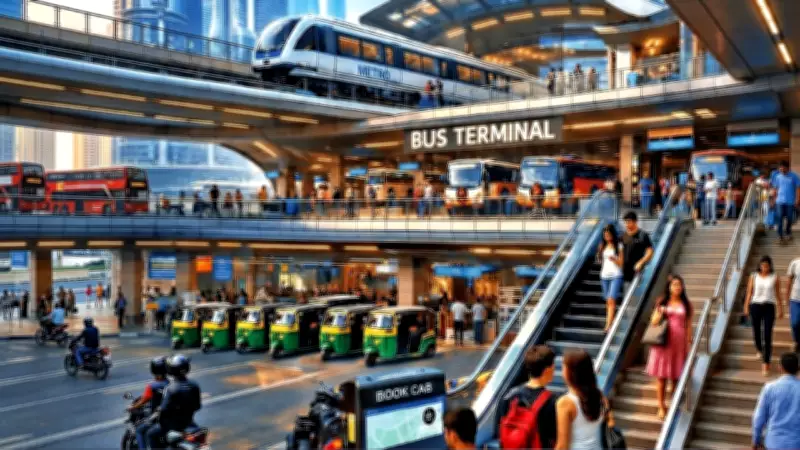
Urban mobility experts argue that a synchronized approach—combining bus, MMTS, and metro services—is crucial. Integrated ticketing systems, real-time tracking, and seamless inter-modal transfers can enhance the overall passenger experience and encourage a shift from private to public transport.
In conclusion, Hyderabad stands at a crossroads. The city must act decisively to implement these multi-pronged solutions. Strengthening public transport, scaling up MMTS services, and accelerating metro rail expansion are not just recommendations but necessities to prevent future gridlock and ensure sustainable urban mobility for all residents.