Indore Municipal Corporation Greenlights Massive Rs 1,500 Crore Infrastructure Overhaul
The Indore Municipal Corporation (IMC) has taken a monumental step toward urban development with the approval of projects exceeding Rs 1,500 crore during its recent mayor-in-council (MIC) meeting. This significant investment is strategically aimed at fortifying the city's water supply infrastructure and revolutionizing mechanical road sanitation systems.
Comprehensive Water Supply Enhancement Under Amrit 2.0
Mayor Pushyamitra Bhargav highlighted that the MIC has sanctioned extensive work under the ambitious Amrit 2.0 Project. This initiative is designed to cater to a projected future population of 60 lakh under the Narmada Phase IV, ensuring a continuous and reliable water supply through both new construction and the modernization of existing systems.
Key approvals include:

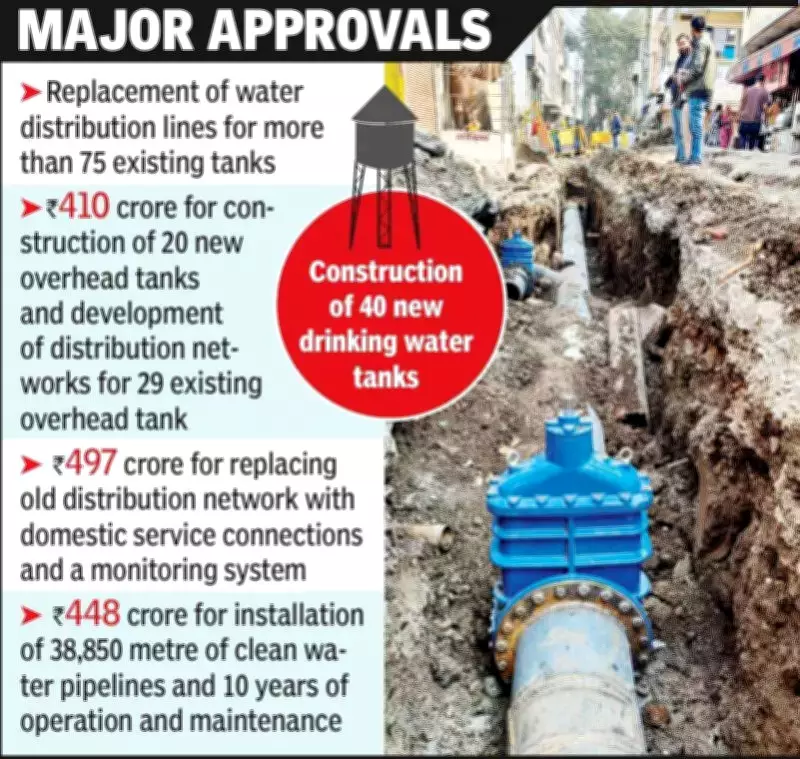
- Construction of 40 new drinking water tanks distributed across various city zones.
- Replacement of water distribution lines for more than 75 existing tanks to improve efficiency and reduce losses.
- A dedicated Rs 410 crore package for building 20 new overhead tanks and developing distribution networks for 29 existing overhead tanks.
- A Rs 497 crore package focused on replacing the aging distribution network with modern domestic service connections and implementing an advanced monitoring system.
- A Rs 448 crore package that encompasses the installation of 38,850 meters of clean water pipelines with a diameter of 2,235 mm, along with a comprehensive 10-year operation and maintenance plan.
Mechanical Road Sanitation and Urban Beautification Initiatives
In a parallel move to elevate civic cleanliness, the MIC has approved a tender for hiring 30 advanced road sweeping machines at an estimated cost of Rs 175 crore. These machines will be deployed to clean major roads, feeder roads, link roads, and public toilets within the municipal boundaries, significantly enhancing the city's sanitation standards.
Furthermore, to boost urban aesthetics, the council has approved a proposal to transfer the development and maintenance of government gardens, green belts, dividers, and intersections or rotaries to registered organizations on an adoption basis. This public-private partnership model is expected to foster community involvement and ensure sustained upkeep of green spaces.
Mayor Bhargav emphasized that these projects are meticulously designed to increase water capacity and accelerate the pace of infrastructure development, directly addressing the growing demands of Indore's expanding population. The holistic approach underscores the city's commitment to sustainable urban growth and improved quality of life for its residents.