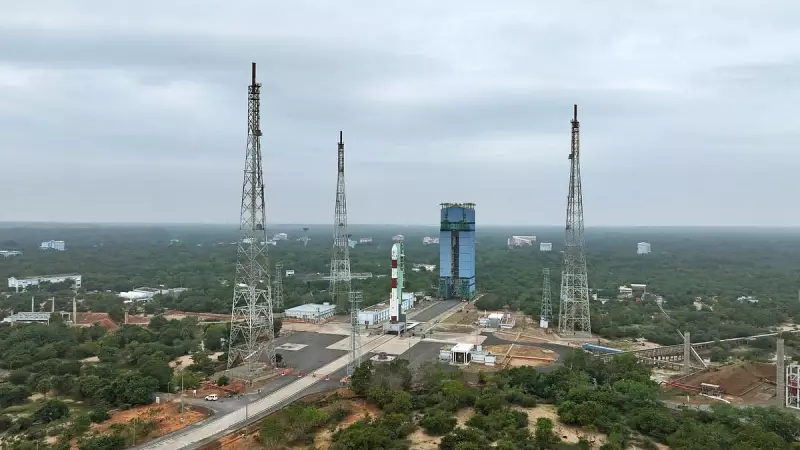
In a significant boost to India's strategic capabilities, the Indian Space Research Organisation (ISRO) has successfully launched the EOS-N1, a sophisticated Earth observation satellite designed primarily for defence purposes. The launch, conducted on 12 January 2026, marks a pivotal moment in the nation's space-based surveillance efforts.
A Strategic Eye in the Sky: The Mission's Core Objective
The primary function of the newly deployed EOS-N1 satellite is to bolster national security. It is engineered to provide critical support for national defence surveillance, including tasks such as strategic monitoring and reconnaissance. This capability is vital for enhancing situational awareness and securing India's borders and strategic interests from space.
Key Features of the EOS-N1 Mission
This launch is notable for several reasons that highlight the evolution of India's space ecosystem. Firstly, the satellite was launched by the commercial arm of India's space ecosystem, showcasing a growing synergy between national space agencies and private sector capabilities. This model promises greater efficiency and scalability for future missions.

Secondly, the EOS-N1 is a dual-use satellite. While its primary mandate is defence, the data it gathers can also be leveraged for civilian applications, demonstrating a versatile approach to space technology investment. Furthermore, the mission is classified as a multi-payload mission, indicating that it carries several instruments to perform a variety of observational tasks, maximizing the value of a single launch.
Orbit and Deployment
A critical detail of any satellite launch is its final orbital position. While the exact orbital parameters are often classified for defence satellites, the mission's success confirms that the EOS-N1 has been accurately deployed into its intended orbit by ISRO's reliable Polar Satellite Launch Vehicle (PSLV). From this vantage point, it will commence its operational life, feeding crucial data to defence analysts.
Implications for India's Defence and Space Program
The successful launch of the EOS-N1 satellite represents a major leap forward for India's indigenous defence technology, spearheaded by the Defence Research and Development Organisation (DRDO). It underscores the country's self-reliance in developing and deploying advanced space assets for security needs.
This mission also reinforces ISRO's role as a key enabler for national security, beyond its civilian space exploration triumphs. The collaboration between ISRO and DRDO sets a powerful precedent for future next-generation Earth observation projects that will keep India at the forefront of space-based intelligence.
In conclusion, the EOS-N1 launch on January 12, 2026, is more than just another satellite deployment; it is a strategic statement. It enhances India's surveillance mosaic, strengthens its defence preparedness, and showcases the maturing, multi-faceted nature of its space ambitions.