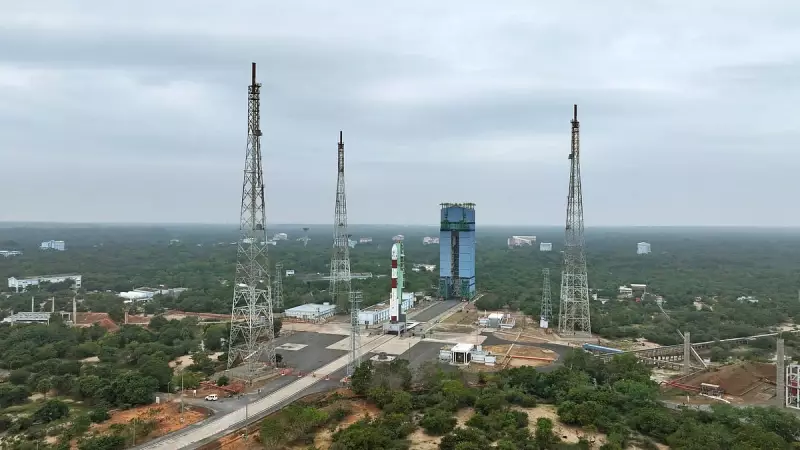
In a significant boost to India's national security infrastructure, the Indian Space Research Organisation (ISRO) successfully launched a sophisticated new spy satellite for the Defence Research and Development Organisation (DRDO). The spacecraft, named ESO-N1, was sent into orbit on 12 January 2026, marking a pivotal moment in the nation's strategic surveillance capabilities.
A Strategic Eye in the Sky: Mission Overview
The launch was conducted by the commercial arm of India's space ecosystem, highlighting the growing synergy between strategic defence needs and the country's commercial space enterprise. The ESO-N1 is a next-generation Earth observation satellite specifically designed to bolster India's defence and security framework. Its primary mandate is to support critical functions such as strategic monitoring and reconnaissance, providing high-resolution imagery and data essential for national defence.
Five Critical Facts About the ESO-N1 Satellite
This mission stands out due to several defining characteristics that underscore its importance for India's strategic autonomy.

1. Dual-Use Nature: While its core purpose is defence and surveillance, the satellite is built on a dual-use philosophy. This means its advanced imaging and data capabilities can also be leveraged for civilian applications, including disaster management, resource mapping, and environmental monitoring, ensuring optimal utilization of the asset.
2. Multi-Payload Configuration: The ESO-N1 is not a single-purpose instrument. It is a multi-payload mission, carrying a suite of advanced sensors and systems. This allows it to gather a diverse range of intelligence data, making it a versatile tool for comprehensive situational awareness.
3. Deployment and Orbit: A key question following any launch is the satellite's final position. While the exact orbital parameters are often classified for strategic assets, the satellite will be deployed in a precise orbit that maximizes its coverage and revisit frequency over areas of strategic interest, ensuring persistent surveillance capability.
4. Launch Vehicle: The trusted workhorse of ISRO, the Polar Satellite Launch Vehicle (PSLV), was used for this mission. The reliable PSLV's proven track record made it the ideal choice for precisely injecting the valuable payload into its intended orbit.
5. Strategic Partnership: The mission exemplifies the deepening collaboration between ISRO and DRDO. While ISRO provides the launch vehicle and space expertise, DRDO contributes the specialized payload technology tailored for defence intelligence, showcasing a successful model of inter-agency cooperation for national security.
Implications for National Security and Beyond
The successful deployment of the ESO-N1 satellite significantly enhances India's indigenous intelligence, surveillance, and reconnaissance (ISR) matrix. It provides the nation with an independent, reliable, and advanced source of strategic information, reducing dependency on foreign sources for critical data. This launch reinforces India's growing prowess in space-based defence technology and underscores its commitment to safeguarding national sovereignty through technological superiority.
Furthermore, the mission's execution by ISRO's commercial arm signals a maturing space sector capable of servicing high-stakes national security requirements while fostering a competitive commercial launch ecosystem. The ESO-N1 satellite is more than just another orbital asset; it is a testament to India's strategic vision and its technological capability to secure its interests from the final frontier.