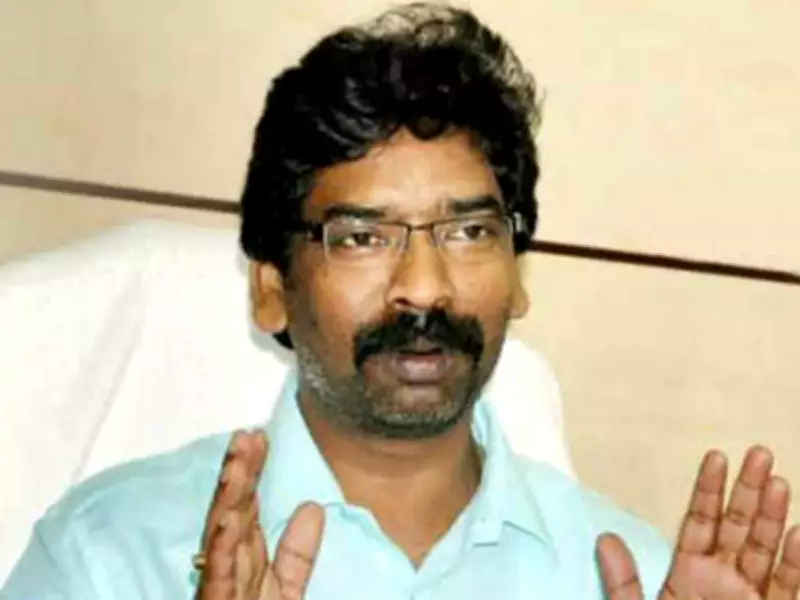
The Jharkhand government has initiated an aggressive push to expand quality public education across the state. Chief Minister Hemant Soren, on Tuesday, directed officials to accelerate the plan to increase the number of CM Schools of Excellence to 5,000. This ambitious move aims to provide better education facilities to children from marginalized and poor families who often remain outside the reach of expensive private schools.
Government Targets Private School-Level Education in Public Institutions
Currently, Jharkhand has 80 operational CM Schools of Excellence. These schools were launched to offer modern infrastructure, improved classrooms, enhanced teaching standards, and quality education comparable to private institutions. The state government now plans to scale up this model significantly. Expanding from 80 to 5,000 schools marks one of the most ambitious education expansion drives in the state in recent years. Officials informed the chief minister that the schools have shown encouraging academic results. According to the government, students in these institutions are not only improving academically but are also performing better in co-curricular activities.
No School Should Run with One Teacher, Says CM
One of the strongest directives issued during the meeting addressed the shortage of teachers in government schools. The chief minister instructed officials to ensure that no school in the state continues to operate with only one teacher within the next six to eight months. The issue of single-teacher schools has remained a serious concern in rural and tribal regions, where students often suffer due to staff shortages and irregular teaching. This direction signals the government's attempt to address one of the biggest structural problems affecting school education in Jharkhand. For years, several schools in remote areas have struggled with poor teacher availability, weak infrastructure, and low student attendance. Education experts have repeatedly warned that without sufficient teachers, improving learning outcomes becomes nearly impossible.

Focus Turns to Dropout Students and Child Labour
The government has also intensified efforts to bring children back to school. Officials told the chief minister that dropout rates in primary and secondary education have declined. The School Education Department is currently running a special campaign to identify and re-enroll students who have left school. Particular attention is being given to children engaged in labor and informal work. The state government said such children are being identified in coordination with the Labour Department so they can be brought back into the education system. This campaign reflects a larger concern in economically weaker regions, where many children leave school early because of poverty, migration, or the need to support family income.
A High-Stakes Education Mission
The expansion of CM Schools of Excellence is emerging as a major political and social project for the Jharkhand government. The administration appears to be positioning education reform as a central pillar of governance, especially in districts where access to quality schooling remains weak. However, experts believe the real challenge will lie in execution. Building thousands of schools, recruiting enough teachers, reducing dropout rates, and maintaining quality standards will require sustained funding and administrative monitoring. For now, the government has made its intention clear: it wants government schools in Jharkhand to become strong enough to compete with private institutions while opening the doors of quality education to students from the most vulnerable backgrounds.