

Karnataka's Water Reserves Hold Steady at 43% Capacity as Summer Intensifies
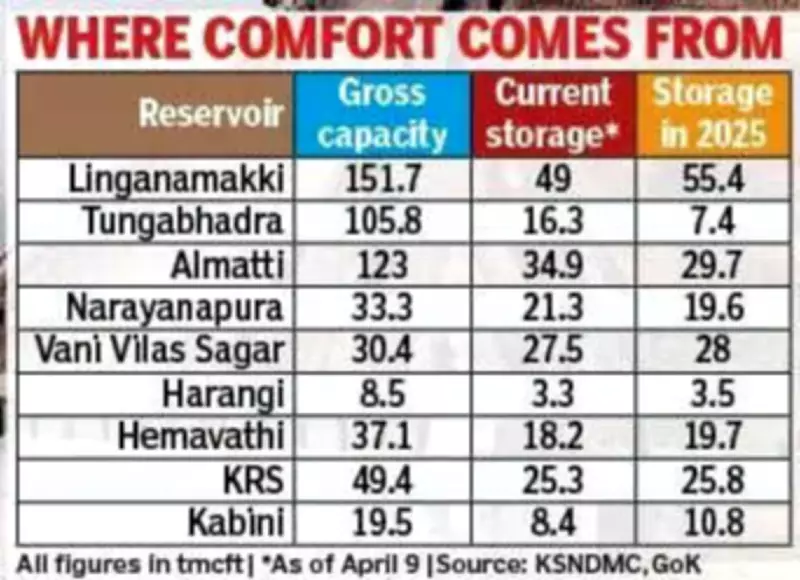
At the midway point of a grueling summer season, concerns over access to potable water are mounting across Karnataka, even though the state's reservoirs have, so far, managed to avoid critical crisis levels. In a notable improvement from the previous year's concerning 34% storage, data reveals that major reservoirs across the state are currently maintaining water at 43% of their total combined capacity. While this provides a measure of relief for government authorities, officials are issuing stern warnings that this existing buffer could diminish rapidly under the relentless summer heat.
Detailed Reservoir Data Shows Varied Basin Conditions
Information compiled by the Karnataka State Natural Disaster Monitoring Centre presents a detailed picture of the water storage situation. Reservoirs within the Krishna basin are currently holding water at 34% of their capacity. Meanwhile, the major hydel reservoirs in the state stand at 38%. The Cauvery basin, a critical water source, shows a more robust figure with its reservoirs at 48% of their storage capacity.
In terms of absolute volume, the Cauvery basin currently contains 55.3 thousand million cubic feet (tmcft) of water. This is slightly lower than the 59.9 tmcft recorded at the same time last year. Conversely, reservoirs in the Krishna basin have seen a marginal improvement, now holding 142.7 tmcft. Hydel reservoirs collectively stand at 115.4 tmcft. However, officials emphasize that the real challenge is only just beginning as the peak summer period approaches.

Strategic Water Management and Conservation Efforts Underway
With the conclusion of irrigation water releases for summer crops, state authorities are now intensifying their focus on conserving the remaining water supplies strictly for drinking purposes and essential industrial needs. Officials from the water resources department credit the relatively stable current situation to two key factors: the bountiful rainfall experienced last year and significantly improved water management strategies.
"Unlike previous years, our planning has been far more measured and proactive this time," explained a senior government official. "The government acted well in advance. We informed farmers and agricultural organizations about what crops to cultivate and clearly communicated whether water would be supplied for the first or the second crop. This approach has helped manage expectations realistically."
The official further noted that in irrigated areas, farmers traditionally plan for two crops. In earlier years, political pressure often led to promises of water for both crops, creating unsustainable demand. "We are now regularly issuing updates and providing 15-day advance forecasts to deputy commissioners, who then disseminate this crucial information directly to the farming community," the official added.
Urban and Rural Challenges: Bengaluru's Appeal and Village Scarcity
In Bengaluru, the Bangalore Water Supply and Sewerage Board (BWSSB) is implementing careful management protocols. BWSSB Chairperson Ram Prasath Manohar has made a public appeal for responsible water use. "People should not waste water. It is wrong to misuse water simply because it is currently available. We will not hesitate to impose penalties for wastage to ensure conservation," Manohar stated firmly.
Simultaneously, a significant rural water scarcity issue has been reported. The rural development and panchayat raj department has identified 324 villages across 60 taluks in 20 districts that are currently experiencing potable water shortages.
To combat this emerging crisis, Minister Priyank Kharge announced immediate financial allocations. "The government has already allocated Rs 60 crore to the affected districts to address drinking water scarcity," Kharge said. "Furthermore, an additional Rs 48 crore has been released to clear pending bills for works undertaken by the task force in March. We have also earmarked Rs 14.5 crore specifically for the repair of drinking water supply units across these regions."

As Karnataka navigates the remaining summer weeks, the dual strategy of advanced planning, strict urban conservation, and targeted rural funding aims to mitigate the impacts of water scarcity. The success of these measures will be tested by the intensity of the coming heat and the state's ability to manage its precious water reserves judiciously.





