The Long Journey of the Khurda-Balangir Railway Line
The Khurda Road–Balangir new railway line represents one of India's most protracted infrastructure sagas, spanning nearly eight decades from its initial conception to recent breakthroughs. First surveyed on January 1, 1947, the project was originally planned as a 286-kilometer route largely parallel to the Mahanadi River, with an estimated cost of Rs 4.98 crore. However, financial viability concerns immediately surfaced, as the rate of return (ROR) was calculated at a negative 0.28%. Citing these poor prospects, the erstwhile Bengal Nagpur Railway did not recommend construction, according to official sources.
Decades of Delays and Reassessments
Public demand persisted, leading the Railway Board to conduct a fresh preliminary engineering-cum-traffic survey in 1985–86. This reappraisal estimated the project cost at Rs 208.8 crore with an improved but still low ROR of 1%. Yet, it was again not recommended due to insufficient returns. On July 8, 1991, the railway ministry officially announced the project would be shelved, seemingly ending its prospects.
Railway historian Dilip Kumar Samantray notes that momentum revived in the early 1990s after then Chief Minister Biju Patnaik took a keen interest and Kanhu Charan Lenka became minister of state for railways in the P V Narasimha Rao government. In March 1993, the railways ordered another reappraisal. Samantray explains that industrialization proposals in Odisha during this period improved traffic projections significantly.

Sanction and Slow Progress
The survey report submitted in September 1993 estimated the cost at Rs 322.5 crore and projected an ROR of 14.41%, marginally above the 14% viability threshold. Consequently, the project was sanctioned in 1994–95 with an initial budget provision of Rs 1 crore. However, progress remained sluggish. By 2000, only Rs 18.5 crore had been spent, as Samantray highlights, adding that the industrialization push weakened by the end of the decade as many proposed projects failed to materialize.
This prompted the railways to review sanctioned projects in Odisha. On November 11, 2000, the Railway Board ordered another traffic reappraisal survey. In August 2003, the South Eastern Railway submitted a reappraisal report for a 289-kilometer broad-gauge line, estimating the cost at Rs 756.74 crore with an ROR of 9.15%.
Political Pressure and Accelerated Efforts
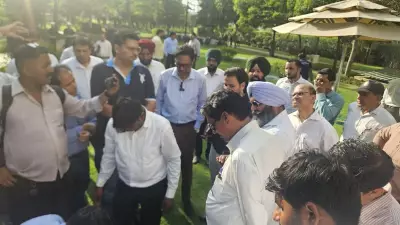
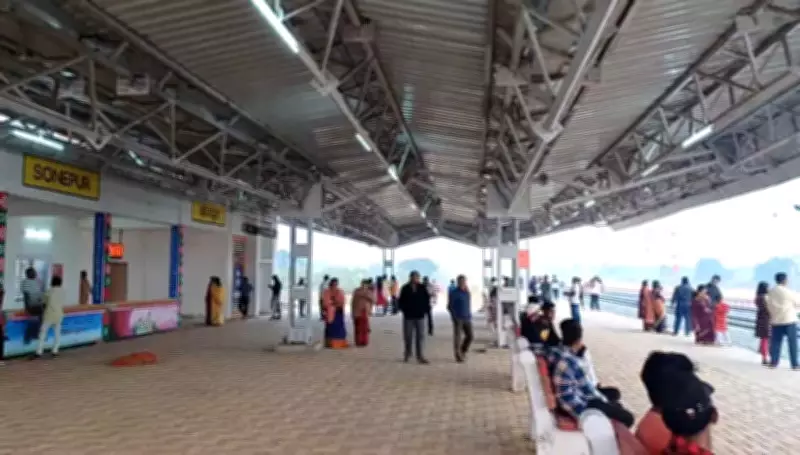
Prasanna Mishra, who served as Odisha's finance secretary when the project was sanctioned in 1994-95, recalls that budgetary allocations began from 2004–05 with Rs 15.39 crore, rising to Rs 20 crore the next year. These amounts were widely seen as inadequate for a project of this scale, leading to low annual allocations for several years. Mishra adds that the slow pace triggered protests and political pressure across Balangir, Sonepur, Boudh, and Nayagarh's Daspalla, including demonstrations outside the East Coast Railway headquarters in Bhubaneswar.
The pace changed notably after 2014. Prime Minister Narendra Modi reviewed the project that year and expressed dissatisfaction over the slow progress. Work later accelerated on the first 32-kilometer stretch from Khurda Road to Begunia. A passenger train was flagged off by then railway minister Suresh Prabhu on July 16, 2015, on the newly built Khurda–Begunia section.
Cost-Sharing and Final Hurdles
On July 20, 2015, the Odisha government signed a memorandum of understanding (MoU) with the railways to share costs in a 50:50 ratio for constructing 177 kilometers of the 289-kilometer project. The state also agreed to provide land free of cost for that section. To speed up completion, the railways began work from the Balangir side as well.
The project was reviewed at the highest level under PRAGATI in 2020. After Ashwini Vaishnaw became the railway minister, work was taken up on a faster scale. With forest clearance pending for years, the alignment was slightly modified to avoid wildlife and forest areas, extending the final length to 301 kilometers, according to official sources.
The 75-kilometer forest stretch between Daspalla and Purunakatak remained the key bottleneck. It received Stage-I forest clearance in February 2023 and Stage-II clearance in January 2025, marking a critical milestone in this enduring infrastructure endeavor.