

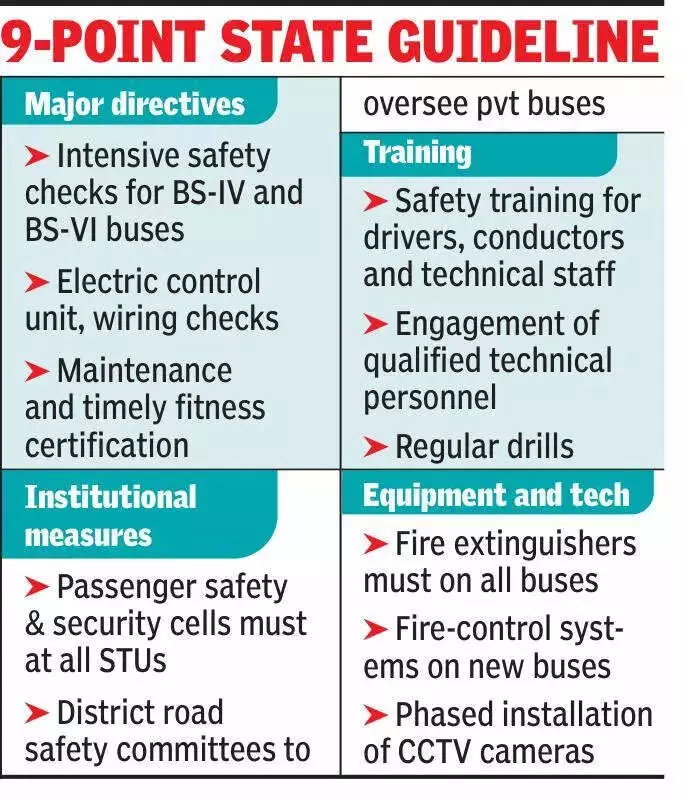
In response to a concerning series of fire incidents involving public transport vehicles, the West Bengal transport department has rolled out a comprehensive nine-point safety framework. The new guidelines mandate strict operational and fire safety protocols for all buses, aiming to address critical vulnerabilities and prevent future tragedies.
Core Directives for State and Private Operators
The guidelines, issued under the direction of Transport Secretary Saumitra Mohan, place significant responsibility on both state-run and private bus operators. A key mandate requires all State Transport Undertakings (STUs) to establish dedicated passenger safety and security cells. These units will be tasked with monitoring safety-related incidents, conducting risk assessments, and recommending corrective measures for their fleets.
For private buses, a similar level of vigilance will be exercised by the district road safety committees. The framework emerged from detailed consultations with STUs, private bus operators, enforcement agencies, and original equipment manufacturers (OEMs), focusing on three pillars: preparedness, risk mitigation, and systematic safety enhancement.

Special Scrutiny for Modern Buses with Electronic Systems
The department has highlighted a particular concern for newer bus models. The guidelines put a special emphasis on BS-IV and BS-VI compliant buses, which come equipped with complex electronic control systems. These systems, while aiding emission norms, are identified as being more vulnerable to short-circuits and consequent fire hazards, necessitating stricter inspection and monitoring regimes.
Operators are now instructed to ensure rigorous adherence to vehicle maintenance schedules and timely fitness certifications. A focused scrutiny must be applied to buses fitted with these electronic control units (ECUs) to proactively identify and rectify potential fire risks.
Building Capacity and Emergency Preparedness
Moving beyond hardware, the guidelines strongly emphasize human resource training and emergency protocols. A crucial directive calls for the creation of a detailed Standard Operating Procedure (SOP) for handling fires, accidents, and other emergencies. This SOP is to be developed in coordination with technical experts, OEMs, and emergency service providers.
Furthermore, the framework underscores the need for extensive capacity building for drivers, conductors, and technical staff. Bus operators are mandated to engage qualified technical personnel and ensure all crew members receive proper training in fire prevention and immediate response techniques. STUs have also been advised to phase out ageing fleets and ensure all new buses are equipped with adequate fire control systems.
The issuance of these guidelines follows a spate of fires that exposed glaring gaps in bus maintenance and operational preparedness. This consolidated safety push seeks to institutionalize checks and training to safeguard passenger lives on the road.






