Land acquisition remains the single biggest obstacle in implementing major infrastructure projects in India, accounting for more than a third of all issues flagged under a key government monitoring system. The government, however, has stated it has no plans to amend the existing land acquisition law, emphasizing the need for a democratic balance between development and citizens' rights.
PRAGATI's Decade of Project Monitoring
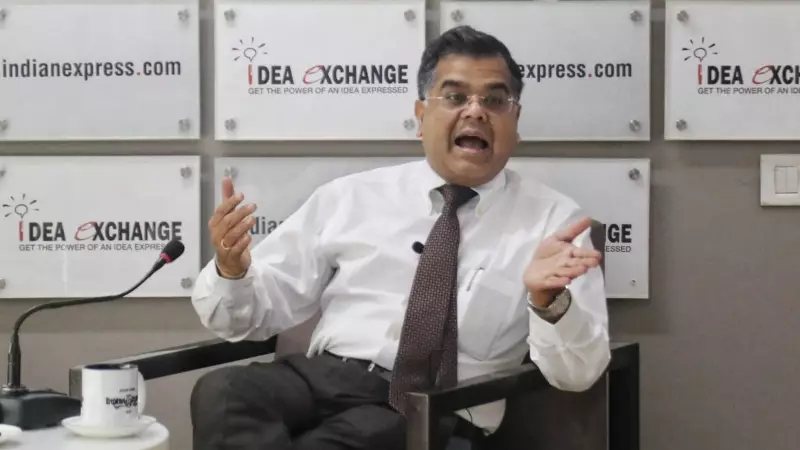
This revelation came from Cabinet Secretary T.V. Somanathan during a media briefing on Friday, two days after Prime Minister Narendra Modi chaired the 50th review meeting of the PRAGATI initiative. The Pro-Active Governance and Timely Implementation (PRAGATI) framework is a technology-driven platform used for monitoring and expediting central sector projects and schemes, each costing at least ₹500 crore.
The system has accelerated the implementation of more than 3,300 projects with a cumulative worth exceeding ₹85 lakh crore. These include legacy projects like the Jammu-Udhampur-Srinagar-Baramulla rail link, where work began as far back as 1995.
Land, Environment, and Right of Way: The Top Three Hurdles
Out of a total of 7,735 issues raised under the PRAGATI framework, a significant 7,156 have been resolved. An analysis of the root causes paints a clear picture of the primary bottlenecks.
Land acquisition problems are the foremost challenge, responsible for 35% of all issues. This figure rises even higher to 42% for the subset of 382 projects personally reviewed by the Prime Minister.
The second-largest category of hurdles, accounting for 20% of issues, stems from forest, wildlife, and environmental clearances. Closely following is the right of use or way, which causes 18% of the problems. Together, these three factors constitute a staggering 73% of all obstacles faced in major project implementation.
"No Plan to Change the Law": Upholding Democratic Process
When asked about potential regulatory reforms to speed up land acquisition, Cabinet Secretary Somanathan was unequivocal. "Regarding land acquisition, there is no plan to change the land acquisition law," he stated.
He elaborated that in a democracy, the interest in completing projects must be balanced with the rights of those whose land is affected. Similarly, the push for infrastructure must coexist with environmental protection. "It is in the very nature of this that there is a balance. And there will be issues; it is never black and white," Somanathan explained.
He contrasted India's approach with nations where land can be acquired swiftly without consultation, noting, "We don't want to be in that situation. We want to implement with consultation, with consent, and with public involvement." While acknowledging scope for procedural improvements, he firmly dismissed any need for a fundamental revisit of processes like public consultation.
Accountability at the Highest Level
Somanathan highlighted the unique accountability mechanism of the PRAGATI reviews, particularly those chaired by the PM. In these meetings, Chief Secretaries of states and Secretaries of Central ministries make direct commitments to the Prime Minister on project timelines.
"This is something which officers take with greater seriousness than something that is not at that level. So, it is actually a very personal accountability that arises," he said, crediting this top-level oversight for the resolution of 2,958 out of 3,187 issues in the PM-reviewed projects.
The 50th PRAGATI meeting focused on five critical infrastructure projects spanning the road, railways, power, water resources, and coal sectors across five states, with a total investment of over ₹40,000 crore. The decade-old PRAGATI framework was instituted precisely to tackle chronic time and cost overruns in public projects, often caused by coordination gaps between different ministries and levels of government.