Mira Bhayandar Flyover Design Controversy: Bridge or Bottleneck?
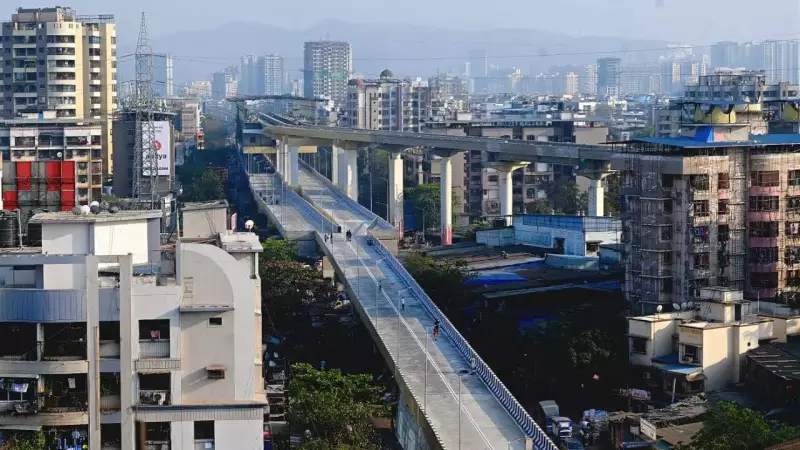
The recently opened Mira Bhayandar flyover in the Mumbai Metropolitan Region has become a focal point of intense public debate and scrutiny. What was envisioned as a solution to chronic traffic congestion has instead raised alarming questions about design safety and urban planning efficiency. The controversy centers on a specific segment where the four-lane flyover abruptly narrows to just two lanes, creating what critics describe as a potential hazard for daily commuters.
Viral Social Media Post Highlights Design Anomaly
The issue gained widespread attention when Gems of Mira Bhayander, a local social media platform, highlighted the dramatic lane reduction in a viral post. The visual documentation clearly showed how the infrastructure transitions from four lanes to two without adequate warning or gradual merging. This sudden narrowing has sparked serious concerns about whether the design prioritizes long-term planning over immediate safety considerations.
MMRDA's Official Defense of Engineering Decisions
Officials from the Mumbai Metropolitan Region Development Authority (MMRDA) have provided a detailed explanation for the controversial design. According to their statement, the lane reduction represents a deliberate engineering strategy rather than a construction flaw. Currently, two lanes are operational toward Bhayander (East), while provisions have been incorporated for two additional lanes toward Bhayander (West) in future expansion phases.

The authority emphasizes that the design accommodates right-of-way constraints while allowing for systematic traffic management improvements over time. This approach, they argue, ensures the flyover can handle projected increases in vehicle volumes without requiring complete reconstruction in coming years.
Public Safety Concerns and Historical Comparisons
Social activist Anjali Damania has voiced strong objections to the design, warning that the abrupt lane narrowing creates dangerous conditions for motorists. She specifically referenced the tragic 2022 Cyrus Mistry accident as a cautionary example of how infrastructure design flaws can lead to catastrophic outcomes. The comparison has amplified public anxiety about whether sufficient safety assessments were conducted before the flyover's inauguration.
Controversy Limited to Specific 1.5-Kilometer Stretch
Interestingly, the controversy appears concentrated on a particular 1.5-kilometer section between Deepak Hospital and Phatak Road in Bhayander (East). Other segments of the double-decker flyover, including:
- The 1.1-kilometer SK Stone Circle to Shivar Garden stretch
- The 754-meter Kashigaon to Saibaba Hospital section
have been operational without similar complaints, suggesting the issue is localized rather than systemic. This geographical specificity has added complexity to the debate about whether the design represents thoughtful planning or compromised safety.
MMRDA's Comprehensive Safety Measures and Traffic Objectives
Despite the criticism, MMRDA maintains that the flyover incorporates multiple safety features designed to protect commuters. These include:
- Proper signage and lane markings
- Strategic placement of rumble strips
- Installation of crash barriers at vulnerable points
The authority also notes that traffic police inputs were incorporated during the planning phase, and the primary objective remains easing the area's notorious traffic congestion. The design controversy highlights the challenging balance urban planners must strike between immediate functionality, long-term adaptability, and uncompromised public safety in rapidly developing metropolitan regions.