

Maharashtra Transport Minister Unveils Major Reforms for MSRTC
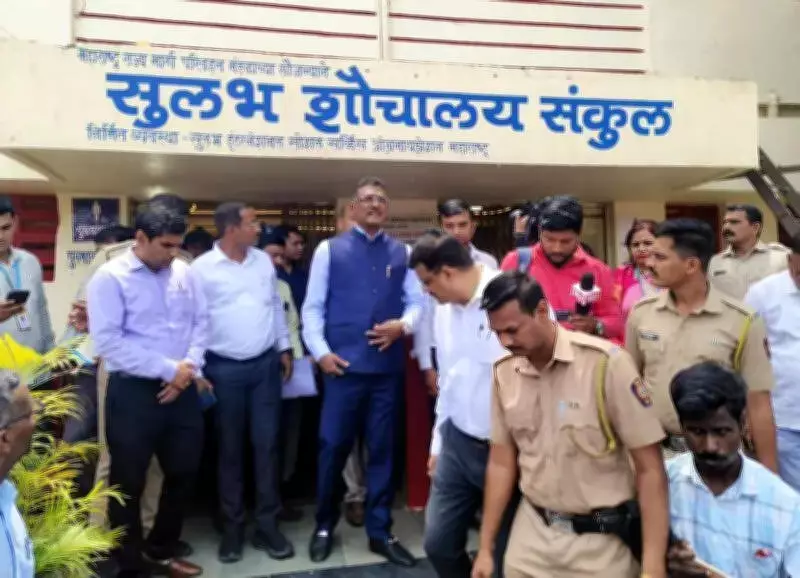
In a significant move aimed at enhancing passenger amenities, Maharashtra Transport Minister Pratap Sarnaik announced on Friday that toilet facilities at all Maharashtra State Road Transport Corporation (MSRTC) bus stands across the state will be made completely free for passengers starting June 1. This date coincides with the foundation day of MSRTC, marking a symbolic shift towards improved public service.
Funding and Management Overhaul for Toilet Facilities
Sarnaik clarified that MSRTC already collects a "cleanliness cess" through bus fares, and these funds will now be directly utilized to maintain the restrooms. "As a result, the current system of outsourcing toilet maintenance to private contractors will be discontinued, with MSRTC taking full responsibility for the operation and upkeep of restroom facilities," he stated during a media address in Kolhapur.
Fleet Expansion with 8,000 New Buses
In addition to the toilet initiative, the minister revealed that the state government has decided to induct 8,000 new buses into the MSRTC fleet. This expansion will be carried out in phases, with a special emphasis on strengthening services in rural and remote areas. "The government is committed to replacing old buses with modern, safe, and comfortable ones, and the new buses will be allocated to districts gradually," Sarnaik explained.

Addressing MSRTC's Financial Health
Speaking on MSRTC's financial condition, Sarnaik acknowledged that losses are not new to the transport utility. "MSRTC has always been running in losses. The state government's intention is to operate it on a no-profit, no-loss basis. No state transport corporation in the country is running in profit, as public transport is essentially a service to the people," he remarked, highlighting the public service mandate over profitability.
Clarification on Marathi Language Requirement for Rickshaw Permits
Responding to the controversy surrounding the proposed Marathi language requirement for obtaining rickshaw permits from May 1, the minister dismissed claims of a language dispute. "There is no language controversy. Anyone who wants to do business in Maharashtra or drives a rickshaw or taxi here must know Marathi," he asserted.
He pointed out that rules framed by the state government in 2019 already mandated that applicants for autorickshaw and taxi driver badges declare their ability to converse in Marathi. "If a passenger speaks in Marathi, the driver must understand and communicate in Marathi. There is no alternative. Therefore, knowing and speaking Marathi is mandatory for operating a rickshaw or taxi in Maharashtra," Sarnaik emphasized.
Inspection and Directives During Kolhapur Visit
The minister was in Kolhapur to inaugurate four newly constructed bus stands at Chhatrapati Sambhajinagar, Peth Vadgaon, Jaysingpur, and Wathar. During his visit to the Central Bus Stand, Sarnaik conducted a detailed inspection of the restrooms, canteen, ‘Hirkani Kaksha' (nursing room), and passenger waiting areas.
He instructed MSRTC officials that cleanliness should not be limited to ministerial visits. To ensure sustained hygiene, Sarnaik directed that cleaning operations be conducted every four hours on a permanent basis.
The minister also expressed displeasure after discovering that the scheme offering tea and breakfast to needy passengers for Rs 30 at bus stand canteens existed only on paper. During the inspection, it was found that food prices were concealed by covering the rate board with adhesive tape. Sarnaik reprimanded the MSRTC officials and the canteen operator for the lapse.
"Serving tea and breakfast for Rs 30 is mandatory, considering the high prices being charged at bus stand canteens. Strict action will be taken against operators who fail to follow this rule. Do not try to deceive ministers by hiding rates with adhesive tape or by offering flower bouquets," he warned.
Cultural and Religious Engagements
During his Kolhapur visit, Sarnaik also paid his respects at the Mahalaxmi Temple in Kolhapur city and the Datta Temple at Nrusinhwadi in the district, underscoring the cultural significance of his tour.






