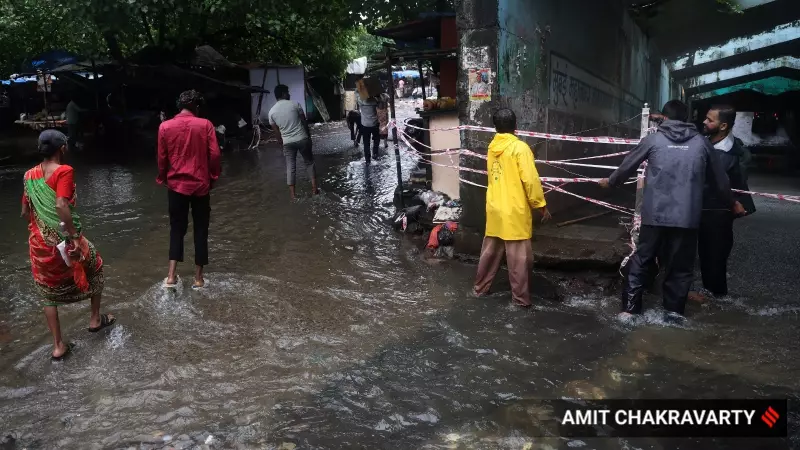
Each monsoon, life in India's financial capital, Mumbai, grinds to a halt as torrential rains trigger severe waterlogging across the city. This decades-old civic crisis continues to plague residents, demanding massive annual fund allocations from the Brihanmumbai Municipal Corporation (BMC) while newer challenges like air pollution emerge.
The Anatomy of a Flood: Overwhelmed Drains and New Spots
Nestled in the Konkan region, Mumbai faces heavy rainfall from June to September. Historical data from the India Meteorological Department (IMD) indicates the city receives an average of 2,500 mm of rain during the monsoon season over the past two decades. The core of the problem lies in the city's stormwater drainage system, which is designed with a carrying capacity of only 55 mm of rain per hour.
However, climate patterns are shifting. The city now frequently experiences extreme weather events where over 100 mm of rainfall lashes the region within short durations. When this happens, the existing drains are simply incapable of handling the deluge, leading to overflow onto roads and chronic water accumulation.
The situation is visibly worsening. In 2025, the BMC officially identified 386 chronic flooding spots across the island city and its suburbs. Analysis reveals a troubling trend: approximately 65 new flooding locations emerge each year. Areas regularly submerged include low-lying zones like Dadar, Parel, Hindmata, Matunga, Dahisar, and Jogeshwari. Slum settlements in Mankhurd, Kurla, and Dharavi are also highly vulnerable, alongside reclaimed sections like the Bandra-Kurla Complex (BKC) and critical transport corridors such as the Central and Harbour railway lines and the Eastern and Western Express Highways.
BMC's Countermeasures and Persistent Challenges
In response, the civic body has undertaken several high-cost interventions. It has commissioned at least 10 mini-pumping stations, including a major facility at the notorious Hindmata junction, built at a cost of Rs 130 crore in 2021. Additionally, two holding ponds have been constructed at Hindmata and Milan subway, and the BMC deploys 482 pumps during the monsoon to manage accumulated water.
Despite these efforts, chronic spots continue to suffer during extreme events, as seen on August 18 and 19, 2025. Senior BMC officials acknowledge that the increased frequency of extreme rain is a monumental challenge. Data shows Mumbai now endures an average of 16 days each year with high-intensity rain exceeding 100 mm. Furthermore, the intensity is rising: the average high-intensity rain in the past six years was 182 mm, compared to 131 mm in the preceding five-year period.
The old drainage system's woes are compounded by inefficient desilting and the dumping of waste into drains, especially in slum areas, which further reduces capacity. Subways in Andheri, Khar, and Poisar, which are forced to close during heavy rain, are particularly problematic due to their saucer-shaped topography, causing rainwater to gush in and making dewatering extremely difficult.
A Call for Long-Term Political and Administrative Action
The Mumbai Climate Action Plan has highlighted the scale of the risk, finding that over 35% of Mumbai's population is vulnerable to flooding. This underscores the critical need for high-level administrative and political intervention.
As the city approaches civic polls, the issue is at the forefront of voters' and candidates' minds. Former corporators and current candidates emphasize the need for permanent solutions. Ravi Raja, a BJP leader contesting from Dharavi, stressed the need for a 15-29 year long-term plan to address changing rain patterns and loopholes in the current pumping station systems.
Rajeshree Shirwadkar, a former BJP candidate from the F/North ward, pointed out that while issues like Gandhi Market have seen improvement, waterlogging in Matunga—a low point where water from Dadar TT and Hindu Colony collects—remains unresolved. She noted that a proposal for a Dadar-Dharavi pumping station has been cleared, marking a step forward.
The recurring monsoon floods in Mumbai are a stark reminder of the clash between aging urban infrastructure and the new realities of climate change. With hundreds of flooding spots and a drainage system operating beyond its designed limits, the city's battle against waterlogging demands innovative, sustained, and urgent solutions.