Nagpur: Amid growing concerns over industrial safety following recent blasts at explosive-handling units in Nagpur, the district administration has decided to set up a joint monitoring panel comprising regulators and technical experts to strengthen oversight mechanisms.
Committee Composition and Focus
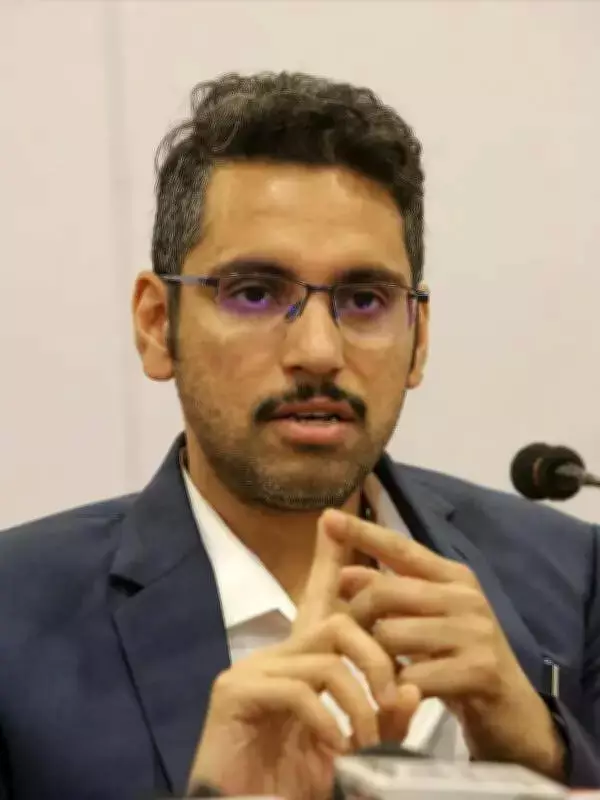
Nagpur collector Kumar Ashirwad said the proposed committee will include officials from the Petroleum and Explosives Safety Organisation (PESO), Directorate of Industrial Safety and Health (DISH), district administration, and independent technical experts.
"The committee will focus on regular inspections, standard operating procedures, and structured worker training, with special attention to risks arising from undertrained contractual workers and operational lapses," Ashirwad said during an informal interaction with the media on Monday.

Having recently completed a month as Nagpur collector, Ashirwad said the administration aims to move beyond reactive measures and establish a long-term industrial safety framework through periodic inspections, training systems, and operational audits.
Addressing Recent Accidents
Referring to recent industrial accidents, he said several meetings had already been held with the concerned departments. "PESO has limited manpower, while DISH largely monitors workplace infrastructure and safety conditions. To strengthen oversight, the administration will constitute a committee under relevant legal provisions," he said.
Ashirwad warned that industries often recruit contractual workers during periods of high demand and deploy them after barely 10 to 15 days of training. "That is dangerous," he said, adding that even experienced workers can become complacent over time. "Such workers can instead be developed into master trainers," he added.
LPG Shortage Situation Improving
The collector also addressed the LPG shortage, saying the administration's intervention was gradually easing the situation. "Earlier, queues were visible outside almost every agency. Now the situation is improving, and only a few agencies continue to witness heavy rush," he said.
Ashirwad explained that increasing cylinder allocation alone was insufficient without adequate delivery infrastructure. "If an agency that normally delivers 1,000 cylinders suddenly receives 5,000, it still requires delivery staff, transport systems, and backend support to supply them efficiently," he said.
He added that OTP verification issues had initially slowed deliveries. "Earlier, OTP compliance was around 45-50%. Today, most agencies have crossed 90%, significantly improving delivery efficiency," he said.
Creating an Industry-Friendly Ecosystem
Ashirwad said the administration was working to create a more industry-friendly ecosystem for investors in sectors such as pharmaceuticals, chemicals, and engineering manufacturing.
"When large companies come to Nagpur, they should not face avoidable hurdles related to land, electricity or water. We want investors to feel confident about establishing operations here," he said.
Tourism and Agriculture Initiatives
Ashirwad also identified wildlife and rural tourism as long-term growth opportunities for the district. Drawing comparisons with Madhya Pradesh's tourism model, he said the administration would spend the next few months studying local potential and consulting stakeholders before preparing a comprehensive development roadmap.
On the issue of HTBT cotton seeds, Ashirwad acknowledged that although the seeds remain uncertified and illegal, farmers continue to prefer them because of their higher resistance to pests and crop damage. He said the administration's focus would remain on preventing the sale of illegal and uncertified seeds rather than interfering in farmers' choices.
"Our responsibility is to ensure that farmers are not cheated through illegal or uncertified seed sales," he said, adding that rising labour costs had also increased demand for HTBT varieties.
Reviewing preparations for the upcoming kharif season, Ashirwad said meetings had already been held with agriculture department officials and farmer representatives regarding fertiliser availability, pricing and distribution practices.

He said complaints regarding the forced "linking" of fertilisers with products such as nano urea were also discussed. "Certain products may be beneficial, but they are not compulsory with fertiliser purchases," he clarified, adding that fertiliser stocks at shops and Krushi Seva Kendras were being continuously monitored and updated on public platforms.