

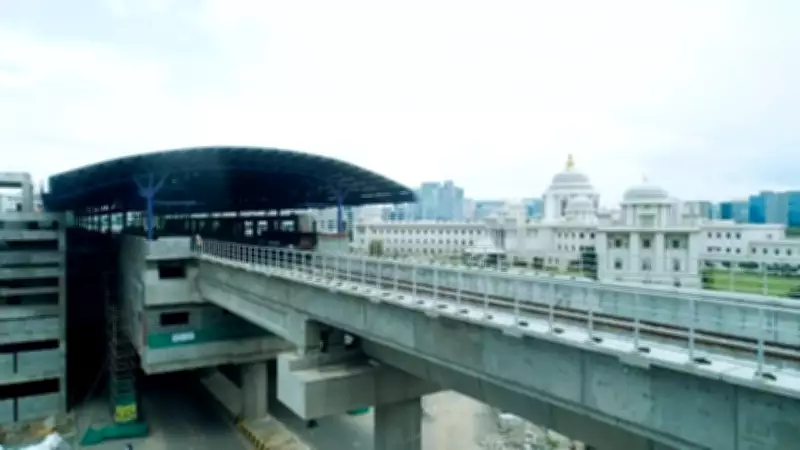
Bengaluru's Namma Metro Pink Line: A Game-Changer for City Travel
For years, navigating Bengaluru has been a mix of charm and challenge, with endless traffic jams, unpredictable travel times, and lengthy cab rides defining the daily experience in India's technology capital. The city, always in a state of flux, has long struggled with congestion that hampers mobility and efficiency.
A New Route Through the Heart of Bengaluru
The much-anticipated Pink Line of Bengaluru's Namma Metro is expected to partially open by May, transforming how the city is explored. This new corridor will significantly improve connectivity across key neighborhoods, linking areas such as Kalena Agrahara, Tavarekere, Dairy Circle, MG Road, Shivajinagar, and Nagawara. By making travel faster and more predictable, the Pink Line aims to address long-standing frustrations with Bengaluru's infrastructure.
The line extends through prominent regions in a phased manner, including Dairy Circle, Lakkasandra, and Langford Town, which are near the city's cultural and commercial center. It further connects to Rashtriya Military School, MG Road, and Shivajinagar, two major urban hubs. As it progresses, the line links Shivajinagar to Tannery Road (approximately 2.88 km) and from Tannery Road to Nagawara (approximately 4.59 km), passing through Venkateshpura and Kadugondanahalli. Until now, these areas have been difficult to access for visitors relying on public transport, but the Pink Line promises to change that, serving not just commuters but also opening up new opportunities for exploration.

From Landmarks to Local Life: Enhancing the Travel Experience
What makes this extension particularly exciting is its connection to both iconic landmarks and hidden gems. While MG Road and Shivajinagar are well-known for shopping, heritage walks, markets, and food streets, the Pink Line also provides access to places like Pottery Town near Cantonment and residential areas like Nagawara. These spots offer a more authentic, down-to-earth perspective of Bengaluru, allowing travelers to step away from controlled environments and experience the city's true essence through its streets and local restaurants.
Perhaps one of the greatest benefits the Pink Line offers is time savings. Bengaluru's notorious traffic has historically dictated what can be accomplished within a given timeframe, with short distances often turning into hour-long trips. With distinct metro sections, movement within the city becomes much more predictable, a significant boon for both daily commuters and tourists seeking to maximize their visits.
Making Bengaluru More Accessible for All
The expansion of the metro network also enhances accessibility for first-time travelers to Bengaluru. A well-developed system reduces reliance on taxis or ride-sharing services, providing a cheaper and more efficient means of getting around. More importantly, it alters perceptions of the city, shifting from a place that requires patience to navigate to one that can be explored with ease.
As the Pink Line launches in stages, it represents more than just an addition to Bengaluru's infrastructure; it signifies a fundamental change in how the city is experienced. From easing traffic congestion to fostering exploration, this metro line is set to redefine urban mobility in India's tech hub, promising a brighter future for all who live in or visit Bengaluru.






