

Namo Bharat Train Achieves 40-Minute Delhi-Meerut Run Ahead of Full Corridor Inauguration
In a significant pre-launch demonstration, a Namo Bharat train covered the entire 82-kilometer distance from Sarai Kale Khan in Delhi to Begumpul in Meerut in just 40 minutes on Friday. This high-speed trial comes ahead of Prime Minister Narendra Modi's scheduled inauguration of the complete Delhi-Ghaziabad-Meerut Regional Rapid Transit System (RRTS) corridor on Sunday.
Operational Details and Speed Capabilities
The pre-launch ride, witnessed firsthand, reached a top speed of 159 kilometers per hour. While the Namo Bharat trains are designed for a maximum speed of 180 kmph, their operational limit is set at 160 kmph. With scheduled stops included, the journey time will extend to approximately 54 minutes to Begumpul and 58 minutes to the terminal station at Modipuram.
This represents a dramatic improvement over road travel, which typically takes around one and a half to two hours, especially during peak traffic congestion. The project, with a total completion cost of Rs 30,274 crore, is poised to revolutionize regional connectivity.

Station Inaugurations and Commuter Impact
On Sunday, alongside the corridor launch, the Sarai Kale Khan Namo Bharat station in Delhi will be inaugurated. This station is designed as the convergence point for three RRTS corridors. Additionally, three more stations in the Uttar Pradesh section—Shatabdi Nagar, Begumpul, and Modipuram—will be commissioned. The Jangpura station in Delhi is slated for construction at a later date.
Currently, a 55-kilometer section across 11 stations from New Ashok Nagar to Meerut South is operational. Commuters on this existing stretch have expressed optimism about the full corridor's launch.
"I work in Delhi and am currently based in Ghaziabad, but I am from Meerut. My home is just a few metres from Begumpul station. I am planning to shift my base to Meerut, from where I can now easily travel for work daily," said Sunita Singh, highlighting the corridor's potential to reshape living and commuting patterns.
Suraj Kumar, a Meerut resident, shared a similar sentiment, having recently started working in Chandni Chowk following the inauguration of the current operational stretch.
Sarai Kale Khan: A Major Multi-Modal Transport Hub
The Sarai Kale Khan station is engineered to be a premier transport hub, featuring extensive multi-modal integration:
- Direct connectivity with the Delhi Metro's Pink Line.
- Integration with Hazrat Nizamuddin railway station.
- Links to Veer Haqeeqat Rai ISBT and city bus services.
Key infrastructure includes a skywalk connecting Nizamuddin, Namo Bharat, and metro stations, with an exit towards Ring Road. A foot overbridge equipped with travelators will further connect the Namo Bharat station to the railway station, with the skywalk also linked to this FOB.
The station boasts dedicated pick-up and drop-off zones for smooth traffic flow:
- A 5.5-meter-wide car or taxi drop-off lane.
- A 7.5-meter-wide city bus drop-off lane.
- Parking capacity for 275 cars and 900 two-wheelers.
Strategic Role and Future Expansion
An official from the National Capital Region Transport Corporation (NCRTC), the executing agency, emphasized the corridor's transformative potential. "Namo Bharat stations, including Sarai Kale Khan, will facilitate the seamless movement of commuters from one mode to another. The implementation of the entire Delhi-Ghaziabad-Meerut corridor is expected to shift the modal share in favour of public transport from 37% to 63% in the region, which ultimately helps in curbing pollution," the official stated.
Sarai Kale Khan is designated as the convergence point for all three Phase-I RRTS corridors:
- Delhi-Panipat-Karnal
- Delhi-SNB-Alwar
- Delhi-Ghaziabad-Meerut
"This interoperability will allow passengers to travel between corridors without changing trains," the official added.

Upon completion of the other two corridors, Delhi's combined mass transit system—including the Delhi Metro—will span 743 kilometers, surpassing the length of systems like London Crossrail, Hong Kong MTR, and Paris RER. The Namo Bharat corridors will be integrated with all connecting Delhi Metro lines, with the RRTS serving as the regional backbone and the metro providing feeder and dispersal services.
Train Amenities and Passenger Comfort
The Namo Bharat trains are designed with passenger convenience in mind:
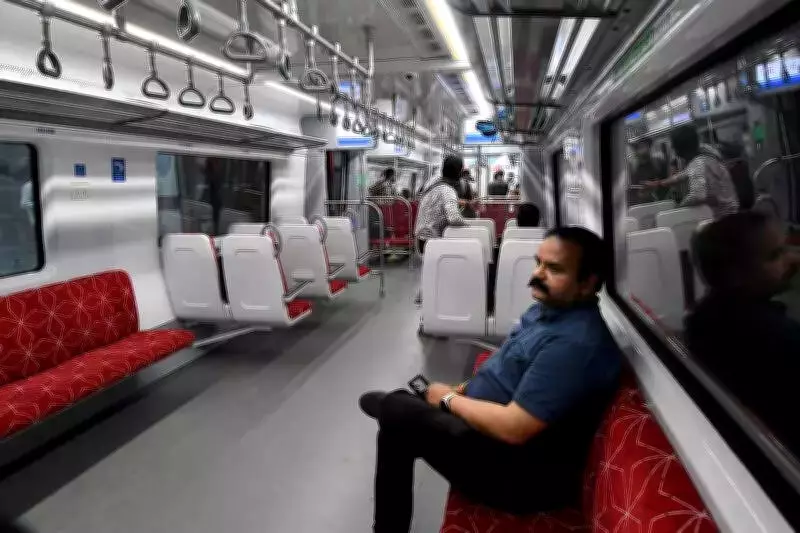
- Transverse 2x2 seating configuration.
- Grab handles and rails for standing passengers.
- Overhead luggage racks.
- A premium coach on every train featuring more spacious, comfortable, and reclining seats.
- One coach reserved exclusively for women passengers.
The inauguration of the full corridor marks a pivotal step in enhancing regional connectivity, reducing travel time, and promoting sustainable public transport in the National Capital Region.





